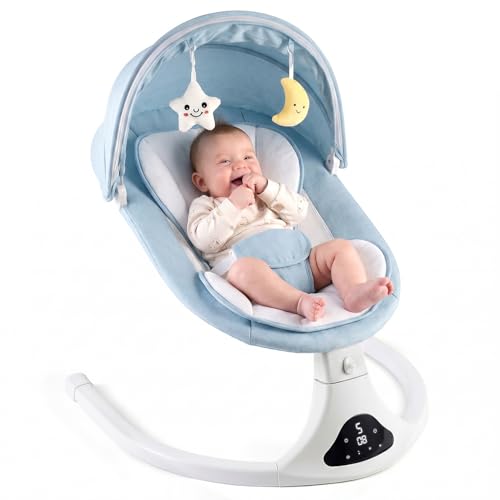
Newborn Sleeping in Swing: Safety & Buying Guide
Wondering whether a baby swing is a safe place for your newborn to sleep? This guide explains what pediatric safety guidance recommends, which swing features actually matter, and how to use a swing responsibly while keeping your baby's rest environment safe.
Read the Safety GuideQuick answer: A baby swing is a soothing tool, not a designated sleep surface. Safety guidance for infant sleep consistently points to a firm, flat surface with the baby on their back for every sleep — naps and nighttime included. A swing can help a supervised, awake newborn settle, but if your baby falls asleep in it, the recommended step is to move them to a crib or bassinet.
Why Parents Turn to Swings for Newborn Sleep
The first weeks with a newborn are a blur of feeding, changing, and trying to coax a fussy baby into rest. A swing promises something powerful: motion that mimics the gentle rocking babies felt in the womb. Many parents report that the rhythmic glide or sway calms a crying newborn within minutes, and that alone explains why swings are one of the most requested items on a newborn must-haves list.
There is a real distinction worth making, though. A swing is excellent at soothing. It is not designed, tested, or recommended as a sleep environment. Understanding that difference is the single most useful thing you can do before you decide how a swing fits into your newborn's routine.
If you are still assembling your baby gear, our overview of necessary items for a newborn can help you separate soothing tools from sleep essentials. Swings belong firmly in the first category.
What Safety Guidance Says About Sleeping in a Swing
Infant sleep safety recommendations are built around one core principle: babies sleep safest on their backs on a firm, flat surface, with nothing soft or inclined around them. A swing seat is typically semi-reclined and padded, which is the opposite of that setup. When a newborn's head falls forward in an inclined seat, the airway can become partially blocked — and a newborn does not yet have the neck strength to correct it.
This is why the consistent advice is to use a swing for supervised, awake soothing only. If your baby drifts off during a swing session, transfer them to a newborn crib or bassinet. For a deeper look at setting up a safe sleep space, see our nursery layout guide, which covers crib placement and room setup.
Safe-Use Checklist
- Always supervise. Keep the swing in the same room as you during every session.
- Use the harness every time. A five-point harness keeps a newborn from slumping or sliding forward.
- Keep sessions short. Limit time in any semi-reclined seat and take breaks for floor play and tummy time.
- Recline within safe limits. Follow the manufacturer's recline positions; do not prop the seat steeper.
- Transfer on sleep. Move a sleeping newborn to a flat crib or bassinet.
- Respect the weight limit. Switch to a different soothing option once your baby outgrows the swing.
Swing Features That Actually Matter
Swing designs vary widely, and the differences that matter most are the ones tied to safety and daily usability rather than novelty features. The table below summarizes what to prioritize at each market position.
| Tier | Best For | What You Typically Get |
|---|---|---|
| Entry-level | Short supervised soothing sessions | Basic front-to-back or side-to-side motion, simple harness, compact frame |
| Mid-range | Daily use with a growing newborn | Multiple motion directions, adjustable recline, quieter motor, wider seat |
| Premium | Frequent use and longer soothing sessions | Plug-in power option, near-silent motor, Bluetooth controls, washable fabrics |
| Top-tier | Parents who want maximum adjustability | Multi-direction motion, app-based control, roomy seat, robust build quality |
Prioritize These Features
- Five-point harness — non-negotiable for a newborn.
- Firm, flat seat bottom — reduces the forward-slump risk of a deeply contoured seat.
- Stable, wide base — prevents tipping if a toddler bumps the frame.
- Adjustable recline that stays within the manufacturer's safe range.
- Quiet motor — a loud motor can overstimulate a tired newborn.
- Plug-in power — avoids battery interruptions mid-soothe.
- Washable seat pad — spit-up is inevitable.
If you are comparing a swing with other soothing seats, our guide to the newborn bouncer seat and the newborn rocker chair breaks down how each option supports a newborn differently.
Alternatives for Safer Newborn Rest
If your goal is a safe place for your newborn to sleep, the swing is not the answer — but several other products are designed for exactly that. A bassinet or crib with a firm, flat mattress is the standard recommendation. For flexible households, a pack-and-play for sleeping offers a portable flat sleep surface, and a pack-and-play mattress upgrade can improve comfort.
For awake soothing that supports rest without replacing the crib, consider these options:
- Swaddling. A well-fitted newborn swaddle blanket can calm the startle reflex and help a newborn settle on a flat surface.
- Wearable blanket. A newborn wearable blanket keeps a baby warm during sleep without loose bedding.
- White noise. A consistent sound machine can replace the motion of a swing for many newborns.
- Contact and carrier time. A newborn sling carrier provides motion and closeness while keeping your hands free.
For a full picture of nighttime setup, our newborn sleep essentials and newborn travel essentials guides cover portable sleep and soothing gear in more detail.
How to Use a Swing Responsibly
Used well, a swing is one of the most effective soothing tools in a newborn's first months. Used as a sleep surface, it introduces avoidable risk. Here is a practical routine that keeps the benefits and removes the risk:
- Use the swing during awake, supervised soothing. Bring it into the living room rather than the nursery.
- Buckle the harness before you start the motion. A newborn can slump quickly once movement begins.
- Watch for drowsiness, not deep sleep. As soon as your baby's eyes close and breathing deepens, move them to the crib or bassinet.
- Cap sessions. Short, frequent use is better than long stretches in any inclined seat.
- Keep the swing out of the sleep routine. Avoid making motion a sleep association you will need to break later.
If you are building a full soothing setup, the newborn noise-cancelling headphones guide and the most recommended pacifiers overview are useful companions to a swing.
Frequently Asked Questions
Is it safe for a newborn to sleep in a swing?
No. Safety guidance for infant sleep recommends a firm, flat surface with the baby on their back. A swing can be used for supervised, awake soothing, but a sleeping newborn should be transferred to a crib or bassinet.
How long can a newborn stay in a baby swing?
Keep sessions short — generally under 30 minutes — and always supervised. Extended time in a semi-reclined seat can strain a newborn's neck and airway.
What features should I look for in a safe baby swing?
A five-point harness, a firm seat bottom, adjustable recline within safe limits, a stable wide base, and a weight limit that suits your baby. A quiet motor and plug-in power are practical bonuses.
Can a swing help a newborn fall asleep?
The gentle motion can calm a fussy newborn and help them drift off during supervised soothing. It should not replace a crib or bassinet for overnight or unmonitored sleep.
What is the best alternative if my newborn only sleeps in motion?
Try swaddling, white noise, and a consistent flat-sleep routine first. A wearable blanket and a firm crib mattress can help a motion-dependent newborn adjust. Speak with your pediatrician if sleep remains difficult.
Ready to Choose a Swing?
Browse our recommended swings and soothing gear below, selected for safety features and everyday usability.
View Recommended Products