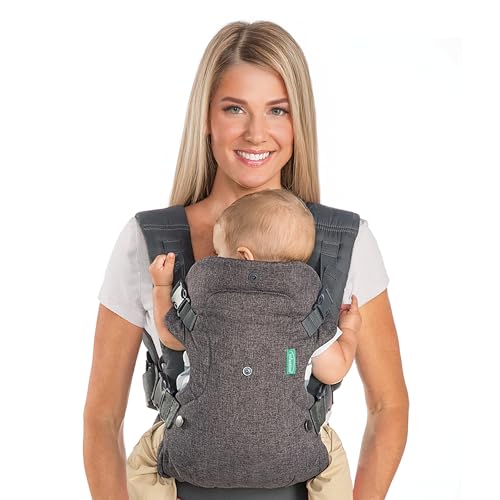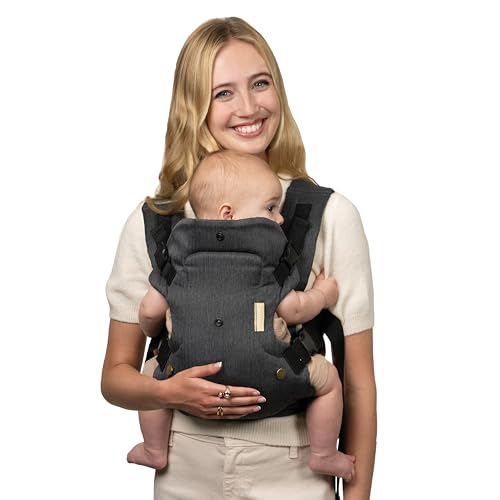
The Complete Baby Carrier Guide: Find the Perfect Carrier for Every Stage
Compare wrap slings, structured carriers, ring slings, and mei tais. Learn safety rules, proper positioning, and which style fits your lifestyle best.

Babywearing is more than just a convenience—it is a practice rooted in centuries of parenting across cultures. A good baby carrier keeps your little one close, calms fussiness, promotes bonding, and frees your hands for everything from grocery shopping to light housework. Research even shows that carried babies cry less and develop stronger emotional security.
But with dozens of options available—from stretchy wraps that cocoon a newborn to rugged framed carriers built for trail hiking—choosing the right one can feel overwhelming. This guide breaks down every major carrier type, explains how to wear each safely, and matches you with the right option based on your baby's age, your body type, and your daily routine. Whether you are building your baby registry checklist or upgrading from a well-loved infant wrap, you will leave here confident in your choice.
Before we dive in, remember that safe babywearing is non-negotiable. The T.I.C.K.S. rule—Tight, In view at all times, Close enough to kiss, Keep chin off chest, Supported back—should guide every carry. We will expand on safety later in this guide.
Types of Baby Carriers Explained
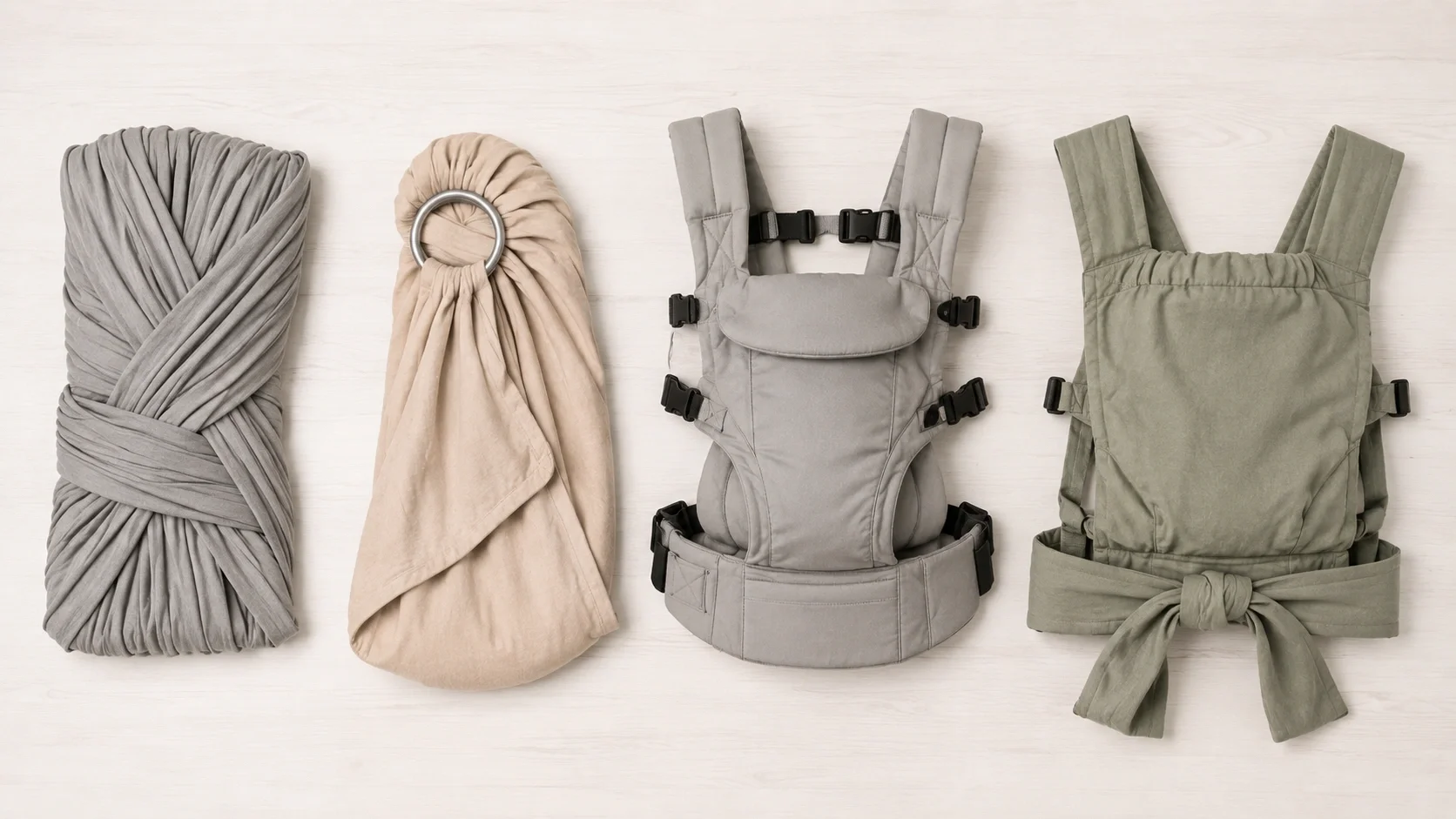
Baby carriers generally fall into five categories, each with distinct advantages. The right one depends on your baby's developmental stage, your comfort preferences, and how you plan to use it.
1. Wrap Carriers (Stretchy & Woven)

Best for: Newborn to 6 months (stretchy) | Newborn to toddler (woven)
Wraps are long pieces of fabric you tie around your body to create a pouch for your baby. Stretchy wraps like the Moby or Solly are buttery soft and forgiving, perfect for the fourth trimester when you want your newborn nestled against your chest for hours. The fabric's elasticity provides a womb-like environment that soothes even the fussiest babies.
Woven wraps are made from non-stretchy material and offer far more versatility. You can use them for front, hip, and back carries well into toddlerhood. They distribute weight across both shoulders and your waist, making them comfortable for extended wear. The trade-off is a steeper learning curve—tying a woven wrap takes practice. If you enjoy mastering skills and want one carrier that grows with your child, a woven wrap is an excellent long-term investment.
✓ Pros
- Perfect for newborns and preterm babies
- Evenly distributes weight across both shoulders
- Machine washable (stretchy wraps)
- No buckles or hardware to adjust
- Custom fit for all body types
✗ Cons
- Learning curve for tying techniques
- Can feel warm in hot weather
- Stretchy wraps lose support as baby grows heavier
- Long fabric tails can drag on the ground
2. Ring Slings

Best for: Newborn to toddler
A ring sling is a length of fabric threaded through two rings, worn over one shoulder. It is the quickest carrier to put on and take off—perfect for short trips, quick errands, or soothing a fussy baby who wants up and down repeatedly. Newborns curl up comfortably in a deep seat, while older babies enjoy the hip carry position that lets them see the world.
Because the weight sits on one shoulder, ring slings are better suited for shorter wearing sessions—typically 30 to 60 minutes—rather than all-day carries. If you have back or shoulder issues, this may not be the best daily driver, but as a secondary carrier, it is unmatched for convenience. Many parents keep one in the car or diaper bag for spontaneous use.
3. Soft Structured Carriers (SSCs)

Best for: 4 months to toddler (with infant insert: birth+)
Soft structured carriers like Ergobaby, Tula, and Lillebaby are the most popular choice for good reason. With padded shoulder straps, a wide waistband, and buckles that click into place, they are intuitive to use and provide excellent back support. Most models support front-inward, front-outward (when developmentally appropriate), and back carry positions.
Many SSCs now offer adjustable panel widths and heights, allowing the same carrier to fit a four-month-old and a two-year-old without additional inserts. If you plan to babywear daily for walks, errands, or light hiking, a structured carrier is likely your best bet. For parents recovering from C-section recovery, the padded waistband is especially appreciated—just ensure it sits above the incision site.
4. Mei Tai & Half-Buckle Carriers
Best for: Newborn to toddler
The mei tai is a hybrid with a rectangular body panel, shoulder straps you tie, and a waist strap that may tie or buckle. It blends the custom fit of a wrap with the structured support of an SSC. Because the straps are tied rather than buckled, a mei tai accommodates a wider range of body shapes and wearing positions. It is popular among babywearing enthusiasts who want versatility without the full fabric management of a woven wrap.
5. Frame Backpack Carriers
Best for: 6 months+ (sitting independently)
Built for outdoor adventures, frame carriers feature a rigid internal or external frame, substantial storage compartments, and sun canopies. Brands like Osprey and Deuter make carriers rated for hikes of several miles. These are specialty items—too bulky for everyday use but indispensable for active families who hit the trails. Frame carriers sit in the premium-to-luxury tier because of their specialized engineering and materials.
Baby Carrier Comparison at a Glance
| Type | Age Range | Best For | Learning Curve | Price Tier |
|---|---|---|---|---|
| Stretchy Wrap | 0–6 months | Newborn bonding, skin-to-skin | Moderate | Entry-level |
| Woven Wrap | Birth–toddler | All-day carries, all positions | High | Entry-level to premium |
| Ring Sling | Birth–toddler | Quick ups/downs, errands | Low–Moderate | Entry-level to mid-range |
| Soft Structured | Birth–toddler | Daily use, long walks | Low | Mid-range to premium |
| Mei Tai | Birth–toddler | Versatile, custom fit | Moderate | Entry-level to mid-range |
| Frame Backpack | 6 months+ | Hiking, outdoor adventures | Low | Premium to luxury |
Babywearing Safety: The Non-Negotiables
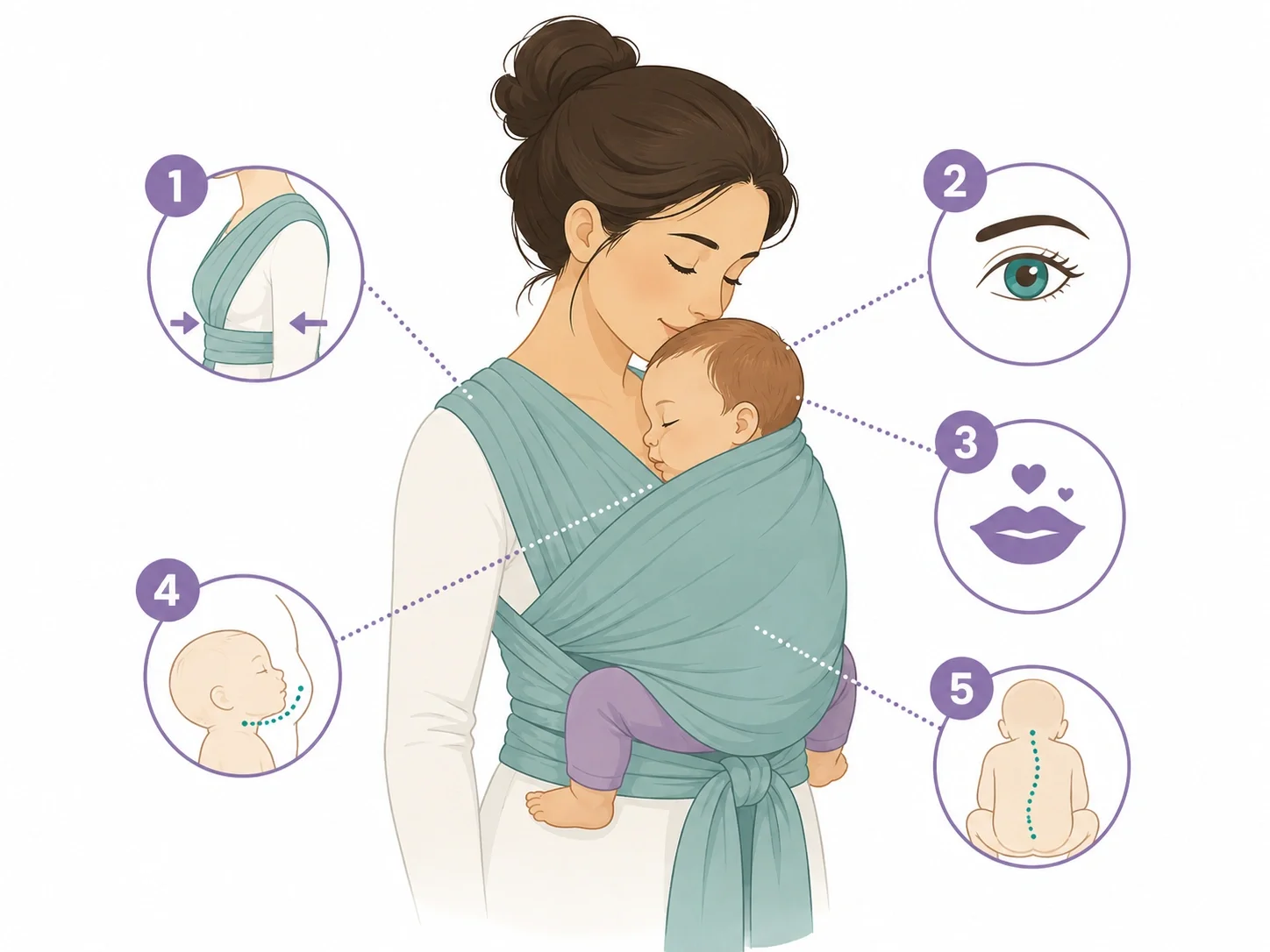
Before you put on any carrier, memorize and apply the T.I.C.K.S. rule every single time:
- Tight — The carrier should be snug enough that your baby cannot slump down. You should feel their body pressed against your chest.
- In view at all times — You must be able to see your baby's face by simply glancing down. No fabric should cover their nose or mouth.
- Close enough to kiss — The top of your baby's head should be within easy kissing distance. If you have to crane your neck, they are too low.
- Keep chin off chest — There should be at least two fingers' width of space between your baby's chin and their chest. A dropped chin can restrict their airway.
- Supported back — Your baby's back should be supported in its natural curve, with their tummy against your chest. They should not be curled so tightly that breathing is compromised.
Additional critical safety points:
- Hip-healthy positioning: The International Hip Dysplasia Institute recommends the "M" position—baby's knees should be higher than their bottom, with thighs supported to the back of the knees. Most ergonomic carriers are certified "hip-healthy."
- Never face forward too early: Front-outward carrying should only be used when the baby has strong head and neck control (usually 4–6 months) and only for short periods. It is less ergonomic and can overstimulate some babies.
- Avoid soft carriers during cooking: Never wear your baby while cooking over a hot stove, using sharp tools, or handling hot liquids.
- Check for wear and tear: Regularly inspect buckles, seams, and fabric. Frayed stitching or cracked buckles are a safety hazard.
⚠️ Important: Carriers and Sleep Safety
It is normal and safe for babies to fall asleep in a properly worn carrier. However, carriers are not substitutes for a safe sleep surface. Never place a baby—asleep or awake—in a carrier on a soft surface like a bed or couch. For overnight sleep, always transfer your baby to a firm crib or bassinet with a properly fitted crib mattress and no loose bedding.
How to Choose the Right Carrier for Your Lifestyle

The "best" carrier is the one you will actually use. Here is how to match your lifestyle to the right type:
For the Newborn Stage (0–4 Months)
Your priority is closeness, head support, and ease of nursing. A stretchy wrap or ring sling excels here—both allow you to breastfeed hands-free (with practice) and keep your newborn's delicate spine in the optimal curled position. If you prefer buckles, look for a structured carrier with a dedicated infant insert. Many parents also find that nursing covers pair well with carriers for discreet feeding on the go.
For the Busy Multitasker
If you are juggling a toddler while wearing a baby, or you need to get things done around the house, a soft structured carrier is your workhorse. The quick buckles, padded lumbar support, and ability to back-carry older babies make it ideal. Pair it with a toy storage system to keep your toddler entertained while you wear the baby.
For Hot Climates
A ring sling in a lightweight linen or a structured carrier with mesh panels (like the Lillebaby Airflow) will keep both you and your baby cooler. Avoid thick stretchy wraps and padded carriers without ventilation. Dressing your baby in lightweight newborn clothing made of breathable cotton also helps regulate temperature.
For Travelers
A soft structured carrier that can be folded compactly is ideal for airport navigation and sightseeing where strollers are impractical. Some parents also bring a ring sling as a lightweight backup. If you are investing in a travel system, check whether the stroller and carrier can complement each other for different situations.
For Petite or Plus-Size Wearers
Carriers are not one-size-fits-all. Petite parents often prefer structured carriers with adjustable panel heights, while plus-size parents should look for brands offering extended waistband sizes (like Tula's Free-to-Grow or Kinderpack's plus-size range). Woven wraps and mei tais are naturally inclusive because you tie them to your exact measurements.
Carrier Recommendations by Age and Weight

Babies grow fast, and your carrying needs will evolve. Here is a roadmap:
Newborn (7–12 lbs): Stretchy Wrap or Ring Sling
At this stage, the carrier's primary job is to replicate the womb. The fabric should mold around your baby's rounded spine. Structured carriers are often too wide unless they have a well-designed infant insert. This is also the ideal time to establish breastfeeding routines, and a carrier that allows discrete nursing is a bonus.
Infant (12–20 lbs): Transition to Structured or Woven
Around 3–4 months, most babies gain enough head control to graduate from stretchy wraps. Many parents switch to a soft structured carrier, a woven wrap, or a mei tai. This is also when you might start exploring hip carries for curious babies who want to see the world. Ensure you are following baby milestones to confirm your child has the necessary neck strength.
Older Baby & Toddler (20–35+ lbs): Back Carry
Once your baby can sit independently (around 6 months), you can safely back-carry in a structured carrier, woven wrap, or mei tai. Back carrying is a game-changer—it distributes weight better than front carrying and gives your child a great view. For long walks, ensure your baby has appropriate seasonal clothing layers, as they will be exposed to the elements more than when front-worn against your body heat.
Our Top Picks for Every Need
After researching dozens of carriers and analyzing real parent feedback, here are our top recommendations. Note that these are starting points—the products section below features our full curated selection with current pricing from our retail partner.
- Best Overall Structured Carrier: Ergobaby Omni 360 — All-carry positions, no infant insert needed, padded lumbar support. A mid-range to premium pick that balances features and comfort.
- Best Stretchy Wrap for Newborns: Solly Baby Wrap — Ultra-soft modal fabric, compact to pack. A premium-tier newborn wrap beloved for its fabric quality.
- Best Ring Sling: WildBird Ring Sling — Beautiful linen, easy to thread, breaks in beautifully. A mid-range to premium option for everyday convenience.
- Best Budget Option: Infantino Flip 4-in-1 — Surprisingly comfortable and one of the best entry-level structured carriers for occasional use.
- Best for Hiking: Osprey Poco Plus — Premium suspension, hydration sleeve, built-in sunshade. A luxury-tier frame carrier for serious outdoor families.
Caring for Your Baby Carrier
With regular use, carriers accumulate sweat, drool, spit-up, and diaper leaks. Most wraps and ring slings are machine washable on gentle cycle—air dry to prevent shrinkage. Structured carriers are typically spot-clean only; check the manufacturer's label. Buckles should be wiped down periodically with a damp cloth.
After washing, always inspect the carrier thoroughly. Frayed stitching on a wrap or a stuck buckle on a structured carrier can compromise safety. When in doubt, retire and replace. For organizing your carrier collection, consider incorporating drawer organizers in your nursery to keep wraps neatly folded and accessible.