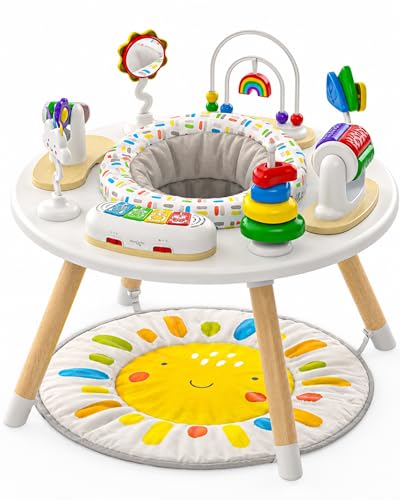
An activity center is more than just a toy – it's a developmental hub that encourages your baby to explore, move, and learn. Whether you're looking for a stationary play station, a baby jumper, or a multi-functional activity gym, this guide will help you navigate the features, safety considerations, and top choices available today. Explore more baby gear essentials to complete your nursery setup.
Did you know? Activity centers can help develop fine and gross motor skills, hand-eye coordination, and cognitive abilities. According to pediatric experts, interactive play is crucial in the first year. Track your baby's milestones and see how activity centers support each stage.
Why Choose an Activity Center?
🧠 Cognitive Growth
Bright colors, sounds, and textures stimulate your baby's brain, encouraging curiosity and early problem-solving skills.
💪 Motor Skills
Reaching, grasping, and bouncing help strengthen muscles and improve coordination, preparing for crawling and walking.
🎨 Sensory Exploration
From crinkly fabrics to light-up toys, activity centers offer a rich sensory experience that keeps babies engaged and happy.
⏳ Independent Play
Give yourself a few minutes of hands-free time while your baby safely explores a world of fun and learning.
Types of Activity Centers
Not all activity centers are the same. Here's a quick comparison of the most popular types:
🏠 Stationary Activity Centers
- Fixed base, no wheels
- 360° rotating seat (some models)
- Includes toys, lights, and sounds
- Great for babies who can sit up (4–6 months+)
🦘 Baby Jumpers & Bouncers
- Spring-loaded or suspended
- Encourages bouncing and leg strength
- Requires sturdy doorframe or frame
- Best for babies 4–12 months
🧩 Activity Gyms & Play Mats
- Flat mat with overhead toys
- Ideal for tummy time (0–6 months)
- Portable and easy to store
- Encourages reaching and rolling
🚀 2-in-1 & Convertible Centers
- Transition from stationary to table
- Grows with your child (up to 3 years)
- Offers extended value
- Often includes storage and extra activities
Features to Consider
When shopping for an activity center, keep these key features in mind to ensure you pick the best fit for your baby:
- Safety: Stable base, JPMA certified, no sharp edges
- Height Adjustability: Multiple positions to accommodate growth
- Toy Variety: Detachable, washable toys with different textures
- Easy to Clean: Removable, machine-washable seat covers
- Weight Limit: Usually 25–30 lbs (check manufacturer specs)
- Interactive Features: Lights, sounds, music, and mirrors
- Storage: Built-in toy storage or accessory hooks
- Portability: Folding or lightweight design for travel
For more tips on choosing the right developmental toys, check out our guides on newborn toys, infant toys, and baby toys.
Safety First: Using Activity Centers Responsibly
While activity centers are generally safe, it's important to follow these guidelines to prevent accidents:
- Always supervise: Never leave your baby unattended in an activity center.
- Check weight limits: Exceeding the limit can cause tipping or structural failure.
- Place on flat surfaces: Avoid uneven floors or elevated areas.
- Limit time: Pediatricians recommend no more than 15–20 minutes at a time to avoid overstimulation or hip issues.
- Read instructions: Assemble correctly and regularly check for loose parts.
For more on baby safety, explore our articles on baby proofing and baby gates.
Our Top Activity Center Picks
Based on expert reviews and parent feedback, here are some of the best activity centers in 2026. Prices are approximate and may vary.
- Skip Hop 3-Stage Activity Center: $120+ – 360° rotating seat, interactive toys, and converts to a table.
- Fisher-Price Deluxe Kick & Play Piano Gym: $80+ – Tummy time mat with piano keys, great for sensory play.
- Baby Einstein 5-in-1 Activity Center: $150+ – Jumper, walker, and stationary modes with music and lights.
- Evenflo Exersaucer Bounce & Learn: $100+ – Bouncing action, multiple toy stations, and 3 height positions.
Frequently Asked Questions
When can my baby start using an activity center?
Most activity centers are suitable for babies around 4 months who have good head control. Always check the manufacturer's age recommendation.
Are activity centers bad for hip development?
When used appropriately and for short periods, activity centers are safe. Some experts recommend using stationary centers instead of walkers to avoid hip stress.
How long can baby stay in an activity center?
Limit sessions to 15–20 minutes, 2–3 times a day. This prevents overstimulation and encourages other forms of movement like tummy time.
Can activity centers replace tummy time?
No. Tummy time is essential for building neck and core strength. Use activity centers as a supplement, not a replacement.
Ready to Choose the Perfect Activity Center?
An activity center is a wonderful investment in your baby's development. By considering safety, features, and your baby's age, you can find a center that brings joy and learning. For more inspiration, explore our guides on sensory toys, play mats, and musical toys.
Browse the recommended products below to discover top-rated activity centers from Amazon. Happy shopping!