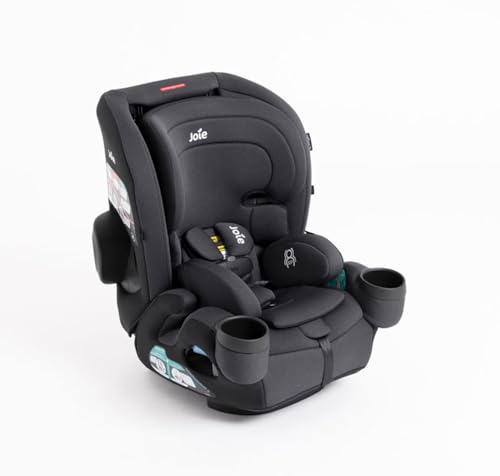
Why the Weight Requirement Matters So Much
A high back booster seat is a critical safety tool in your child's car seat journey. Unlike a forward-facing harnessed seat, a booster relies on the vehicle's lap and shoulder belt to restrain your child. The booster's job is to position the belt correctly across the strongest parts of your child's body — the bony hip and the center of the shoulder — rather than across the soft abdomen or neck.
If your child is below the minimum weight requirement, the booster may not position the belt correctly, and the seat itself may not perform as designed in a crash. That is why every manufacturer sets a specific high back booster weight requirement, and why parents must respect it. You can read more about the full range of options in our high back booster seat guide.
Weight and height work together. A child who meets the weight minimum but is too short may still have the shoulder belt cutting across the neck. That is why the best boosters are designed with adjustable headrests and belt-positioning guides that grow with your child. If you want to explore how these features differ across models, our height and weight guide for high back boosters breaks it down in detail.
Typical High Back Booster Weight Requirements
While every model is different, the following ranges give you a reliable picture of what to expect across the market. Use these as a starting point, then always confirm the exact limits in your seat's manual and on the manufacturer's label.
| Tier | Typical Minimum Weight | Typical Maximum Weight | Best For |
|---|---|---|---|
| Entry-level | Around 30–40 lbs | Around 80–100 lbs | Families seeking a straightforward, essential-tier seat for a child who meets the minimum comfortably |
| Mid-range | Around 40 lbs | Around 100–110 lbs | Growing children who need adjustable headrests and better belt positioning |
| Premium | Around 40 lbs | Around 110–120 lbs | Long-term use with reinforced construction and premium materials |
| High-end tier | Around 40 lbs | Around 120 lbs | Taller or heavier children who need the highest available limits and flagship-tier features |
Notice that the minimum weight requirement is fairly consistent across tiers — usually around 40 pounds — while the maximum limit is where tiers really diverge. A premium or high-end tier seat is a long-term investment that stays with your child well into the school years. If your child is on the taller side, you may also want to look at options with the highest height limit, since weight alone does not tell the full story.
Height, Age, and Maturity: The Other Requirements
Weight is the headline number, but it is not the only requirement. Before moving your child into a high back booster, check all of the following:
- Height: Most boosters require a minimum height of around 38–43 inches. The shoulder belt must rest across the center of the shoulder, not the neck.
- Age: Safety organizations generally recommend waiting until at least age 4, and many experts suggest age 5 or older. Age is a proxy for maturity and bone development.
- Maturity: Your child must be able to sit upright for the entire ride without slouching, leaning, or unbuckling. A child who cannot do this is not ready, regardless of weight.
- Vehicle fit: The booster must sit flat on the vehicle seat, and the vehicle's belt must route correctly through the booster's guides.
If you want a deeper comparison of how these factors play out across popular models, our high back booster seat recommendations cover the best options for different age and size profiles. And if you are still deciding between a harnessed seat and a booster, the high back booster with a 5-point harness guide explains the trade-offs.
How to Check the Weight Requirement on Your Seat
Every high back booster seat has a label — usually on the side or back of the shell — that lists the minimum and maximum weight and height limits. You can also find these numbers in the user manual and on the manufacturer's website. Follow these steps:
- Locate the manufacturer's label on the seat shell.
- Read both the minimum and maximum weight limits, plus the height limits.
- Cross-check with the manual, since labels can wear off over time.
- Weigh and measure your child before every transition, and recheck as they grow.
- Never use a booster beyond its stated maximum limits, even if your child still fits physically.
If you are comparing seats side by side, our highest-rated high back booster seats roundup includes the weight and height ranges for each model, so you can see at a glance which seats match your child's profile.
Features That Affect the Effective Weight Range
Two seats with the same stated weight limit can perform very differently in practice. The features below are the ones that most affect how well a booster works across its weight range:
- Adjustable headrest: A headrest that raises as your child grows keeps the shoulder belt properly positioned across the full weight range. This is one of the most important features for long-term use.
- Belt-positioning guides: These keep the lap and shoulder belts in the correct path. Look for guides that are easy to thread and clearly marked.
- LATCH system: A LATCH connection anchors the booster to the vehicle, preventing it from sliding when your child climbs in. Our guide to the high back booster seat with LATCH system explains when this matters most.
- Reinforced construction: High-grade steel frames and reinforced shells are common in premium and high-end tier seats and help maintain structural integrity at higher weights.
- Convertibility: Some seats convert from a high back to a backless booster, extending usable life. See our guide to the high back booster that converts to backless for the pros and cons.
If you are shopping for a seat that will stay with your child for years, the high back booster with removable back is worth considering — it gives you a high back for younger children and a backless booster for older ones.
Common Mistakes Parents Make With Booster Weight Limits
Even well-informed parents can slip up. Watch for these common mistakes:
- Transitioning too early: Moving a child into a booster before they meet the minimum weight is one of the most common — and most dangerous — errors.
- Ignoring height: A child can meet the weight minimum but still be too short for the shoulder belt to fit correctly.
- Using an expired or second-hand seat: Boosters have a limited lifespan, and a seat with an unknown history may not be safe.
- Skipping the vehicle fit check: The booster must sit flat on the vehicle seat, and the belt must route correctly. A poor fit undermines the seat's protection.
- Assuming "one size fits all": A seat that works for one child may not work for another, even at the same weight. Always check the fit in your own vehicle.
For a broader view of how to match a seat to your child's size, our height and weight guide for high back booster seats covers the full decision process.
When to Move to a Backless Booster
A high back booster provides head and neck support, which is especially valuable for younger children and for vehicles without headrests in the rear seats. Once your child outgrows the high back — either by weight, height, or shoulder height relative to the headrest — a backless booster may be appropriate. Many high back boosters convert to backless, which is why checking the conversion options on your seat is worthwhile. You can explore the high back booster that converts to a backless booster to see which models offer this flexibility.
Keep in mind that backless boosters have their own weight and height requirements, and they require a vehicle seat with adequate head support. Always check the vehicle manual before switching.
Ready to Choose the Right Booster?
Explore our curated recommendations for every weight range and tier, and compare the features that matter most for your child's safety and comfort.
Frequently Asked Questions
What is the minimum weight requirement for a high back booster seat?
Most high back booster seats have a minimum weight requirement of around 40 pounds, though some entry-level models start at 30 pounds. Always check the specific manufacturer's guidelines, as requirements vary by model and brand.
When can my child transition to a high back booster?
A child is typically ready for a high back booster when they meet the minimum weight and height requirements set by the manufacturer — usually around age 4 to 5 — and can sit properly for the entire ride without slouching or unbuckling.
What is the maximum weight limit for a high back booster?
High back booster weight limits generally range from 80 to 120 pounds, depending on the model. Premium and high-end tier boosters often support higher weight limits. Always verify the specific limit in your seat's manual.
Is weight or height more important for booster readiness?
Both matter equally. A child must meet both the minimum weight and the minimum height requirements. Weight affects the seat's structural performance, while height determines whether the shoulder belt fits correctly across the shoulder rather than the neck.
Can my child use a high back booster before age 4?
Safety organizations generally recommend waiting until at least age 4, and many experts suggest age 5 or older. Even if a child meets the weight minimum, they may not have the bone development or maturity to sit correctly for the entire ride.
How do I know if my booster seat is installed correctly?
The booster should sit flat on the vehicle seat with no gaps underneath. The lap belt should lie across the bony hips, and the shoulder belt should cross the center of the shoulder. If you use LATCH, confirm the connectors are engaged and the seat does not slide easily.
Do I need a high back booster if my car has rear headrests?
A high back booster still offers valuable side-impact protection and helps position the shoulder belt correctly. Even with rear headrests, many parents choose a high back booster for younger children and switch to a backless booster once the child is older and taller.