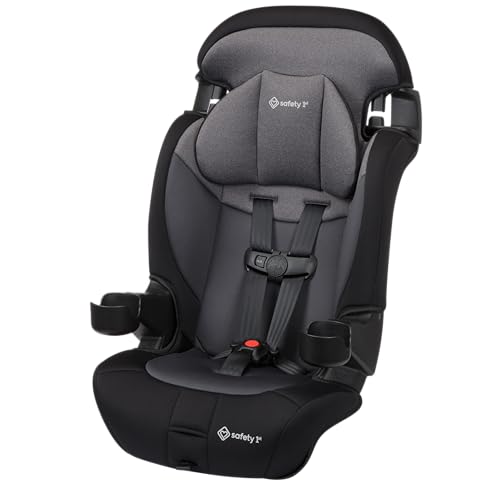
High Back Booster with 5 Point Harness: The Complete Buying Guide
Everything you need to know about choosing a harnessed high back booster that balances safety, comfort, and long-term usability for your growing child.
Why a High Back Booster with 5 Point Harness Matters
As your child outgrows their rear-facing infant seat but is not yet ready for a standard belt-positioning booster, a high back booster with a 5 point harness bridges the gap safely. This hybrid design combines the side-impact protection and head support of a high back booster with the secure, full-body restraint of a five-point harness.
For parents navigating the transition from a convertible car seat to a booster, this category offers a critical middle step. Unlike a basic backless booster that relies solely on the vehicle's lap and shoulder belt, a harnessed high back booster keeps your child properly positioned using five separate attachment points: two at the shoulders, two at the hips, and one at the crotch. This distributes crash forces across the strongest parts of the body and reduces the risk of ejection or submarining.
If you are also considering a traditional forward-facing seat, our guide to forward-facing 5 point harness car seats covers that category in detail. And for families comparing safety ratings across seat types, our overview of top safety-rated convertible car seats provides useful context.
Who Should Use a High Back Booster with 5 Point Harness?
This seat type is ideal for children who have outgrown the height or weight limits of their rear-facing or forward-facing convertible seat but still need the full-body restraint of a harness. Typically, this means children around 4 to 7 years old who weigh between 40 and 65 pounds and stand up to 49 inches tall, though specific limits vary by model.
Key indicators your child is ready:
• They have exceeded the rear-facing height or weight limit of their current seat.
• They can sit upright without slouching for the entire ride.
• They still fit within the harness height and weight range of the booster seat.
• They are not yet mature enough to keep a vehicle belt properly positioned without a harness.
A harnessed high back booster is particularly valuable for children who tend to unbuckle themselves, slump sideways, or slip the shoulder belt under their arm. The five-point harness eliminates these common misuse patterns until the child develops the maturity to sit correctly in a belt-positioning booster.
Key Features to Evaluate Before You Buy
1. Harness Height and Weight Limits
The most important specification is the maximum harness height and weight rating. A seat with a taller top harness slot will accommodate your child longer in harness mode, which is generally the safest mode for as long as possible. Look for models where the top harness slot is at least 17 to 18 inches from the seating surface. Weight limits for the harness typically range from 40 to 65 pounds, though some premium models extend to 90 pounds.
2. Side Impact Protection
High back boosters are defined by their tall back and headrest, which provide crucial side-impact protection. Look for deep head and torso wings, energy-absorbing foam (such as EPS or EPP), and a rigid shell. Some models feature adjustable headrests that grow with your child and can be raised as they get taller.
3. Installation Method
Harnessed boosters install in one of two ways: with the vehicle's lower anchors (LATCH system) or with the vehicle seat belt. Lower-anchor installation is often easier and reduces the chance of install errors, but check your vehicle's manual for anchor weight limits, as some vehicles restrict lower-anchor use above a certain child weight. Belt installation is universally compatible but requires careful routing and tensioning.
4. Adjustability and Fit
A no-rethread harness allows you to adjust harness height by moving the headrest up or down without disassembling the seat. This feature makes it much easier to maintain a proper fit as your child grows. Also look for multiple crotch-buckle positions and a recline feature that helps align the seat with your vehicle's backrest.
5. Conversion to Belt-Positioning Booster
Most harnessed high back boosters convert to a belt-positioning booster once your child outgrows the harness. This extends the seat's useful life and gives you a clear progression: harness mode first, then high back belt-positioning mode, and in some cases a backless booster mode. Check whether the seat includes a belt-positioning clip or shoulder-belt guide for the booster stage.
6. Comfort and Usability
Padding, breathable fabrics, cup holders, and machine-washable covers matter for daily use. A seat that your child finds comfortable is more likely to be used correctly on every trip. Also consider the seat's footprint and weight if you frequently move it between vehicles.
Comparing Booster Seat Tiers
When evaluating harnessed high back boosters, it helps to understand how models differ across market tiers. The table below outlines what you can generally expect at each level without referencing specific brands or figures.
| Tier | Best For | Typical Characteristics |
|---|---|---|
| Entry-level | Families needing a reliable secondary seat | Basic side-impact protection, standard harness adjustability, fewer recline options, simpler fabrics |
| Mid-range | Everyday primary use with growing children | No-rethread harness, deeper head wings, multiple recline positions, easier lower-anchor installation |
| Premium | Long-term use and maximum feature set | Extended harness weight limits, superior energy-absorbing materials, quick-release harness, plush padding, conversion to backless mode |
For a broader look at how harnessed seats compare with other forward-facing options, see our guide to forward-facing 5 point harness car seats. If you are also setting up a travel system, the universal car seat adapter for stroller can help you integrate your car seat with a stroller frame.
Installation and Fit Tips for Maximum Safety
Even the best seat only performs as intended when installed and adjusted correctly. Follow these guidelines to get the most from your harnessed high back booster.
Installation
- Read both the car seat manual and your vehicle owner's manual before installing.
- Place the seat on a forward-facing vehicle seat. Never install a forward-facing harnessed seat in a rear-facing position.
- If using lower anchors, confirm your vehicle's anchor weight limit and that the connectors are fully engaged.
- If using the seat belt, route it through the designated belt path and lock the retractor or use a locking clip as specified.
- Check for movement at the belt path: the seat should not move more than one inch side to side or front to back.
- Use the top tether whenever one is available; it significantly reduces forward head movement in a crash.
Harness Fit
- Position the harness straps at or just below your child's shoulders when forward-facing.
- Adjust the harness snugly so you cannot pinch slack at the shoulder.
- Place the chest clip at armpit level.
- Ensure the crotch buckle is in the position closest to your child without pressing into their body.
- Remove bulky clothing or blankets from under the harness; use a thin layer and add blankets over the top.
Pro tip: Do the "pinch test" every trip. If you can pinch the harness webbing together at the shoulder, it is too loose.
When to Move from Harness to Belt-Positioning Booster
The safest approach is to keep your child in the five-point harness until they reach the maximum harness height or weight limit of the seat. Only then should you switch to belt-positioning booster mode, provided your child meets the minimum requirements for that mode and can sit correctly for the entire ride.
Signs your child is ready for belt-positioning mode include: the lap belt lies flat across the upper thighs (not the stomach), the shoulder belt crosses the center of the shoulder and chest, your child's knees bend comfortably at the edge of the seat, and they can remain seated upright without reminders.
For families also planning for a new baby, our guide to things you actually need for a newborn can help you prioritize gear. And if you are comparing car seat categories broadly, the top safety-rated convertible car seats article offers a useful reference point.
Common Mistakes to Avoid
- Moving to a booster too early. A harnessed seat is generally safer for younger children who cannot sit still.
- Using a loose harness. Slack in the harness reduces its effectiveness significantly.
- Placing the chest clip too low. It should sit at armpit level, not on the belly.
- Installing with both lower anchors and the seat belt. Unless the manual explicitly permits it, use one method.
- Ignoring the top tether. The tether is a critical safety feature for forward-facing seats.
- Forgetting to check the vehicle seat back angle. A seat that is too reclined or too upright can affect harness fit and crash performance.
Frequently Asked Questions
What is the difference between a high back booster with 5 point harness and a regular booster?
A regular belt-positioning booster uses the vehicle's lap and shoulder belt to restrain the child. A high back booster with a 5 point harness has its own integrated harness that secures the child independently of the vehicle belt, providing a full-body restraint for children who are not yet ready for a belt-positioning booster.
How long can my child use the 5 point harness?
That depends on the seat's maximum harness height and weight rating. Most children can use the harness until around age 6 or 7, but always follow the specific limits in your seat's manual and keep your child harnessed as long as they fit within those limits.
Can I use a high back booster with 5 point harness in the front seat?
No. Children under 13 should ride in the back seat. The front seat is not appropriate for any child restraint due to airbag risk.
Do I need a top tether for a harnessed booster?
Yes, whenever your vehicle has a designated top tether anchor for that seating position. The top tether is a critical component of forward-facing installations and helps reduce head excursion in a crash.
How do I know if the harness is tight enough?
Perform the pinch test: after buckling and tightening, try to pinch the harness webbing at the shoulder. If you can pinch slack, it is too loose. The harness should lie flat against the body with no twists.
Can I use lower anchors and the seat belt together?
Only if the car seat manual explicitly allows it. Many seats require you to choose one installation method. Using both when not permitted can stress the seat and anchors beyond design limits.
Ready to Choose the Right Seat?
Explore our curated selection of high back boosters with 5 point harness and compare features side by side.
View Recommended Seats