Bedside Sleeper Bassinet: The Complete Guide to Safer Co-Sleeping
Discover how a bedside sleeper bassinet keeps your newborn close for nighttime feeds and soothing, while helping you make an informed, confident purchase decision.
Why parents choose a bedside sleeper: The first months after birth involve frequent night wakings, and a bedside bassinet bridges the gap between room-sharing and independent sleep. It lets you reach your baby instantly for feeding, diapering, and comforting — without leaving your bed — while still giving your newborn a dedicated, flat sleep surface. This guide explains the features that matter, the safety checks to perform, and how to match a model to your bed height and lifestyle.
What Is a Bedside Sleeper Bassinet?
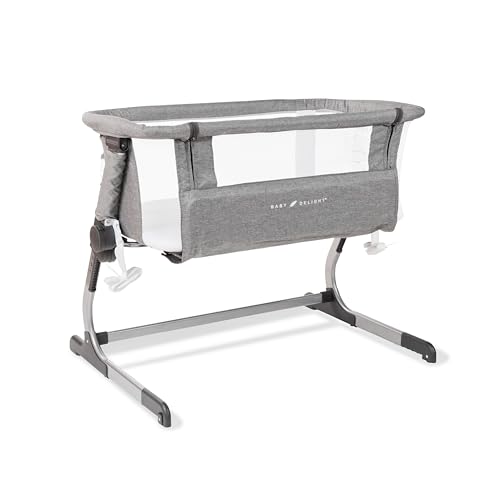
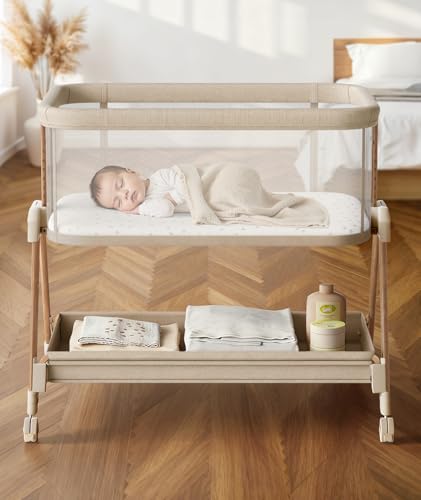
A bedside sleeper bassinet is a newborn bed that is positioned directly against the side of the parents' bed. Most models feature a drop-down or zip-down side panel that can be lowered so the baby is within arm's reach, making nighttime breastfeeding and comforting far easier. Unlike a standard bassinet, a bedside sleeper is engineered to sit flush against an adult mattress with no dangerous gaps.
These products fall under the broader category of bassinets and are often grouped with bassinets that attach to the parents' bed. If you are still deciding between a standalone crib and a co-sleeper, browsing the full range of baby gear helps you compare categories side by side. Many parents also pair a bedside sleeper with a baby monitor for extra peace of mind.
Key Features That Define a Good Bedside Sleeper
Adjustable Height
A height-adjustable frame lets you align the bassinet's top edge with your adult mattress, which is essential for safe access and preventing gaps.
Secure Attachment
Safety straps or anchors attach the bassinet to your bed frame, keeping it stable and flush during the night.
Breathable Mesh
Mesh side panels improve airflow and let you see your baby at a glance, supporting a safer sleep environment.
Drop-Down Side
A zip-down or fold-down panel gives unobstructed access for feeding and soothing without lifting the baby over a high wall.
Firm Flat Mattress
A firm, flat sleep surface is a core safe-sleep requirement. Look for a snug-fitting mattress with no gaps.
Stable Base
A wide, sturdy base or locking wheels prevents tipping and keeps the unit steady on hard floors or carpet.
Bedside Sleeper Tiers Compared
To help you shortlist models without relying on monetary figures, the table below groups bedside sleepers into universal quality tiers. These descriptors reflect relative market positioning and feature depth rather than any specific figure.
| Tier | Typical Build & Features | Best For |
|---|---|---|
| Entry-Level | Basic height adjustment, simple strap attachment, mesh sides, manual drop-down panel | Parents who need a functional co-sleeper for a short newborn phase |
| Mid-Range | Smoother height adjustment, reinforced frame, rocking mode, larger storage pockets | Families wanting a balanced mix of comfort features and durability |
| Premium | Tool-free assembly, multi-position recline, premium fabrics, quiet rocking, travel bag | Parents planning to use the bassinet for several months and possibly travel |
| Top-Tier | Flagship engineering, quick-release drop side, integrated soothing features, robust anchoring | Buyers who prioritize long-term investment and premium materials |
Bedside Sleeper Safety Checklist
Before and During Use
- Confirm the bassinet is securely attached to your bed with no gap larger than a finger width.
- Always use the manufacturer's mattress — never add a second mattress, pillow, or thick blanket.
- Keep the sleep surface flat; do not use incline or recline positions for unsupervised sleep.
- Place the bassinet away from curtains, cords, heaters, and other hazards.
- Follow the weight and age limits, and transition to a crib once your baby can roll over or push up.
- Check product recall databases and register your product with the manufacturer.
A safe setup also benefits from a supporting baby thermometer for monitoring room temperature and a baby monitor camera if you want visual checks without entering the room. For a full room-safety review, see our baby proofing guide.
How to Choose the Right Bedside Sleeper Bassinet
1. Measure your bed height. The single most important specification is the adjustable height range. A bedside sleeper must rise high enough to sit flush with your mattress and its side rail. Measure from the floor to the top of your mattress before you shop.
2. Check the attachment method. Models use safety straps, a frame that slides under the mattress, or anchors. Ensure the system is compatible with your bed frame — especially if you have a platform bed or an adjustable base.
3. Decide on the drop-side style. A zip-down panel offers convenience and is common on models like those in our bedside bassinet with drop-down side roundup. A fold-down wall may be sturdier but requires more clearance.
4. Consider portability. If you plan to move the bassinet between rooms or travel, a lightweight unit with a carry bag is a worthwhile investment. Compare options in our bedside bassinet for newborn guide.
5. Look at storage and extras. Pockets for diapers and wipes keep nighttime changes efficient. Some parents prefer a unit with an integrated changing area — see the bedside bassinet with changing table selection.
6. Plan for the transition. Most babies outgrow a bassinet by around five months. Knowing your next step — a crib or a baby play yard — helps you time the switch. If you are building a full registry, the baby registry checklist helps you avoid duplicate purchases.
Popular Bedside Sleeper Models and What They Offer
Several models dominate parent discussions, and each has a distinct personality. The Beside Me Doze Deluxe bedside bassinet is known for its straightforward attachment and generous height range, making it a solid mid-range choice for standard bed frames. Families who want a dual-purpose unit often look at the Beside Me Dreamer bassinet and bedside sleeper, which blends bassinet and co-sleeper functions.
If you are specifically comparing co-sleeping designs, our best co-sleeper bassinets overview covers the trade-offs between a full drop-down panel and a zip-open window. For a pure co-sleeper format, the bedside sleeper bassinet category page is the best starting point. Parents who need a compact footprint may prefer a standard bassinet for daytime naps and reserve the bedside sleeper for night.
Whichever model you choose, pair it with a bassinet bedding set that fits snugly and avoid loose bedding. For overnight monitoring, a baby monitor and a baby thermometer round out a practical sleep setup.
Ready to Compare Bedside Sleepers?
Browse our hand-picked selection of bedside sleeper bassinets, filtered by the features that matter most for safe co-sleeping.
Explore Top PicksFrequently Asked Questions
What is a bedside sleeper bassinet?
A bedside sleeper bassinet is a newborn bed positioned directly against the parents' bed. It usually has a drop-down or zip-down side so parents can reach the baby easily for feeding and comforting without getting out of bed.
Is a bedside sleeper safe for a newborn?
Yes, when used correctly. Choose a model with a firm, flat mattress, breathable mesh sides, and a secure attachment system with no gaps. Always follow the manufacturer's weight and age limits and consult your pediatrician about safe sleep.
How long can a baby use a bedside bassinet?
Most bedside bassinets are designed for newborns up to around five months, or until the baby can roll over, push up, or reaches the weight limit. At that point, transition to a crib.
What features should I look for?
Prioritize adjustable height, secure attachment, a breathable mesh side, a firm mattress, a drop-down side, and a stable base. Extras like rocking modes and storage pockets are nice but secondary to safe sleep fundamentals.
Can I use a bedside sleeper with any bed frame?
Not always. Check the attachment method against your bed frame type. Platform beds, adjustable bases, and beds with thick rails may require specific models or adapters. Measure your bed height before buying.
Continue exploring: Compare bassinets that attach to bed, review essential baby items, or plan your full baby registry. For sleep-related accessories, see best nursery bedding for baby sleep and baby lounger options. Parents who travel often pair a co-sleeper with a bassinet stroller.