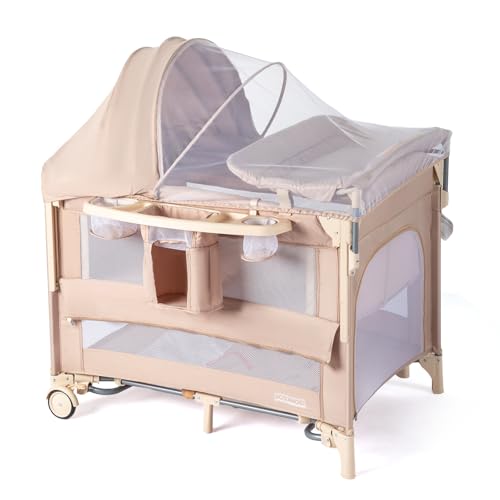
Bassinet That Attaches to Parents Bed
A complete guide to bedside bassinets that keep your newborn within arm's reach. Learn how attached bassinets work, what to look for, and how to choose the right model for safe and restful nights.
Explore Recommended OptionsWhat Is a Bassinet That Attaches to Parents Bed?
A bassinet that attaches to parents bed — often called a bedside bassinet or co-sleeper bassinet — is a standalone sleep space designed to sit flush against the adult mattress. Unlike traditional bassinets placed across the room, these models feature an adjustable height frame and a drop-down or zip-down side panel so you can reach your baby without getting out of bed. The baby still sleeps on a separate, firm surface, which is important for safe sleep.
This category differs from a standard bassinet in one key way: the side panel and height adjustability are engineered for direct bedside placement. Many parents compare these to a bedside sleeper bassinet or a bedside bassinet, and the terms are often used interchangeably. The core idea is the same: keep the newborn close while preserving an independent sleep surface.
Key Benefits for Parents and Newborns
Easier Night Feedings
With the side panel lowered, you can lift and settle your baby without leaving bed, which reduces disruption during breastfeeding or bottle feeds.
Faster Soothing
Being within arm's reach makes it simpler to check breathing, replace a pacifier, or gently pat your baby back to sleep during the night.
Independent Sleep Surface
The baby sleeps on a firm, flat mattress with its own sides, rather than sharing the adult mattress — an important safety distinction.
How Attached Bassinets Compare by Tier
Rather than comparing by numeric pricing, it helps to understand where models sit in the market. The table below groups bedside bassinets by quality tier and intended use, so you can match a model to your priorities.
| Tier | Best For | Typical Characteristics |
|---|---|---|
| Entry-Level | Short-term use and straightforward setups | Basic height adjustment, simple side panel, lighter frame, essential features only |
| Mid-Range | Most families wanting a balance of features and durability | Smoother height adjustment, reinforced frame, machine-washable cover, storage pockets |
| Premium | Frequent use and parents who want refined mechanisms | Tool-free assembly, one-hand side panel, premium fabrics, rocking or gliding modes |
| Top-Tier | Long-term use and multi-function needs | Convertible design, integrated changing station or storage, high-grade materials, refined hardware |
Mid-range models usually offer smoother adjustment mechanisms than entry-level options, while premium and top-tier models focus on convenience features and heavier-duty construction. The right tier depends on how long you plan to use the bassinet and whether you value portability, adjustability, or multi-function design.
Features That Matter Most
- Adjustable height: Must align with your adult mattress height to avoid gaps. Look for models with multiple height settings and a clear alignment guide.
- Drop-down or zip-down side: A one-hand mechanism is convenient for night feedings; check that the panel locks securely when raised.
- Sturdy frame and stable base: The bassinet should not tip when the side panel is lowered or when a parent leans over it.
- Firm, flat mattress: A snug-fitting mattress with no gaps around the edges is essential for safe sleep.
- Breathable mesh sides: Improves airflow and visibility, especially helpful for anxious first-time parents.
- Machine-washable fabrics: Nighttime spit-up and diaper leaks are common; removable covers make cleanup easier.
- Locking casters or feet: Wheels help with daytime repositioning; locks keep the bassinet stationary at night.
- Storage pockets: Useful for diapers, wipes, burp cloths, and a spare pacifier within reach.
Safety Considerations Before You Buy
Safe sleep guidance applies to every bassinet, including attached models. The baby should always sleep on their back on a firm, flat surface with a fitted sheet only — no pillows, blankets, bumpers, or soft toys. The bassinet should be placed tight against the adult bed with no gap where the baby could become wedged, and the side panel should be raised and locked whenever the baby is unattended.
Check that the model meets current safety standards and has a stable base that cannot be pulled over by a toddler or pet. If you are also setting up a larger sleep space, our guide to a bed for an infant sleeping with parents covers related room-sharing considerations. For parents who prefer a drop-side design, the bedside bassinet with drop down side guide explains mechanism differences and what to verify before purchase.
Editorial note: Attached bassinets support room-sharing, not bed-sharing. The baby sleeps in their own separate surface next to the adult bed. Always follow the manufacturer's assembly instructions and weight limits, and discontinue use once your baby can sit up, roll over, or push up on their hands and knees — whichever comes first.
Setting Up Your Bedside Bassinet
Place the bassinet on a flat, stable surface with no gap between the bassinet and the adult mattress. Remove any cords, curtains, or monitor cables from the sleep area. Use only the mattress and fitted sheet supplied by the manufacturer, and keep the sleep surface clear. If the bassinet has a rocking or gliding mode, lock it at night. For models with a changing station, use the changing surface only when the bassinet is stationary and the baby is supervised.
If you are building out a full sleep and feeding setup, browse our baby gear hub for related essentials, and review the baby registry checklist to see how a bedside bassinet fits into a complete newborn preparation list. Parents who want a more traditional standalone option can also compare the general bassinet category.
Who Should Choose an Attached Bassinet?
Attached bassinets are a strong fit for parents who plan to breastfeed or bottle-feed at night, those recovering from a C-section who want to minimize getting out of bed, and anyone who wants frequent reassurance during the newborn months. They are also helpful for smaller bedrooms where a full crib will not fit next to the adult bed. Families who need a longer-term sleep solution often transition to a crib after the bassinet stage; the bedside sleeper bassinet guide covers transition timing and weight limits.
If you are comparing co-sleeper styles more broadly, the best co-sleeper bassinets overview groups models by setup type and intended use. For parents who want a dedicated newborn bedside option with a changing surface, see the bedside bassinet with changing table guide.
Frequently Asked Questions
How long can my baby use an attached bassinet?
Most bedside bassinets are designed for newborns up to around five months, or until the baby reaches the manufacturer's weight limit, can roll over, or can push up on their hands and knees. Always follow the specific model's limits.
Is an attached bassinet the same as bed-sharing?
No. Bed-sharing means the baby sleeps on the same mattress as an adult. An attached bassinet keeps the baby on a separate, firm sleep surface next to the bed, which is the safer room-sharing approach recommended by safe sleep guidance.
What height should the bassinet be?
The bassinet mattress should sit level with or slightly below the adult mattress so you can reach the baby comfortably and the side panel meets the bed without a gap. Adjustable-height models make this easier to match.
Can I use a regular bassinet next to my bed?
You can place a standard bassinet beside the bed, but it will not have the drop-down side or height alignment designed for direct bedside access. An attached or bedside model is purpose-built for that setup.
Do I need a separate mattress for a bedside bassinet?
Use only the mattress and fitted sheet specified by the manufacturer. Aftermarket mattresses can create gaps and are not recommended unless the manufacturer explicitly approves them.