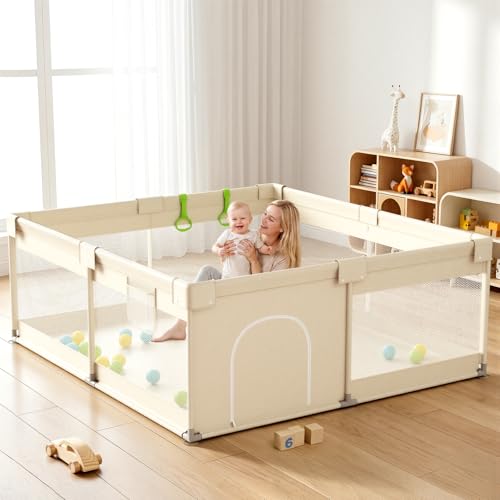
Your Complete Guide to Baby Play Yards
Discover how to choose the best play yard for your baby's safety and development. From types and key features to expert tips for creating a secure play area at home or on the go.
Shop Top-Rated Play YardsA baby play yard (often called a playpen or pack-and-play) is one of the most versatile pieces of baby gear you can own. It provides a safe, contained space for your little one to play, rest, or explore while you attend to other tasks. Whether you're at home, visiting grandparents, or traveling, a quality play yard offers peace of mind and promotes independent play. This guide covers everything you need to know to choose the perfect baby play yard for your family.
What Is a Baby Play Yard?
A baby play yard is a portable, enclosed structure with mesh or fabric walls and a sturdy frame. It's designed to keep your baby safely contained while they play, nap, or spend time with you. Modern play yards are lightweight, fold easily for storage or travel, and often come with additional features like changing tables, bassinet attachments, or toy bars. Unlike baby gates that block off areas, play yards create a dedicated play zone.
Types of Baby Play Yards
1. Standard Play Yards
The most common type, featuring a simple frame with mesh sides and a padded floor. They are lightweight, portable, and great for everyday use at home or travel. Prices typically range from $60–$200.
2. Travel Play Yards
Ultra-lightweight and compact, these are designed for frequent travel. They often come with a carrying bag and set up in seconds. Expect to pay $80–$250 for a quality travel model.
3. Play Yards with Bassinet & Changing Table
Multi-functional units that include a removable bassinet and a changing table attachment. Perfect for newborns and the first few months. Prices range from $120–$350.
4. Extra-Large & Activity Play Yards
Larger floor space with interactive elements like toy bars, lights, and sounds. Great for older babies and toddlers who need more room to move. Costs typically $100–$300.
Key Features to Look For
- Safety Certifications: Look for JPMA (Juvenile Products Manufacturers Association) certification, which ensures the product meets safety standards.
- Sturdy Frame & Locking Mechanisms: A robust frame with secure locks prevents collapse. Always check that the locking mechanism is intuitive and child-resistant.
- Breathable Mesh Sides: Mesh walls provide visibility and airflow. Ensure the mesh is durable and has small openings to prevent finger or toe entrapment.
- Comfortable Floor Pad: A thick, padded floor is essential for naps and play. Some models feature reversible or removable, washable pads.
- Portability & Ease of Setup: Consider the weight and folded dimensions if you travel frequently. Look for models with one-hand fold mechanisms.
- Extra Functionality: Features like bassinet attachments, changing tables, storage pockets, and toy bars add value, especially for the early months.
How to Choose the Right Size
The size of your play yard should match your available space and your baby's needs. Standard play yards are approximately 39″ x 39″ (100 x 100 cm) and fit well in most living rooms or bedrooms. If you have a larger space or an active toddler, consider an extra-large model measuring 47″ x 47″ (120 x 120 cm) or more. For travel, compact models that fold to about the size of a small suitcase are ideal. Before purchasing, measure your intended floor space and check the product's folded dimensions to ensure it fits in your car or storage area.
Benefits of Using a Baby Play Yard
- Safe Containment: Provides a secure space for baby while you cook, answer calls, or take a quick break.
- Promotes Independent Play: Encourages self-exploration and cognitive development through safe, focused play.
- Portable Safe Sleep: Many play yards are approved for overnight sleep, giving your baby a familiar sleep space at home or away.
- Versatility: Use it indoors or outdoors, at home, grandparents' house, or during travel. It's a familiar space for your baby wherever you go.
- Easy to Clean: Most fabric covers and floor pads are machine washable or can be wiped clean, making maintenance simple.
Play Yard vs. Baby Gate: What's the Difference?
While both products are designed for child safety, they serve different purposes. A baby gate is used to block off doorways, staircases, or larger areas, restricting access to certain rooms or zones. In contrast, a baby play yard creates a dedicated, enclosed space that your baby can stay in. Play yards are portable and can be used in various locations, while gates are typically fixed installations. For many families, owning both is the best approach to create a safe, accessible home environment.
📘 Further Reading
⭐ Our Takeaway
A baby play yard is an essential investment for modern parenting. It offers a safe, flexible space that grows with your child—from newborn naps to toddler play. By considering the type, safety features, and your lifestyle needs, you can choose the perfect play yard that gives you peace of mind and your baby a happy, safe place to explore the world.
Ready to choose your baby play yard? Browse our curated selection of top-rated play yards below, featuring trusted brands and excellent value for money.