The Ultimate Bassinet Buying Guide
Find the safest, most comfortable bassinet for your newborn. Expert advice on types, features, and top-rated picks.
SEE TOP BASSINETS →A bassinet is one of the most essential baby gear items for the first few months. It provides a cozy, safe sleep space for your newborn, often placed beside your bed for easy nighttime feeding and bonding. But with so many options—from traditional bassinets to smart bedside sleepers—choosing the right one can feel overwhelming. This guide breaks down everything you need to know to make an informed decision.
Quick Answer: A bassinet is a small, portable bed for infants up to 4–6 months (or until they can roll over). The best bassinets are sturdy, breathable, and meet current safety standards. Prices typically range from $100–$350, with premium smart models costing up to $500+.
Why Choose a Bassinet Over a Crib?
Many parents start with a bassinet because it offers several advantages over a full-sized baby crib:
- Portability: Easily move it from bedroom to living room.
- Space-saving: Perfect for smaller nurseries or shared bedrooms.
- Bedside access: Many models allow you to keep your baby close for nighttime feedings.
- Cozy environment: The snug size mimics the womb, helping newborns feel secure.
However, a bassinet is a short-term solution. Once your baby starts pushing up or rolling over (around 4–5 months), it’s time to transition to a crib. For more on that transition, check our guide on toddler beds.
Types of Bassinets
Understanding the different types will help you narrow down your choices. Here are the most common:
Standard Bassinet
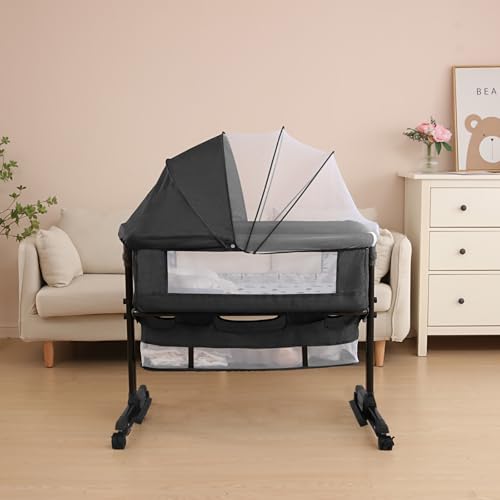
Basic, stationary bassinet with a simple stand. Affordable and lightweight, ideal for home use.
Bedside Sleeper
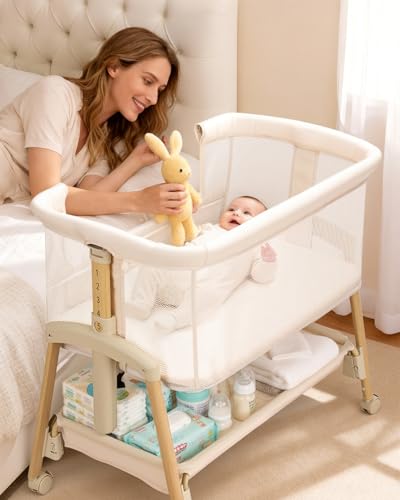
Attaches securely to your bed, with a drop-down side for easy access. Great for breastfeeding moms.
Portable / Travel Bassinet
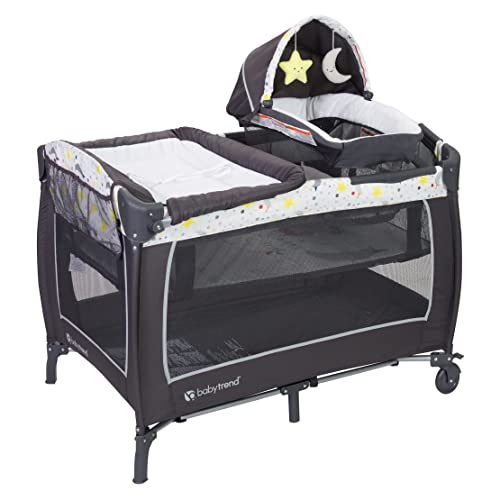
Collapsible and lightweight, perfect for trips or moving between rooms. Some come with a carrying bag.
Smart Bassinet
Features automated rocking, white noise, and even cry detection. Premium models like Snoo can cost $1,500+.
Bassinet Safety: What to Look For
Safety is non-negotiable. Always look for bassinets that meet or exceed current safety standards. Here are the key safety features to check:
- JPMA certification – ensures the bassinet meets ASTM and CPSC safety standards.
- Firm, flat mattress – reduces the risk of SIDS. Avoid soft bedding or pillows.
- Sturdy base and lockable wheels – prevents tipping or accidental movement.
- Breathable mesh sides – allows airflow and lets you see your baby easily.
- No drop-side mechanisms – these have been recalled due to entrapment risks.
For a detailed safety checklist, visit our sleep training guide which also covers safe sleep environments.
Key Features to Consider
Beyond safety, here are practical features that can make your life easier:
| Feature | Why It Matters |
|---|---|
| Adjustable Height | Matches your bed height for easy reach, especially useful for C-section recovery. |
| Wheels with Brakes | Move the bassinet from room to room without waking the baby. |
| Storage Basket | Keeps diapers, wipes, and swaddles within arm’s reach. |
| Vibration / Rocking | Calms fussy babies and helps them fall asleep faster. |
| Canopy or Cover | Blocks light and creates a cozy sleep environment. |
Bassinet vs. Crib vs. Co-sleeper: What's Best?
Each option has its place. Here’s a quick comparison:
- Bassinet: Best for the first 4–5 months. Portable, compact, and keeps baby close.
- Crib: Long-term solution (up to 2–3 years). More space, but less portable.
- Co-sleeper: Attaches to your bed, offering a separate sleep surface with easy access.
Many parents start with a bassinet and then transition to a crib. For more on nursery setup, explore our nursery decor ideas.
How to Choose the Right Bassinet for Your Family
Consider these factors before making a purchase:
- Your bedroom space: Measure the area next to your bed.
- Your budget: Standard bassinets range from $100–$250. Smart models go up to $1,500+.
- Lifestyle: Do you travel often? Consider a portable bassinet.
- Ease of cleaning: Removable, machine-washable covers are a lifesaver.
- Weight limit: Most bassinets support up to 20–25 lbs. Check the manufacturer's specs.
If you’re a first-time parent, our baby registry checklist can help you track all essential items, including a bassinet.
Top Bassinet Picks for 2026
Based on expert reviews and customer feedback, here are some of the best bassinets available today:
- Halo BassiNest Swivel Sleeper – Adjustable height, 360° swivel, and bedside design. (~$250)
- Fisher-Price Soothing Motions Bassinet – Auto-rocking and vibration features. (~$150)
- Baby Delight Beside Me Dreamer – Portable, breathable mesh, and lightweight. (~$120)
- Snoo Smart Sleeper – The premium choice with responsive rocking and white noise. (~$1,500)
- Mika Micky Bedside Sleeper – Affordable, adjustable height, and mesh sides. (~$100)
For more budget-friendly options, check our budget picks guide.
Caring for Your Bassinet
To keep the bassinet safe and hygienic:
- Wash the mattress cover and sheets weekly.
- Wipe down the frame with a mild, non-toxic cleaner.
- Inspect for loose parts or wear regularly.
- Replace the mattress if it becomes stained or worn.
Proper maintenance ensures your baby sleeps safely and comfortably every night.
Frequently Asked Questions
How long can a baby sleep in a bassinet?
Most babies outgrow a bassinet by 4–5 months or when they start pushing up on their hands and knees. Always follow the manufacturer's weight and developmental guidelines.
Can a bassinet be used for overnight sleep?
Yes, as long as it meets safety standards and you place your baby on their back on a firm, flat mattress with no loose bedding.
Is a bassinet safer than a crib?
Both are safe when used correctly. Bassinets are designed for newborns and smaller infants, while cribs are for older babies. The key is following safe sleep practices.
Do I need a bassinet if I already have a crib?
Not necessarily, but many parents find a bassinet convenient for the first few months because it keeps the baby close during nighttime feedings and is easier to move around.
Final Thoughts
Choosing the right bassinet is a personal decision that depends on your family’s needs, budget, and lifestyle. Focus on safety, comfort, and ease of use. Remember, this is a temporary but crucial piece of baby gear that will help you and your little one get those precious first months of sleep.
Ready to buy? Browse our curated selection of top-rated bassinets below.