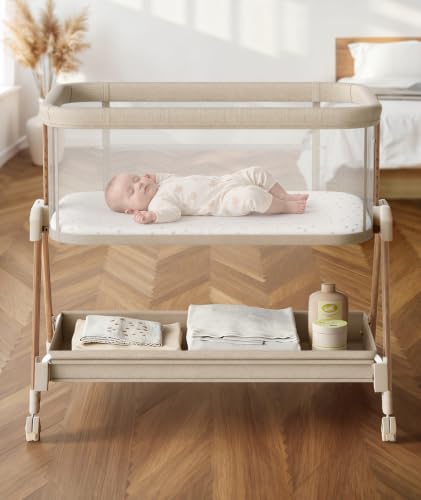
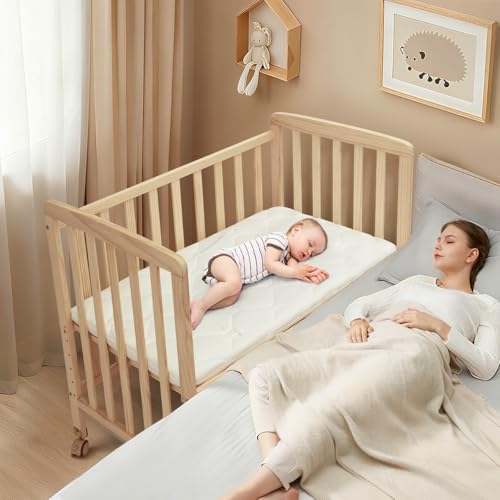
Bedside Bassinet with Drop Down Side
Keep your newborn within arm's reach all night long. Learn how a drop down side bassinet supports safer room-sharing, what features matter most, and how to choose the right model for your family.
EXPLORE THE GUIDEWhy parents choose a drop down side bassinet: A bedside bassinet with a drop down side lets you soothe, feed, and check on your baby without leaving your bed. The fold-down panel creates a clear line of sight and easy access while the baby still sleeps in their own separate, firm sleep surface — the arrangement pediatric sleep experts recommend for the first months of life.
What Is a Bedside Bassinet with a Drop Down Side?
A bedside bassinet with a drop down side is a compact newborn sleeper designed to sit directly next to your bed. Its defining feature is a side panel that folds or zips down, creating an open window between the bassinet and your mattress. This lets you reach your baby for night feeds, diaper changes, or comfort without getting out of bed.
Unlike a traditional standalone bassinet, these models are built for room-sharing. Many include adjustable height legs, anchor straps that attach to the adult bed frame, and mesh panels for airflow. The drop-down side is not meant to merge the two sleep surfaces — it simply improves access while keeping the baby in their own safe space.
If you are still comparing sleepers, our overview of bedside bassinets and bedside sleeper bassinets can help you understand the broader category before narrowing down to drop-side models.
How the Drop Down Side Works in Practice
The mechanism varies by model, but most fall into three styles:
- Zip-down panel: The side fabric unzips and folds down, often with a mesh window. This is common on travel-friendly and lightweight models.
- Hinged fold-down side: A rigid or semi-rigid panel lowers on a hinge. These tend to feel more structured and may include a locking latch.
- Retractable or sliding panel: Less common, but some premium models slide the side down along a track for a very low profile.
In every case, the goal is the same: when the panel is lowered, you can see and reach your baby easily. When it is raised and locked, the bassinet functions as a fully enclosed sleeper. Always raise and secure the panel when you are not actively tending to your baby, and never leave it down while the baby sleeps unattended.
Safety First: What Every Parent Should Know
Safety is the single most important factor when choosing any newborn sleep product. A bedside bassinet with a drop down side is safe when it meets current standards and is used correctly. Keep these points in mind:
- Firm, flat mattress: The sleep surface should be firm and flat with a snug-fitting sheet. Avoid any soft bedding, pillows, or bumpers inside the bassinet.
- Secure locking mechanism: The drop-down panel must lock firmly in the raised position. Test the latch before purchase if possible, and check it regularly.
- Mesh airflow panels: Breathable mesh on the sides supports airflow and lets you see your baby clearly.
- Stable base and anchors: Use the included straps to secure the bassinet to your bed frame. Make sure the bassinet cannot tip or slide.
- No gap between bassinet and mattress: The bassinet should sit flush against your bed with no dangerous gap where a baby could become trapped.
- Weight and age limits: Follow the manufacturer's limits. Most models are for babies from birth until they begin to roll over or sit up, or until they reach the weight limit.
- Recall checks: Before buying new or secondhand, verify the model has not been recalled. Our baby product reviews section can point you toward reliable options.
Always place your baby on their back to sleep, and keep the bassinet free of loose items. For a deeper look at safe sleep setups, see our guide to the best nursery bedding for baby sleep.
Key Features to Compare
Beyond the drop-down panel itself, these are the features that separate a good bassinet from a great one:
Adjustable Height
Your bed height is not universal, so look for a bassinet with multiple height settings. This ensures the drop-down side aligns with your mattress top, which is essential for both access and safety.
Anchor Straps
Straps that loop around your bed frame keep the bassinet firmly in place. Some models also include a small clip or buckle system. Never skip this step during setup.
Portability
Many bedside bassinets fold flat or come with a carry bag, making them easy to move between rooms or take on trips. If you travel often, compare with a dedicated bassinet stroller or a baby play yard for daytime use.
Storage and Extras
Side pockets, a small storage basket, or a built-in changing station can be convenient. If you want more functionality, explore bedside bassinets with a changing table.
Mattress Quality
A firm, supportive mattress with a waterproof cover is easier to clean and safer for sleep. Some models include a spare sheet or mattress pad.
Market Tiers: Finding Your Fit
Bedside bassinets with drop down sides span several market tiers. Rather than focusing on numbers, think about what each tier typically offers so you can match a model to your needs.
| Tier | Typical Characteristics | Best For |
|---|---|---|
| Essential tier | Simple zip-down or fold-down panel, basic mesh sides, limited height adjustment, lightweight frame | Parents who want a straightforward room-sharing sleeper for the newborn stage |
| Balanced tier | Multiple height positions, secure anchor straps, breathable mesh on all sides, easy-clean mattress, storage pockets | Most families seeking a reliable everyday bassinet with practical extras |
| Premium tier | Sturdy frame, smooth-glide or hinged drop side with locking latch, tool-free assembly, travel bag, premium fabrics | Parents who value build quality, portability, and long-term durability |
| Top-tier | Flagship features such as one-hand drop mechanism, integrated rocking mode, reinforced anchors, and refined design | Families who want the most feature-rich bedside sleeper experience |
In general, mid-range and premium models tend to offer smoother drop mechanisms and more secure attachment systems than entry-level options. If you are weighing different approaches, our comparison of the best co-sleeper bassinets and the Beside Me Doze Deluxe bedside bassinet can provide useful reference points.
Setup Checklist for a Safe Bedside Sleeper
- Assemble the bassinet fully and tighten all fasteners before first use.
- Set the height so the bassinet rail aligns with your mattress top.
- Attach the anchor straps to your bed frame and pull them snug.
- Check that there is no gap between the bassinet and your mattress.
- Install a firm, flat mattress with a snug sheet.
- Remove all loose bedding, pillows, and toys from inside the bassinet.
- Test the drop-down panel lock — it should click securely into the raised position.
- Keep the bassinet away from blinds, cords, and heaters.
- Place the baby on their back for every sleep.
- Register the product with the manufacturer for recall alerts.
For more on keeping your sleep space safe as your baby grows, see our guides to baby proofing and baby monitors for monitoring during naps and nights.
When to Move On from the Bedside Bassinet
A bedside bassinet is a temporary sleeper by design. Plan to transition when your baby shows any of these signs:
- They begin to roll over on their own.
- They can push up onto hands and knees.
- They sit up unassisted.
- They reach the manufacturer's weight or height limit.
At that point, a standard crib or a larger sleeper is appropriate. If you are planning ahead, browse our guides to cribs and bassinets and the bedside bassinet for newborn selection tips to understand the next step.
Some parents also keep a baby lounger or baby rocker for supervised daytime lounging, which is different from overnight sleep use.
Frequently Asked Questions
Is a bedside bassinet with a drop down side safe for newborns?
Yes, when used correctly. Choose a model that meets current safety standards, secure the drop-down side in the raised position when not in use, and always follow the manufacturer's instructions for attaching the bassinet to your bed.
How long can a baby sleep in a bedside bassinet?
Most bedside bassinets are designed for babies from birth until they begin to roll over, sit up, or reach the manufacturer's recommended weight limit — typically around five to six months.
Does the drop down side bassinet need to be attached to the bed?
Not always, but many models include straps or anchors to secure the bassinet to the adult bed frame. Using these attachments improves stability and helps close the gap between the bassinet and your mattress.
Can I use a drop down side bassinet for co-sleeping?
A bedside bassinet supports room-sharing, not bed-sharing. The baby sleeps in their own separate sleep surface while remaining within arm's reach — the arrangement recommended by pediatric sleep experts.
What should I look for in a bedside bassinet with a drop down side?
Prioritize a firm, flat mattress, mesh side panels for airflow, a secure locking mechanism for the drop-down panel, adjustable height settings, and a stable base. Also check for current safety certification and recall status before buying.
Final Thoughts
A bedside bassinet with a drop down side is one of the most practical purchases for the newborn stage. It supports night feeding, bonding, and peace of mind while keeping your baby in a separate, safe sleep space. Focus on build quality, a secure locking mechanism, and proper anchoring to your bed — those details matter far more than extra gadgets.
If you are still building out your newborn setup, pair this guide with our baby registry checklist and baby registry essentials to make sure you have the full picture. And for a broader view of newborn sleep products, explore the bassinet that attaches to bed and bassinet that attaches to parents' bed comparisons.