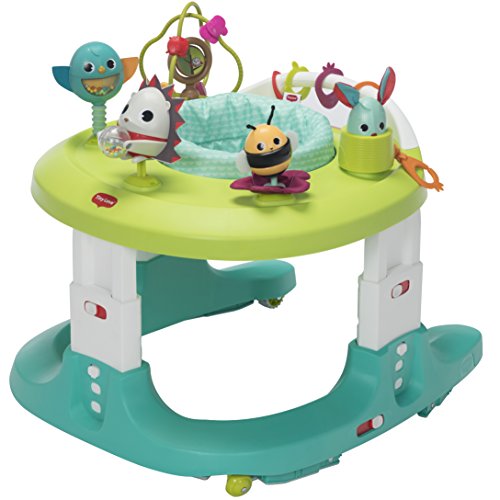
Explore and More 3-Stage Activity Center: The Complete Buying Guide
Everything you need to know about this versatile developmental play center that grows with your baby from infancy through toddlerhood.
SEE RECOMMENDED PICKSWhy Parents Research This Product: The Explore and More 3-Stage Activity Center is one of the most searched developmental play products because it promises to replace multiple items with a single, adaptable system. Parents want to know if it truly delivers on that promise, how it compares to standalone bouncers and play tables, and whether it is worth the investment for their family's specific needs. This guide answers all of those questions.
What Is the Explore and More 3-Stage Activity Center?
The Explore and More 3-Stage Activity Center is a convertible play system designed to support your child's development from early infancy through the toddler years. Unlike traditional activity centers that serve a single function, this product is engineered to transition through three distinct configurations, each matched to a specific developmental window.
In its first stage, the center functions as a seated activity station with a 360-degree rotating seat that lets babies explore interactive toys, lights, and sounds while building core strength and hand-eye coordination. As your child gains mobility, the second stage converts the unit into a standing and cruising station where toddlers can pull themselves up and practice balance. The third stage transforms the center into a play table, offering a stable surface for imaginative play, snack time, or early learning activities.
This evolutionary design addresses a common frustration among parents: the rapid obsolescence of baby gear. Most activity centers are outgrown within a few months. The 3-stage concept attempts to solve that problem by providing a longer usable lifespan and reducing the need for multiple purchases. For families who value efficiency and long-term utility, this is a compelling proposition.
The Three Stages Explained: A Developmental Deep Dive
Stage 1: Seated Discovery (Approximately 4–9 Months)
During the seated stage, your baby sits in a supported seat surrounded by a ring of interactive elements. This configuration is designed for babies who have developed head and neck control but are not yet mobile. The toys at this stage typically include rattles, spinners, textured surfaces, mirrors, and electronic features that respond to touch or sound.
The seated stage serves several developmental purposes. It encourages reaching and grasping, which refines fine motor skills. The rotating seat promotes torso rotation and core engagement. The variety of sensory inputs—visual, auditory, and tactile—stimulates cognitive development. Many parents also find this stage useful as a safe, contained space where baby can play independently while a caregiver attends to nearby tasks.
If your baby is approaching this stage, you may also be interested in other developmental play tools like toys for infants 3–6 months to complement the activity center experience.
Stage 2: Standing and Cruising (Approximately 9–18 Months)
As your baby begins to pull up and cruise, the activity center converts to a standing configuration. The seat is removed, and the unit becomes a sturdy perimeter that supports standing and side-stepping. The toys are repositioned to encourage reaching while standing, and the overall height is adjusted to match your toddler's growing frame.
This stage is critical for gross motor development. The act of pulling up, standing, and cruising around the perimeter builds leg strength, balance, and coordination. The activity center provides a safe boundary that gives toddlers confidence to practice these skills without the risk of wandering into unsafe areas. For parents who are also preparing for independent play, resources like newborn must-haves and things you actually need for a newborn can help you build a comprehensive play and development setup.
Stage 3: Play Table (Approximately 18–36 Months)
In the final stage, the activity center transforms into a low play table. The perimeter walls are removed or reconfigured, and the top surface becomes a flat, stable platform. Toddlers can use this surface for drawing, playing with blocks, sorting toys, or enjoying a snack. The table height is typically designed to accommodate a standing or seated toddler comfortably.
The play table stage extends the product's usefulness well beyond the infant months, making it a genuine multi-year investment. For parents who are also setting up other areas of the home, our guide to toy storage solutions for the living room and toy storage solutions for small spaces can help you integrate the activity center into a functional play environment.
Key Features to Evaluate Before You Decide
Not all 3-stage activity centers are created equal. When evaluating the Explore and More model or any comparable product, pay close attention to these features:
- Seat rotation: A smooth, 360-degree rotating seat in Stage 1 allows full access to all toys and encourages torso mobility. Look for a seat that locks securely and has a padded, wipeable cover.
- Height adjustability: Multiple height positions accommodate growing legs and ensure proper foot support at each stage. Ideally, the unit should offer at least three height settings.
- Toy variety: A mix of electronic and non-electronic toys is ideal. Electronic features should have volume control and an off switch. Non-electronic toys like spinners, mirrors, and textured elements encourage open-ended play.
- Stability and footprint: A wide, weighted base prevents tipping. Check the assembled dimensions to ensure the center fits comfortably in your home without dominating the room.
- Portability: Some models fold flat or have wheels for easy relocation. If you plan to move the center between rooms, this is a significant convenience.
- Ease of cleaning: Removable, machine-washable seat covers and wipeable surfaces are essential for a product that will see daily use.
- Safety certifications: Verify that the product meets current safety standards (such as ASTM or equivalent) and has no active recalls. Check the manufacturer's website and the CPSC database before purchasing.
For parents who are also researching other large baby gear purchases, you may find our guides on high chairs for 6-month-olds and portable infant swings useful for building a coordinated gear plan.
Developmental Benefits: What the Research Says
Activity centers, when used appropriately and in moderation, can support several areas of early development. The seated stage encourages visual tracking, auditory discrimination, and fine motor manipulation. The standing stage promotes gross motor skills, spatial awareness, and balance. The play table stage fosters imaginative play, social interaction, and early problem-solving.
However, it is important to note that activity centers are not a substitute for floor time. Pediatric physical therapists generally recommend that babies spend ample time on the floor to develop natural movement patterns, rolling, crawling, and eventually walking. The activity center should be one tool in a broader play and development routine that includes tummy time, free floor play, and outdoor exploration.
For families interested in supporting cognitive development through play, our guides to toys for brain development (1–2 years) and electronic learning toys for 3-year-olds offer additional ideas for age-appropriate enrichment.
Safety and Usage Guidelines
Safety is paramount when selecting any product for your baby. Follow these guidelines to ensure safe use of the Explore and More 3-Stage Activity Center:
- Age and stage appropriateness: Do not introduce the seated stage until your baby has adequate head and neck control, typically around 4 months. Do not use the standing stage until your child can bear weight on their legs with support.
- Supervision: Always supervise your baby while they are in the activity center. Never leave them unattended, even for a moment.
- Time limits: Limit seated and standing time to short sessions (15–20 minutes) to avoid fatigue and to encourage floor play.
- Assembly and maintenance: Follow the assembly instructions precisely. Periodically check that all screws, bolts, and connections are secure. Inspect toys for wear and tear.
- Placement: Use the activity center on a flat, stable surface away from stairs, sharp edges, and heat sources. Do not place it near windows with cords or blinds.
- Recall awareness: Register your product with the manufacturer to receive recall notifications. Check the CPSC website periodically for safety updates.
Understanding Product Tiers: Entry-Level vs. Premium
The baby gear market offers a wide range of options at different quality tiers. The Explore and More 3-Stage Activity Center typically sits in the mid-range to premium tier, offering a balance of durability, feature set, and long-term utility. Here is how to think about the tiers:
| Tier | Key Characteristics | Best For |
|---|---|---|
| Entry-Level | Basic seated activity center with limited toy variety; single-stage use; lighter construction | Parents seeking a short-term solution for the seated stage only |
| Mid-Range | Multi-stage convertible design; moderate toy variety; decent build quality; some height adjustability | Families who want a versatile product without the highest-tier investment |
| Premium | Robust construction; extensive toy features; smooth 360-degree seat rotation; easy-clean materials; long lifespan | Parents planning for multiple children or seeking maximum long-term value |
When comparing options, consider how long you plan to use the product and how many children will use it. A mid-range or premium 3-stage center may offer better long-term value than an entry-level single-stage product, especially if you plan to have more children.
Alternatives to Consider
While the 3-stage activity center is a versatile option, it may not be the right fit for every family. Here are some alternatives to consider:
- Standalone baby bouncer or swing: If you primarily need a place to set your baby down safely, a portable infant swing or bouncer may suffice. These are typically smaller and more portable.
- Play mat and gym: For floor-based play and sensory exploration, a play mat with an overhead gym is a simpler, more traditional option. Our guide to toys for infants 3–6 months covers this category.
- High chair with play features: Some high chairs, such as those designed for 6-month-olds, include removable play trays that can serve a similar function during meal prep and seated play.
- Play table alone: If your primary interest is the Stage 3 functionality, you may find a dedicated play table more suitable for your space and budget.
Who Is This Product Best For?
The Explore and More 3-Stage Activity Center is best suited for:
- First-time parents who want a single product that covers multiple developmental stages and reduces the need for separate purchases.
- Families with limited space who cannot accommodate multiple pieces of baby gear.
- Parents planning for more than one child who want a durable product that can be handed down.
- Caregivers who value developmental play and want a product that actively supports motor and cognitive skills at each stage.
It may not be the best fit for parents who prefer a minimalist approach, those who have very limited floor space, or families who primarily rely on floor play and outdoor exploration.
Final Verdict: Is the Explore and More 3-Stage Activity Center Worth It?
The Explore and More 3-Stage Activity Center is a thoughtfully designed product that addresses a real need in the baby gear market: the desire for versatile, long-lasting play equipment that adapts to a child's growth. Its three-stage configuration, combined with a focus on developmental play and safety, makes it a compelling option for many families.
Before purchasing, consider your available space, your child's current developmental stage, and your long-term plans. If you are looking for a single product that can serve as a seated activity center, a standing support, and a play table, this product is a strong candidate. If you prefer a simpler setup or have limited space, a standalone bouncer or play mat may be a more practical choice.
For parents building a comprehensive baby gear plan, our guides to newborn must-haves, things needed for mom after giving birth, and essentials for breastfeeding provide additional context for preparing for your baby's arrival.
Frequently Asked Questions
What age is the Explore and More 3-Stage Activity Center for?
The product is designed for babies from approximately 4 months to 3 years old. Stage 1 (seated) is for 4–9 months, Stage 2 (standing) is for 9–18 months, and Stage 3 (play table) is for 18–36 months. Always follow the manufacturer's age and weight guidelines for each stage.
Is the activity center safe for babies?
Yes, when used according to the manufacturer's instructions and age recommendations. The unit features a stable base, secure seat, and age-appropriate toys. Always supervise your baby during use, limit session length, and check for recalls before purchasing.
How does the 3-stage system work?
The system adapts to your child's growth. The seat and toy configuration change at each stage, and the height is adjustable to accommodate growing legs. The conversion process typically involves removing or repositioning components and is designed to be straightforward.
Can I use the activity center on carpet?
Yes, the activity center can be used on carpet as long as the surface is flat and stable. However, a firm, level surface is preferable for stability. Avoid using it on uneven or soft surfaces that could cause tipping.
How do I clean the activity center?
Most models feature removable, machine-washable seat covers and wipeable plastic surfaces. Refer to the manufacturer's cleaning instructions for specific guidance. Avoid harsh chemicals that could damage the materials or leave residue.
Does the activity center fold for storage?
Some models fold flat or have a compact footprint for storage. Check the product specifications for your specific model. If portability is important, look for a model with folding capabilities or wheels.