Toys for Brain Development: 1–2 Years
A complete buying guide to the playthings that genuinely support cognitive, sensory, and motor growth during your toddler's most explosive developmental window.
Why the 1–2 year window matters: Between twelve and twenty-four months, a toddler's brain forms neural connections at a remarkable pace. The right toys do not simply entertain — they invite problem-solving, language practice, and hand-eye coordination. This guide explains which toy categories deliver real developmental value, how to evaluate construction quality, and how to match a toy to your child's current stage.
What Actually Makes a Toy Brain-Boosting?
Not every colourful object on a shelf supports development. Pediatric researchers consistently point to a handful of design principles that separate genuinely beneficial toys from passive entertainment. When you shop, look for these characteristics:
- Open-ended play: A toy that can become many things (blocks, stacking cups, play silks) encourages imagination and sustained attention far longer than a toy with a single scripted outcome.
- Cause-and-effect feedback: Buttons that produce sounds, lids that pop open, and dials that turn teach a toddler that their actions have consequences — a foundational cognitive concept.
- Fine-motor challenge: Grasping, stacking, inserting, and turning build the small hand muscles that later support self-feeding, drawing, and dressing.
- Language and labelling opportunities: Toys with familiar objects (animals, vehicles, food) give parents natural prompts to name things, which accelerates vocabulary acquisition.
- Age-appropriate complexity: A toy that is too simple becomes boring; one that is too advanced causes frustration. The sweet spot is a challenge a toddler can solve with light adult support.
The Five Developmental Domains and the Toys That Support Them
The 1–2 year stage spans several overlapping areas of growth. The most effective toy collection touches each domain without overwhelming the child. Below is a practical breakdown.
1. Cognitive & Problem-Solving Toys
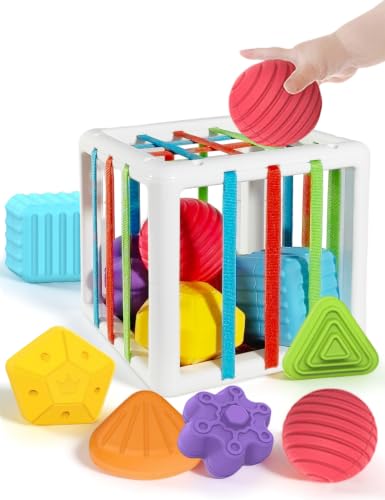
These toys ask the child to think: to fit, sort, match, or sequence. Simple shape sorters, nesting cups, and beginner puzzles with large knobs are classic entry points. As your toddler approaches two, toys that require two-step reasoning — such as a box that must be opened before a ball can be retrieved — become increasingly valuable. Look for designs with clear visual cues and forgiving tolerances so early attempts succeed often enough to build confidence.
2. Fine-Motor & Manipulative Toys
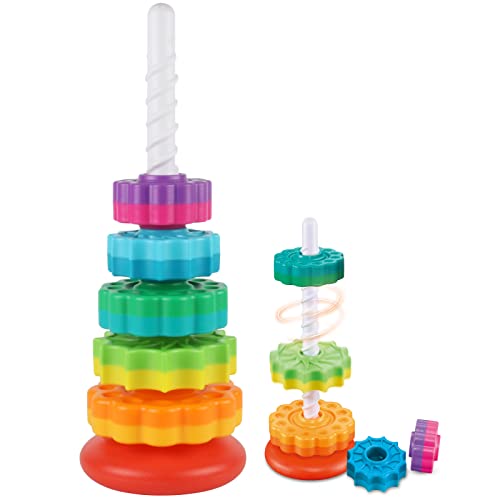
Stacking rings, chunky peg boards, and large bead mazes all demand precise hand control. For the younger end of this range, oversized blocks that are easy to grip are ideal; by eighteen months, smaller blocks and simple threading activities become achievable. Durability matters here — these toys take a lot of dropping and chewing. A solid build with rounded edges and non-toxic finishes is the standard to expect from any reputable brand.
3. Sensory & Exploratory Toys
Toddlers learn through their senses. Textured balls, water-play sets, sand toys, and musical instruments (drums, tambourines, xylophones) all provide rich sensory input. Sensory play also supports emotional regulation — the repetitive motion of scooping or pouring can be calming. When choosing sensory toys, prioritise easy-to-clean materials and avoid small parts that could become a choking hazard.
4. Language & Social Toys
Board books with realistic images, toy phones, and simple hand puppets all create opportunities for conversation. At this age, the toy is less important than the interaction it sparks — a parent naming objects, asking questions, and responding to babbling is what drives language growth. Look for toys with clear, realistic depictions rather than abstract or overly stylised designs.
5. Gross-Motor & Active Toys
Push-and-pull toys, low ride-on vehicles, and soft play blocks encourage walking, balancing, and coordination. These are especially valuable between twelve and eighteen months as your toddler transitions from cruising to confident walking. Choose stable designs with a low centre of gravity; a wobbly ride-on is a frustration, not a challenge.
Understanding Toy Quality Tiers
Toys for this age group span a wide range of construction quality. Rather than focusing on any numeric figure, it helps to understand where a product sits within the market. The classification below uses neutral, relative descriptors that remain useful regardless of currency or region.
| Tier | Typical Characteristics | Best For |
|---|---|---|
| Entry-level | Basic materials, simpler mechanisms, fewer included pieces. Adequate for short-term use or occasional play. | Parents testing whether a toy category holds their child's interest before committing further. |
| Mid-range | Solid build, smoother mechanisms, thoughtful design details, safer finishes. A reliable everyday choice. | The majority of families seeking a dependable balance of durability and developmental value. |
| Premium | Premium materials (hardwood, high-grade plastic), refined mechanisms, often designed to grow with the child across multiple stages. | Parents who prefer fewer, longer-lasting toys and value longevity over quantity. |
| Luxury / flagship | Exceptional craftsmanship, heirloom potential, often from specialist or heritage manufacturers. May include curated play sets. | Gift-givers or families building a long-term toy collection intended to be passed down. |
A mid-range toy from a reputable brand often delivers the most practical balance: the mechanisms are smoother and safer than entry-level options, yet the construction is robust enough to survive daily toddler use. Premium and luxury tiers are worthwhile when the toy is intended as a long-term investment or a meaningful gift.
The Best Toy Categories for 1–2 Year Olds
Rather than chasing individual products, it is more useful to build a collection across a few proven categories. Each of the following has a strong developmental rationale and a wide range of options across quality tiers.
Shape Sorters & Nesting Toys
Teach size relationships, matching, and trial-and-error reasoning. Look for smooth edges and a lid that is easy for small hands to open. A mid-range wooden sorter typically outlasts a basic plastic version.
Stacking Blocks & Rings
Build hand-eye coordination and early understanding of balance. Soft blocks suit the younger end; wooden blocks with painted edges suit toddlers approaching two. Check that finishes are non-toxic.
Musical Instruments
Drums, shakers, and simple xylophones support rhythm awareness, cause-and-effect learning, and auditory discrimination. Choose instruments with rounded edges and a volume level that will not overwhelm.
Board Books & First Word Toys
Sturdy board books with realistic images are among the highest-value developmental tools available. Pair them with simple labelling toys (animal sets, vehicle sets) to reinforce vocabulary through play.
Push & Pull Toys
Encourage walking, turning, and spatial awareness. A sturdy push-along walker with adjustable resistance is a worthwhile mid-range choice for the early walking stage.
Large Crayons & First Art Supplies
Chunky, washable crayons and large sheets of paper introduce mark-making, which supports fine-motor control and early self-expression. Prioritise non-toxic, washable formulations.
Safety Checklist Before You Buy
The 1–2 year age group remains firmly in the mouthing phase, so safety is non-negotiable. Run through this checklist for every toy you consider:
- Choking hazards: Avoid any part small enough to fit inside a toilet-paper tube. Check that eyes, buttons, and small components are firmly attached.
- Non-toxic finishes: Painted wooden toys should use water-based, child-safe paints. Look for reputable safety certifications on the packaging.
- Rounded edges and no sharp points: Run a finger along every edge before handing a toy to your child.
- No long cords or strings: Strangulation risk remains a concern; avoid toys with cords longer than roughly seven inches.
- Sturdy construction: A toy that breaks easily can create sharp fragments. Heavy-duty construction and reinforced joints are worth prioritising.
- Age labelling: Always follow the manufacturer's age guidance. A toy labelled for three-plus is not appropriate for a toddler, regardless of how advanced your child seems.
How to Choose: A Practical Framework
With so many options, it helps to have a simple decision process. The framework below keeps the focus on developmental value and long-term usefulness rather than novelty.
- Match the toy to the current stage, not the birthday: A child who is not yet walking will get little from a ride-on toy; a confident walker may be bored by a stationary activity centre. Observe what your toddler is attempting now.
- Favour open-ended over scripted: A set of blocks will be used in dozens of ways; a toy with a single button and a single sound will be abandoned quickly.
- Buy fewer, better toys: A small collection of well-made, versatile toys supports deeper play than a large pile of single-purpose items. This also makes tidying easier — see our guide to toy storage solutions for small spaces if space is tight.
- Check for growth potential: A toy that adapts as the child develops (for example, a stacking toy that later becomes a sorting game) offers far more value than one that is outgrown in weeks.
- Consider the play environment: If you have a small living area, compact and stackable toys are more practical. Our guide to toy storage for the living room covers practical options.
Ready to Build a Brain-Boosting Toy Collection?
Explore our curated selection of developmentally appropriate toys for 1–2 year olds, chosen for construction quality, safety, and genuine cognitive value.
View Recommended ToysFrequently Asked Questions
How many toys does a 1–2 year old actually need?
A small, rotating collection of eight to twelve versatile toys is generally more beneficial than a large pile. Too many options can overwhelm a toddler and reduce sustained play. Rotate a subset every week or two to keep engagement high without accumulating clutter.
Are electronic toys bad for brain development?
Not inherently, but they are less valuable than open-ended toys when they do all the playing for the child. A toy that lights up and plays a song in response to a single button press teaches cause-and-effect, but it does not invite problem-solving. Use electronic toys sparingly and prioritise toys that require the child to act, build, or imagine.
What is the single most valuable toy category for this age?
If forced to choose one, board books and simple blocks consistently rank highest among child-development specialists. Both are open-ended, support language and spatial reasoning, and grow with the child across many months. They also require adult interaction, which is the strongest driver of early brain development.
Should I buy toys labelled for older children if my toddler seems advanced?
No. Age labels exist primarily for safety reasons, not developmental ones. A toy labelled for three-plus may contain small parts that are a choking hazard for a child under three. If your toddler seems ready for more challenge, look for toys within the correct age band that offer greater complexity rather than moving up an age category.
How do I know if a toy is well-made?
Check the joints and connections, feel the weight (a surprisingly light toy often signals thin materials), inspect the finish for evenness, and look for safety certification marks on the packaging. A mid-range toy from an established brand usually offers the most reliable balance of durability and thoughtful design.
Can toys really influence brain development?
Toys are tools, not magic. Their value comes from the play they enable — the grasping, stacking, naming, and experimenting that build neural pathways. A well-chosen toy paired with an engaged adult is a powerful combination; the same toy left alone in a corner is not. The toy matters, but the interaction matters more.