Toy Storage Solutions for Small Spaces
Smart, space-saving ideas to keep toys organized, accessible, and out of the way in compact nurseries, apartments, and playrooms.
Explore Storage IdeasWhy small-space toy storage matters: In compact homes, toys can quickly take over every available surface. The right storage strategy transforms chaos into calm, protects your little one's play area, and makes cleanup effortless. This guide walks you through practical, space-conscious solutions that fit real nurseries and apartments.
If you live in an apartment, a compact home, or a nursery with limited floor area, you already know the struggle: toys multiply faster than storage space appears. The key is not buying more bins — it is choosing the right types of storage that work with your walls, your furniture, and your daily routine. In this guide, we break down the most effective toy storage solutions for small spaces, from vertical shelving and under-crib organizers to multi-functional furniture and rotating toy systems.
Whether you are setting up a first nursery or rethinking a play corner, the strategies below focus on maximizing every square foot without sacrificing accessibility. After all, storage is only useful if your child can reach their favorite toys and help put them away. For a broader look at organizing the entire home, you may also want to explore toy storage solutions for the living room, which pairs well with the small-space ideas covered here.
Key Principles of Small-Space Toy Storage
Before choosing specific products, understand the four principles that make small-space storage work: go vertical, stay multi-functional, rotate what is visible, and label everything. These principles guide every recommendation in this guide and help you make smarter choices no matter which storage tier you choose.
- Go vertical: Use wall height instead of floor area. Wall-mounted shelves, hanging organizers, and tall narrow units multiply storage without eating up play space.
- Stay multi-functional: Choose furniture that doubles as storage — benches with hidden compartments, storage ottomans, and toy chests that double as seating.
- Rotate and limit: Keep only a few toys accessible at a time. Rotating toys reduces visual clutter and makes small spaces feel larger.
- Label and categorize: Clear or labeled bins help children learn where things belong and make quick tidy-ups realistic.
Top Toy Storage Solutions for Small Spaces
The following storage solutions are ranked by how well they perform in compact environments. Each option includes a market-tier descriptor so you can quickly understand where it sits in the category.
Stackable Fabric Bins
Lightweight, collapsible, and easy to move, fabric bins are the workhorse of small-space toy storage. They fit into cubby shelving, under cribs, and inside closets. Choose bins with reinforced handles and a structured rim so they hold their shape when full.
Best for: quick daily toy rotation and lightweight items like stuffed animals and blocks.
Vertical Cubby Shelving
A tall, narrow cubby unit uses wall height instead of floor space. Look for units with adjustable or fixed compartments sized to standard fabric bins. Anchoring to the wall is essential for safety in nurseries and playrooms.
Best for: categorizing toys by type and keeping the most-used items at child height.
Under-Crib Storage Bags
The space beneath a crib is often wasted. Flat, low-profile storage bags or rolling under-bed bins slide neatly beneath the crib frame and hold out-of-season toys, extra bedding, or larger items that do not need daily access.
Best for: off-season toy storage and bulkier items in tight nurseries.
Multi-Functional Storage Benches
A storage bench with a lift-up lid or deep drawers serves double duty as seating and concealed toy storage. In small living spaces, this replaces both a toy box and a chair, freeing up floor area.
Best for: play corners that need seating and hidden storage in one footprint.
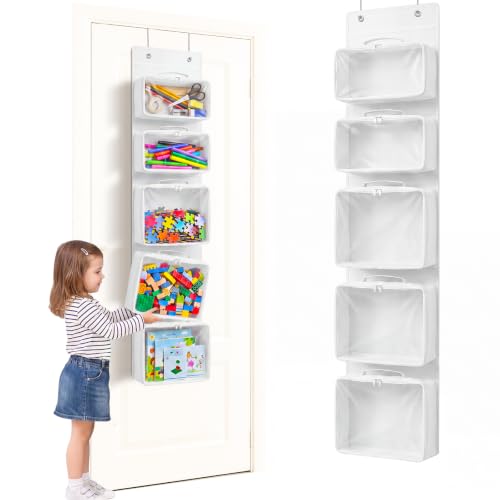
Hanging Wall Organizers
Over-the-door or wall-mounted hanging organizers with multiple pockets keep small toys, art supplies, and stuffed animals off the floor. They are especially useful on the back of a nursery door or the side of a closet.
Best for: small toys, craft supplies, and items that need to stay visible but contained.
Convertible Toy Storage with Bookshelf
Combined toy storage and bookshelf units offer the most storage per square foot. Shelves display books and larger toys while lower bins hold loose pieces. Choose units with a small footprint and a sturdy back panel for stability.
Best for: compact nurseries that need both book display and toy containment.
Pro tip: Measure your space before buying. A tall narrow unit that fits a 20-inch wall segment often stores more than a wide low unit that blocks the play area. Also check that bins and drawers slide out fully without hitting furniture or walls.
Storage Solutions Compared by Tier
Use this comparison to match a storage type to your room, your child's age, and your organizational style. Descriptors reflect market position, not numeric values.
| Storage Type | Tier | Footprint | Best For |
|---|---|---|---|
| Stackable Fabric Bins | Essential Tier | Minimal | Quick rotation and lightweight toys |
| Vertical Cubby Shelving | Mid-Range | Small (vertical) | Categorized toy storage at child height |
| Under-Crib Storage Bags | Mid-Range | Zero (uses dead space) | Off-season and bulky toy storage |
| Storage Benches | High-End Tier | Moderate (dual-use) | Seating plus hidden storage |
| Hanging Wall Organizers | Essential Tier | Zero (wall-mounted) | Small toys and craft supplies |
| Convertible Storage + Bookshelf | Top-Tier | Small (combined use) | Books and toys in one compact unit |
A Step-by-Step Setup Playbook
Follow this sequence to build a small-space storage system that actually works day to day.
- Audit and declutter: Empty every bin and sort toys into keep, rotate, and donate piles. Fewer toys make every storage solution more effective.
- Measure walls and floor: Note door swing paths, outlet locations, and window clearance. Vertical storage works best on walls without obstructions.
- Choose a primary unit: Pick one vertical cubby or convertible shelf as the backbone of the system, then add smaller bins and organizers around it.
- Label by category: Use picture labels for pre-readers and text labels for older children. Consistent categories make tidy-up a five-minute task.
- Set up a rotation bin: Store out-of-cycle toys in under-crib bags or closet bins and swap them monthly to keep engagement high.
- Anchor everything: Secure all shelving and tall units to wall studs, and keep heavy items on lower shelves.
Safety reminder: Wall-mounted storage must be anchored into studs using appropriate hardware. Keep small parts and bins with choking hazards out of reach for children under three, and check manufacturer weight limits before loading shelves.
Related Organization Guides
Small-space storage is part of a larger nursery organization plan. These guides complement the ideas above and help you build a cohesive, clutter-free home for your growing family.
- Toy storage essentials: choosing the right bins, shelves, and organizers — a foundational overview before you commit to a small-space layout.
- Toy storage with bookshelf: combined units for reading and play — ideal if your nursery doubles as a reading corner.
- Toy storage solutions for the living room — keep shared family spaces tidy while toys stay accessible.
- Nursery rocking chair for small spaces — pair compact seating with your storage layout for a complete small-nursery setup.
Ready to Reclaim Your Floor Space?
Browse our recommended toy storage products below and compare features side by side. Every option is selected for compact spaces, durability, and everyday usability.
View Recommended ProductsFrequently Asked Questions
How do I store toys in a small apartment?
Use vertical storage like wall-mounted shelves and hanging organizers, choose collapsible or stackable bins, and adopt a rotating toy system where only a few toys are accessible at a time. Multi-functional furniture such as storage ottomans and benches with hidden compartments also helps maximize limited floor area.
What is the best toy storage for a small nursery?
The best options combine vertical shelving with labeled fabric bins, under-crib storage bags, and a compact toy storage unit that doubles as a bookshelf. Look for pieces with a small footprint that offer multiple compartments so you can categorize toys efficiently without overwhelming the room.
How can I keep toy storage organized in a small space?
Sort toys into categories, use clear or labeled bins, limit the number of toys available at once by rotating them, and dedicate a quick daily tidy-up routine. Choose open shelving for frequently used items and closed storage for infrequently used toys to reduce visual clutter.
Are wall-mounted toy storage solutions safe for nurseries?
Yes, when properly installed. Always anchor wall shelves and units securely into wall studs using appropriate hardware, keep heavy items on lower shelves, and ensure mounted storage is out of reach of younger babies. Follow the manufacturer's weight limits and installation instructions carefully.