
Toys for Infants 3-6 Months: Complete Buying Guide
Your baby is discovering the world through tiny hands and curious eyes. Learn which toys truly support development at this magical stage — and how to choose safely and confidently.
Why the Right Toys Matter at 3-6 Months
The 3-to-6-month window is a period of remarkable transformation. Your baby is transitioning from reflexive movements to intentional reaching, from blurred vision to sharp visual tracking, and from passive observation to active exploration. During these months, toys are not merely entertainment — they are developmental tools that shape how your baby understands cause and effect, practices hand-eye coordination, and builds the foundation for language and problem-solving.
Unlike the newborn stage, where your baby was mostly a observer, a 3-6 month old is now grabbing, mouthing, batting, and transferring objects between hands. This is the prime time to introduce toys that reward their curiosity with sounds, textures, and movement. A well-chosen rattle or a textured teething ring does more than occupy your baby — it teaches them that their actions produce results, a concept that underpins all future learning.
Key Insight: At this age, simpler is often better. Open-ended toys that respond to your baby's actions — rather than toys that entertain passively — build stronger neural connections and sustain attention longer. Research in early childhood development consistently shows that active, child-directed play outperforms passive, battery-driven entertainment for cognitive and motor growth.
Developmental Milestones: What Your 3-6 Month Old Is Learning
Understanding what your baby is working on helps you choose toys that match their current abilities while gently stretching them toward the next milestone. Here is a snapshot of the key developmental shifts during this period:
| Milestone Area | What's Happening | Toys That Support It |
|---|---|---|
| Visual Tracking | Baby follows moving objects with their eyes, distinguishes colors, and shows preference for faces and high-contrast patterns. | High-contrast rattles, mobile with slow movement, soft books with bold patterns |
| Grasping & Reaching | Intentional reaching begins around 3-4 months; by 5-6 months, babies grasp, hold, and transfer objects between hands. | Lightweight rattles, easy-grip rings, soft blocks, textured balls |
| Tummy Time & Head Control | Baby pushes up on forearms, lifts head, and begins to roll. Tummy time strengthens neck, shoulder, and core muscles. | Mirror toys, crinkle books for floor play, activity gym with dangling toys |
| Mouthing & Teething | Gums are preparing for teeth; babies explore everything by mouth. Chewing provides relief and sensory feedback. | BPA-free teething rings, textured silicone toys, chilled (not frozen) teethers |
| Cause & Effect | Baby discovers that shaking a rattle makes noise, batting a toy makes it move, and dropping things makes you pick them up. | Rattles, squeaky toys, toys with mirrors, soft blocks that can be knocked over |
| Sitting & Bouncing | By 5-6 months, many babies can sit with support and enjoy bouncing or kicking their legs against surfaces. | Floor gyms, soft activity centers, kick-and-play toys |
Pro Tip: Every baby develops at their own pace. These milestones are general guides, not strict deadlines. If you have concerns about your baby's development, consult your pediatrician. Toys should always be chosen to meet your baby where they are — not where a chart says they should be.
The Best Toy Categories for Infants 3-6 Months
Rather than recommending specific products, it helps to understand the categories of toys that consistently support development at this age. Each category below serves a distinct developmental purpose, and a well-rounded toy collection typically includes a mix of these types.
Rattles & Handheld Shakers
The classic first toy. Rattles teach cause and effect, encourage grasping, and provide auditory feedback. Look for lightweight designs with easy-to-grip handles and gentle (not harsh) sounds. High-contrast colors and textured surfaces add sensory value.
Teething Toys & Chew Rings
At 3-6 months, mouthing is a primary way babies explore. Safe teething toys provide relief for sore gums and satisfy the oral sensory drive. Choose BPA-free, phthalate-free materials with varied textures and shapes that are easy for small hands to hold.
Soft Books & Crinkle Toys
Soft, wipeable books with bold patterns and crinkle pages engage visual tracking, encourage tummy time, and introduce the concept of turning pages. Crinkle sounds are especially rewarding for babies learning cause and effect.
Activity Gyms & Play Mats
An activity gym with dangling toys encourages reaching, kicking, and visual tracking. Look for models with adjustable arches and a mix of hanging elements (mirrors, rattles, crinkle toys). Floor play is critical for motor development at this stage.
Textured Balls & Sensory Toys
Balls with ridges, bumps, and varied textures stimulate tactile processing and encourage two-handed play. Soft balls that are easy to grasp and roll are ideal for babies learning to transfer objects and track movement.
Mirror Toys
Babies are fascinated by faces — especially their own. Baby-safe mirrors (unbreakable, with rounded edges) support self-recognition, tummy time engagement, and visual tracking. Many activity gyms include a hanging mirror, but standalone mirror toys are also excellent.
Musical & Sound Toys
Simple musical toys — such as soft chime balls or toys that play a gentle melody when batted — introduce cause and effect while engaging auditory processing. Keep sounds soft and non-repetitive to avoid overstimulation. Avoid toys with loud, electronic sounds that can overwhelm a baby's sensitive hearing.
Wooden & Heirloom Toys
High-quality wooden rattles and teethers offer a natural, durable alternative to plastic. Look for smooth-sanded, splinter-free surfaces finished with baby-safe, non-toxic paints or oils. These toys often become keepsakes and are valued for their craftsmanship and longevity.
When building your collection, aim for variety across categories rather than multiples within one category. A baby who has one excellent rattle, one textured teether, one soft book, and one activity gym has more developmental variety than a baby with ten rattles and nothing else.
Toy Safety Checklist for Babies 3-6 Months
Because babies at this age put virtually everything into their mouths, safety is non-negotiable. Use this checklist every time you introduce a new toy:
Before You Buy
- No small parts: Avoid toys with buttons, beads, or components that could detach. Use a small-parts tester (or a toilet paper roll) — if an object fits entirely inside, it is a choking hazard.
- No long strings or cords: Anything longer than 7 inches poses a strangulation risk. This includes toy straps, ribbons, and cords on hanging toys.
- Non-toxic materials: Look for toys labeled BPA-free, phthalate-free, lead-free, and CPSIA-compliant (or EN71 for Europe). Babies mouth everything, so material safety is critical.
- Age-appropriate labeling: Choose toys labeled for "3+ months" or "0+ months." Avoid toys labeled for older children, even if they seem harmless.
- No sharp edges or points: Run your fingers along all surfaces. Wooden toys should be smooth-sanded; plastic toys should have no rough seams or mold lines.
During Use
- Always supervise: Never leave your baby alone with a toy, even for a moment. Active supervision is the single most important safety measure.
- Inspect regularly: Check toys for wear, loose parts, cracks, or deterioration. Discard damaged toys immediately.
- Keep it clean: Wash and sanitize toys regularly, especially teethers and anything that goes into your baby's mouth. Follow the manufacturer's cleaning instructions.
- Avoid batteries: Battery-operated toys can overheat or leak. At this age, passive mechanical toys (rattles, squeakers, crinkle toys) are safer and more developmentally appropriate.
Safety Standard Reference: In the United States, toys should meet ASTM F963 (Standard Consumer Safety Specification for Toy Safety). In Europe, look for the CE mark and EN71 compliance. These standards cover mechanical hazards, flammability, and heavy metal content. When in doubt, choose toys from reputable brands that clearly state their safety certifications.
How to Choose the Right Toys: A Practical Framework
With so many options on the market, it helps to have a simple decision-making framework. Use the following criteria to evaluate any toy you are considering:
1. Match the Toy to Your Baby's Current Skills
A toy that is too advanced will frustrate your baby; a toy that is too simple will bore them. At 3-4 months, prioritize toys that are easy to grasp and mouth. By 5-6 months, introduce toys that encourage transferring between hands, sitting play, and more complex cause-and-effect exploration.
2. Prioritize Active Over Passive Play
The best toys require your baby to do something — shake, grasp, mouth, bat, or drop. Passive toys (those that entertain with lights and sounds without any input from your baby) do not build the same neural pathways. Choose toys that respond to your baby's actions and leave room for imagination.
3. Less Is More
A curated collection of 8-12 high-quality toys is better than a bin overflowing with options. Too many toys can overwhelm a baby and shorten attention spans. Rotate toys every few days — keeping a few out and storing the rest — to keep engagement high and novelty fresh.
4. Consider Material and Durability
Toys for this age take a beating — they get mouthed, dropped, thrown, and washed. Choose materials that hold up: food-grade silicone, hard wood with non-toxic finishes, and high-quality plastics that resist cracking. Avoid toys with fabric that cannot be washed or materials that deteriorate quickly.
5. Look for Longevity
Some toys grow with your baby. A simple set of soft blocks, for example, can be mouthed at 4 months, stacked at 9 months, and used for color recognition at 18 months. Investing in a few versatile, open-ended toys often provides more long-term value than buying many single-purpose items.
Ready to explore top-rated toys for your 3-6 month old?
View Recommended Toys6. Think About Storage and Travel
Toys that are easy to store and transport get used more often. Consider a small toy basket for the living room and a few compact toys for the diaper bag. If you are looking for organization ideas, explore toy storage solutions for small spaces and toy storage for the living room.
Recommended Toys for Infants 3-6 Months
⚠️ AFFILIATE DISCLOSURE: This website contains affiliate links. As an Amazon Associate, we earn from qualifying purchases. If you make a purchase through these links, we may receive a small commission at no additional cost to you. Read our full affiliate policy.

Baby Toys 0-6 Months Musical Stuffed Caterpillar Newborn Tummy Time Toys | Sensory Toys with Mirror Crinkle Rattle for Infants 0-3 3-6 2 3 4 5 6-12 Months Old Babies Boy Girl Shower Gifts Essentials
Check price on Amazon
Baby Montessori Sensory Teething Toy 0-6 6-12 Months, Teether Ball & Rattle | 12 Textured Silicone Teething Ball, BPA Free, Easy to Hold, Infant Developmental Toys for 3 6 9 12 Months, Newborn Gifts
Check price on Amazon
Nuby Ice Gel Teether Keys for Babies, Soft Teething Toy, Blue, 3M+ | Cooling Teethers for Infants, Easy-Hold Textured Teething Toy, Textured for Teething
Check price on Amazon
Baby Girl Toys 0-6 Months: Musical Light Up Tummy Time Ocean Rotating Toy | Babies Music Toys 3 4 5 6-12 Month - Infant Aquarium Crawling Toy for 1 Year Old Baby Girls Birthday Newborn Shower Gifts
Check price on Amazon
Yeeeasy Tummy Time Water Mat丨Inflatable Tummy Time Water Play Mat for Babies, Infants and Toddlers 3 to 24 Months Promote Development Toys Baby Toys essentials and Gifts
Check price on Amazon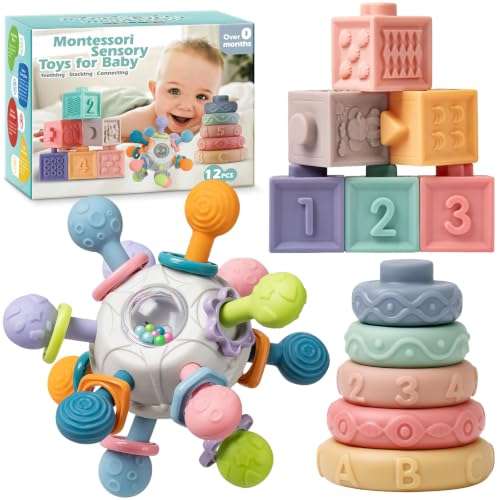
Baby Sensory Teething Toys Set, Montessori Baby Toys 6-12 Months, Incl Newborn Rattle Teether & Baby Blocks & Soft Stacking Rings, Ideal Babies Boy Girl Gifts, Infant Toys 0-3-6-9-12-18 Month
Check price on Amazon
Baby Sensory Toys 0-6 Months Musical Tummy Time Stuffed Plush Flip Fish Toy | High Contrast Newborn Toy 0-3-6-12 Month with Mirror Crinkle Rattle for 2 3 4 5 6 Month Infant Girl Boy Christmas Shower Gift
Check price on Amazon
hahaland Baby Toys 6-12 Months - Surprise Barn Stuffed Farm Animals Plush | Baby Gifts Christmas Stocking Stuffers 6 Month Old Montessori Toys with Rattle, Crinkle, Texures, Mirror Infant Sensory Balls
Check price on AmazonFrequently Asked Questions
What toys are best for infants 3-6 months?
The best toys for infants 3-6 months support sensory exploration, grasping, and tummy time. High-contrast rattles, soft teething rings, textured balls, crinkle books, and activity gyms with hanging toys are all excellent choices. These promote visual tracking, hand-eye coordination, and motor development. Focus on simple, open-ended toys that respond to your baby's actions rather than battery-operated toys that entertain passively.
How many toys does a 3-6 month old need?
A 3-6 month old does not need many toys. A curated selection of 8-12 developmentally appropriate toys is sufficient. Focus on variety in texture, sound, and visual stimulation rather than quantity. Rotate toys every few days — keeping a few out and storing the rest — to maintain engagement and prevent overstimulation. Too many toys can overwhelm a baby and shorten attention spans.
Are electronic toys good for 3-6 month olds?
Passive electronic toys that do all the work for your baby are less beneficial than simple, open-ended toys. At 3-6 months, babies learn best through active exploration. Choose toys that respond to your baby's actions — such as rattles, squeakers, and textured objects — rather than battery-operated toys that entertain passively. If you do choose electronic toys, look for models with soft sounds and simple, predictable responses to your baby's input.
What safety features should I look for in toys for 3-6 month olds?
Since babies at this age put everything in their mouths, ensure toys are free of small parts, have no sharp edges, and are made from non-toxic materials. Avoid toys with long strings or cords longer than 7 inches. Check for choke hazards using a small-parts tester. Look for toys labeled as BPA-free, phthalate-free, and meeting ASTM F963 or EN71 safety standards. Always supervise your baby during play and inspect toys regularly for wear and damage.
How do toys help a 3-6 month old's development?
Toys at this stage support several developmental milestones: visual tracking (following moving objects), hand-eye coordination (reaching and grasping), gross motor skills (tummy time and rolling), fine motor skills (transferring objects between hands), and sensory processing (textures, sounds, and colors). They also lay the foundation for cause-and-effect understanding — the idea that actions produce results. This is a critical cognitive milestone that underpins problem-solving and early language development.
Should I avoid toys made in certain countries?
What matters most is not the country of origin but whether the toy meets recognized safety standards. Look for toys that clearly state compliance with ASTM F963 (US), EN71 (Europe), or other equivalent safety certifications. Reputable brands — regardless of where they manufacture — test their products against these standards. If a toy lacks safety labeling or comes from an unknown brand with no certification information, it is best to avoid it.
When should I introduce a lovey or stuffed animal?
The American Academy of Pediatrics recommends keeping soft objects, including stuffed animals and loveys, out of the crib until your baby is at least 12 months old to reduce the risk of SIDS. However, a small lovey can be introduced during supervised playtime starting around 6 months, once your baby can sit up and has good head control. Always supervise, and never place a lovey in the sleep environment before 12 months.
Final Thoughts: Building a Thoughtful Toy Collection
The toys you choose for your 3-6 month old do more than fill playtime — they shape how your baby learns about the world. By focusing on a small number of high-quality, developmentally appropriate toys, you create an environment that encourages curiosity, builds motor skills, and supports the critical cognitive leaps happening during this period.
Remember that you are your baby's first and best toy. Your voice, your face, and your interaction are far more stimulating than any object. Toys are tools that facilitate connection and exploration — not replacements for human engagement. The best play sessions are the ones where you are down on the floor with your baby, narrating what they are doing, celebrating their discoveries, and following their lead.
For more guidance on supporting your baby's growth, explore our parenting and development guides, including toys for brain development in 1-2 year olds and first birthday gift ideas. If you are also preparing for the next stage, see our newborn must-haves checklist and sleep bag guide.