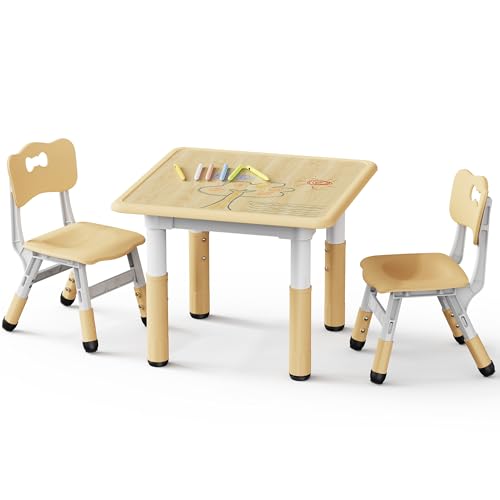
Children's Rectangular Table and Chairs: A Complete Buying Guide
Everything you need to know before choosing a children's rectangular table and chairs set — from sizing and materials to safety features and design styles that grow with your child.
EXPLORE RECOMMENDED SETSWhy a rectangular table and chairs set matters: A dedicated children's table and chairs gives your child a sense of ownership over their own space. It becomes a hub for art projects, snack time, puzzles, and early learning. Unlike adult furniture scaled down, a properly sized children's rectangular table and chairs set supports healthy posture, independence, and creativity — all while fitting neatly into playrooms, bedrooms, or shared living areas.
Sizing Your Children's Rectangular Table and Chairs
Getting the proportions right is the single most important factor in choosing a children's rectangular table and chairs set. A table that is too tall forces your child to dangle their feet, while a table that is too low can cause slouching and discomfort. The goal is simple: when your child sits, their feet should rest flat on the floor and their elbows should bend comfortably at table height.
Most children's rectangular tables fall into a few common size categories. A compact two-seat table typically measures around 30 inches long and 20 inches wide, making it ideal for toddlers and small bedrooms. A four-seat rectangular table usually runs 36 to 48 inches long and 24 inches wide, which suits preschoolers and early elementary-age children. For families with multiple children or frequent playdates, a six-seat configuration offers the most versatility and can serve as a shared activity station.
- Toddler height (ages 1–3): Table height around 18–20 inches, chair seat height around 10–12 inches. Look for sets with rounded edges and wide bases for stability.
- Preschool height (ages 3–5): Table height around 20–22 inches, chair seat height around 12–14 inches. This is the most common size range for children's rectangular table and chairs sets.
- Early elementary (ages 5–8): Table height around 22–24 inches, chair seat height around 14–16 inches. These sets often bridge the gap between play furniture and a homework station.
If you are short on floor space, consider a set that nests or folds. You can also explore storage solutions that keep chairs tucked away when the table is not in use. For rooms shared with other furniture, our guide to toy storage organizers with bookshelves can help you plan a cohesive play area.
Materials and Construction: What to Look For
The material of your children's rectangular table and chairs set determines not only how it looks but also how well it survives daily use. Children are naturally rough on furniture — spills, crayon marks, and the occasional tumble are part of the deal. Choosing the right construction is the key to a set that lasts through multiple growth stages.
Solid wood remains the gold standard for durability and longevity. Hardwoods like birch, maple, and rubberwood offer excellent strength and a timeless look. A water-based, low-VOC finish keeps the surface safe for little hands and easy to wipe clean. Birch plywood is a strong mid-tier option that balances durability with a lighter weight, making it easier to move around during room rearrangements.
High-density polyethylene (HDPE) is a popular choice for outdoor or messy-play setups. It is weather-resistant, rust-proof, and simple to hose down. For indoor use, laminated MDF offers a smooth, easy-to-clean surface at an entry-level position in the market, though it may not withstand heavy impacts as well as solid wood.
- Solid wood (premium tier): Best for long-term use, heirloom quality, and a natural aesthetic. Look for reinforced joinery and non-toxic finishes.
- Birch plywood (mid-tier): A balanced choice with good strength-to-weight ratio. Often used in modern, minimalist designs.
- HDPE plastic (essential tier): Ideal for toddlers, outdoor play, and easy cleaning. Weather-resistant and lightweight.
- Laminated MDF (entry-level): A solid choice for light indoor use. Check for sealed edges to prevent moisture damage.
Regardless of material, always check for rounded corners, smooth sanded edges, and sturdy leg joints. Chairs should have a wide base to prevent tipping, and tables should feel solid without wobbling when leaned on. If your child is still in a high chair or booster, our guides to a booster seat for counter-height tables and a booster seat for restaurants can help you transition smoothly.
Safety Features That Matter
Safety should never be an afterthought when selecting a children's rectangular table and chairs set. The best sets are designed with stability, non-toxic materials, and child-friendly geometry in mind. Here are the features to prioritize:
- Rounded edges and corners: Sharp corners are a common source of bumps and bruises. Look for sets where every edge has been softened or rounded.
- Non-slip feet: Rubber or felt pads on chair legs and table feet prevent sliding on hardwood and tile floors, reducing falls.
- Sturdy joinery: Screws, bolts, and dowels should be recessed and secure. Avoid sets with exposed hardware that little fingers can reach.
- Non-toxic finishes: Choose water-based paints, low-VOC stains, and finishes that meet safety standards for children's furniture. Avoid any set with a strong chemical odor.
- Weight-tested construction: Chairs should be rated for the weight of an adult if possible, ensuring they can handle energetic play and occasional adult use.
- Anti-tip design: Chairs with a wide stance and a low center of gravity are less likely to tip backward when a child leans or climbs.
If your play area is near stairs or uneven flooring, consider pairing your table set with a baby gate for stairs or a standard baby gate to keep the space contained and safe during active play.
Design Styles and Room Integration
A children's rectangular table and chairs set does not have to look out of place in a thoughtfully designed home. Modern manufacturers offer a wide range of aesthetics, from natural wood tones that blend seamlessly with living room furniture to bright, playful colors that energize a playroom.
If your home leans toward a calm, neutral palette, consider a set in natural birch or whitewashed wood. These tones pair well with gender-neutral nursery themes and can transition from nursery to big-kid room without feeling out of date. For a more whimsical playroom, a boho nursery aesthetic works beautifully with rattan or cane-backed chairs and a warm wood table.
Think about how the set will be used. A table dedicated to art and crafts benefits from a wipe-clean surface and a set of chairs with a slightly higher back for support. A table used primarily for snacks and meals might prioritize easy-to-clean materials and a compact footprint. If the table will double as a homework station, look for a mid-tier or premium set with a larger surface area and chairs that offer good lumbar support.
For families planning a full room refresh, our guides to changing table ideas for small spaces and nursery recliner glider swivel chairs can help you coordinate the rest of the room around your new table set.
Comparing Tiers: Which Set Fits Your Needs?
To make your decision easier, we have organized the market into three broad tiers based on construction quality, material, and intended use. This framework helps you match a set to your child's age, your space, and your long-term plans — without relying on numeric figures.
| Tier | Best For | Typical Materials | Key Characteristics |
|---|---|---|---|
| Essential Tier | Toddlers, light indoor use, first table set | HDPE plastic, laminated MDF | Lightweight, easy to clean, rounded edges, simple assembly. A solid choice for the early years. |
| Balanced Tier | Preschoolers and early elementary, daily use | Birch plywood, rubberwood, mixed materials | Stronger joinery, better stability, more refined finishes. A good value for its class with room to grow. |
| Premium Tier | Long-term use, design-conscious homes, heirloom potential | Solid hardwood, premium non-toxic finishes | Heavy-duty construction, reinforced joints, timeless design. A worthwhile investment that can be passed down. |
Within each tier, you will find sets with different features — some prioritize portability, others focus on storage or extendability. The right choice depends on how you plan to use the table and how long you expect it to serve your family.
Care and Maintenance Tips
Keeping your children's rectangular table and chairs set in good condition is straightforward with a few simple habits. Wipe down surfaces after meals and art sessions with a damp cloth and mild soap. For wooden sets, avoid soaking the surface and dry immediately to prevent water rings. Plastic and laminated surfaces can handle a gentle all-purpose cleaner, but steer clear of abrasive pads that can scratch the finish.
Check the hardware every few months. Tighten any loose screws or bolts, and inspect leg joints for wobbling. If a chair starts to feel unstable, address it right away — stability is the foundation of safe use. For wooden furniture, a light application of child-safe wood conditioner once or twice a year helps prevent drying and cracking, especially in dry climates.
If your child is transitioning from a high chair to a table set, you may find our guide to baby spoons and baby spoons helpful for mealtime readiness. And when the table set is ready for a refresh, consider pairing it with a toy storage organizer with bookshelf to keep the play area tidy and inviting.
Frequently Asked Questions
What size rectangular table is best for children?
A standard children's rectangular table typically measures around 30 to 36 inches in length and 20 to 24 inches in width, seating two to four children comfortably. For larger families or playgroups, consider a longer table that accommodates four to six children. The table height should align with the chair seat height so your child's feet rest flat on the floor while seated.
What materials are safest for a children's table and chair set?
Solid wood, birch plywood, and high-density polyethylene are excellent choices for durability and safety. Look for finishes that are water-based, low-VOC, and certified non-toxic. Avoid sets with exposed sharp edges or hardware. Rounded corners, sturdy legs, and non-slip feet are important safety features to prioritize.
How do I clean and maintain a children's rectangular table and chairs?
Wipe surfaces daily with a damp cloth and mild soap. For stubborn marks, use a gentle all-purpose cleaner suitable for the material. Avoid abrasive pads on painted or laminated surfaces. Periodically check screws and bolts for tightness, and inspect edges for wear. Wooden sets benefit from occasional conditioning to prevent drying and cracking.
Can a children's table and chairs set be used outdoors?
Yes, but it depends on the material. HDPE plastic sets are typically weather-resistant and suitable for patios and covered outdoor areas. Solid wood sets can be used outdoors if they are finished with a weather-resistant coating, but they require more maintenance. Laminated MDF and birch plywood are generally best kept indoors to avoid moisture damage.
How long will a children's rectangular table and chairs set last?
The lifespan depends on the tier and construction. An essential-tier set made from HDPE or laminated MDF may serve well for two to four years of regular use. A balanced-tier set in birch plywood or rubberwood can last five to seven years or more. A premium-tier solid hardwood set, with proper care, can last a decade or longer and may be passed down to younger siblings.
Ready to Choose the Perfect Set?
Browse our curated selection of children's rectangular table and chairs sets — carefully organized by tier and use case to help you decide with confidence.
VIEW RECOMMENDED SETS