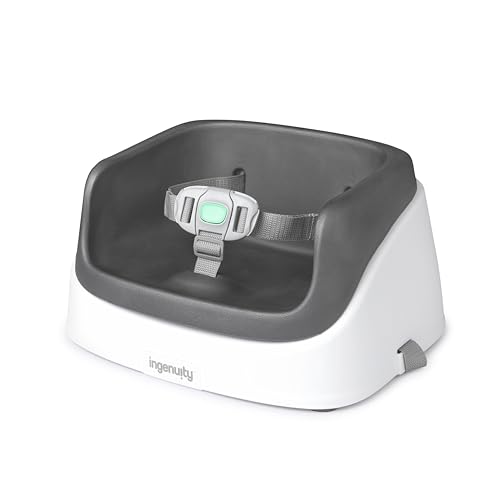
Why Counter Height Tables Need a Different Booster Seat
A counter height table typically sits considerably higher than a standard dining table, which changes the entire geometry of mealtime for a toddler. A regular booster seat is engineered around a standard table surface, so it lifts a child just enough to reach a plate. On a counter height table, that same seat leaves a child sitting far too low, with elbows below the tabletop and knees pressed awkwardly against the apron.
The result is not only uncomfortable — it is a genuine safety issue. A child who cannot rest forearms comfortably on the surface tends to lean forward or wiggle sideways, which increases tipping risk. That is why matching seat rise to table height is the single most important decision in this category, more important than color, padding, or any secondary convenience feature.
There is also a mounting question. Counter height tables often have thick aprons, pedestal bases, or a bar-style overhang that limits where a booster can be strapped. Some seats rely on a wide rear strap that simply will not wrap around certain table designs. Before choosing, it helps to understand the broader landscape of seating options — our overview of booster seat types and their typical use cases is a good starting point for that comparison.
The Counter Height Factor: Matching Seat Rise to Table Surface
Counter height tables generally sit noticeably higher than standard dining tables, and this height gap is where most product decisions are won or lost. A booster seat for counter height table use must compensate for that additional elevation through a taller rise, a thicker base, or a combination of both.
Rather than relying on absolute measurements that vary between manufacturers, focus on the relationship between the seat and the surface. The practical target is simple: when your child sits in the booster, their elbows should rest comfortably at or slightly above the tabletop, and their feet should have a stable place to land on a footrest or support surface.
Three practical fit scenarios
- Adjustable-rise booster seats: These offer multiple height positions and are the most flexible choice. A mid-range adjustable model can usually bridge the gap between a standard table and a counter height surface, while an entry-level fixed-height seat often cannot.
- Tall-base booster seats: Designed with a thicker molded base, these add elevation through structure rather than adjustment. They are effective on counter height tables but less versatile if your child later moves to a standard table.
- Hook-on and clip-on seats: These attach directly to the table edge and remove the height gap entirely. However, they demand a compatible table edge and a sufficient overhang, which not every counter height table provides.
If your child is approaching the upper end of booster sizing and you need additional elevation beyond what a counter booster provides, a high-back booster with the highest height limit is worth reviewing as a transitional option. For families who frequently eat out or travel, the considerations in our guide to a booster seat for restaurant use overlap significantly with counter height seating, since restaurant booths and bars present similar geometry challenges.
Safety and Stability: What Actually Matters
Stability on a counter height table deserves more scrutiny than it gets. A child seated at that elevation has a longer fall distance, so the seat must resist forward tipping, lateral tipping, and slipping across the table surface. Three design elements drive this.
1. Attachment system
Look for a seat with both a rear strap and a bottom strap, ideally with tension locks rather than simple buckles. A single rear strap can allow the seat to pivot; a bottom strap anchors the base against the underside of the table and dramatically reduces movement. Seats marketed with a dual-strap or three-point attachment system are generally more secure on thicker counter tops.
2. Base footprint and grip
A wider base distributes weight and lowers the center of gravity. Non-slip pads on the underside add friction, which matters more on smooth quartz or laminate surfaces than on wood. If your counter has a polished finish, prioritize a booster with a generous rubberized base rather than small adhesive feet.
3. Restraint and seating geometry
A three-point or five-point harness keeps a child properly positioned rather than relying on the table edge as a backstop. Side wings and a raised front lip help contain spills and reduce sideways movement. These features are not cosmetic — they are the difference between a seat that holds a toddler securely and one that merely props them up.
Counter Height Booster Safety Checklist
- Dual-strap attachment that fits your table apron and underside
- Wide, rubberized base for grip on smooth counter tops
- Three-point or five-point harness with adjustable straps
- Adjustable rise to match your specific counter height
- Side containment or raised edges to limit lateral movement
- Age and weight guidance consistent with your child's stage
Comfort and Usability Features Worth Prioritizing
Once safety and fit are settled, comfort determines whether a child actually stays seated through a meal. On a counter height table, the most overlooked comfort factor is foot support. Dangling legs create pressure behind the thighs and encourage fidgeting, so a booster with an integrated or adjustable footrest is a meaningful upgrade, particularly for longer meals.
Seat padding matters, but not in the way most shoppers assume. A moderately firm, wipeable pad holds its shape better than deep plush foam, which compresses over time and changes the effective seat height. Removable, machine-washable covers are a practical advantage for any family in the messy-hands stage.
Tray compatibility is another consideration. Many counter height tables have limited overhang, so a booster with an attachable tray gives you a dedicated eating surface when the table itself is impractical. If your child is still developing self-feeding skills, pairing the booster with age-appropriate utensils such as a baby spoon or a set of baby spoons makes the transition smoother.
Comparing Booster Seat Categories for Counter Height Use
The table below organizes the main booster seat categories by how well they suit a counter height table. Tiers describe relative market positioning and build complexity, not any specific figure.
| Tier / Category | Best For | Counter Height Suitability | Key Trade-Off |
|---|---|---|---|
| Essential tier — basic backless booster | Short, occasional meals | Limited; fixed rise rarely reaches counter height | Simple and lightweight, but insufficient elevation |
| Balanced tier — adjustable-rise booster | Daily family meals at a counter | Strong; multiple height positions bridge the gap | More straps and setup steps to learn |
| High-end tier — tall-base booster with footrest | Longer meals, fidgety toddlers | Strong; structure provides elevation plus leg support | Bulkier footprint, less portable |
| Top-tier — hook-on / clip-on seat | Tables with a compatible edge and overhang | Excellent when compatible; eliminates the gap | Requires specific table edge geometry |
| Professional-grade — convertible high chair booster | Families wanting one seat across multiple stages | Strong; adjustable and sturdy | Heavier and occupies more storage space |
For many households, a balanced tier adjustable-rise model is the most sensible starting point: it handles a counter height table today and adapts if your seating arrangements change. Families who eat at the counter daily and have a child who resists sitting still may find a high-end tier tall-base model with a footrest more effective in the long run.
Common Setup Mistakes to Avoid
Even a well-chosen booster can underperform if it is mounted incorrectly. These are the errors that show up most often when parents move a booster from a standard table to a counter height surface.
- Skipping the bottom strap. A rear-only attachment allows the seat to pivot on thicker counter tops. Always use every available anchor point.
- Positioning over a table gap or leaf seam. Straps can slip into the seam and loosen. Place the seat on a solid, continuous section of the table.
- Ignoring the footrest gap. If a child's feet dangle far above the floor with no support, they will push against the table to stabilize themselves, which stresses the attachment.
- Over-tightening the rear strap. Excessive tension can compress the seat frame or distort the harness geometry. Tighten until firm, not forced.
- Placing the booster near a counter edge with no barrier. On a bar-style overhang, a child can push backward against open space. Seat them toward the wall side of the counter when possible.
- Reusing a seat past its stated stage. Weight and age guidance exists for a reason — a booster that fits a young toddler may be too small for an older, more active child at counter height.
Maintenance and Long-Term Use
A booster seat used daily at a counter height table accumulates crumbs, spills, and strap wear faster than one used occasionally. Wipe the base and harness weekly, and check strap tension monthly — webbing can stretch slightly with repeated tightening. Inspect the buckles for cracks, and confirm that non-slip pads have not peeled away, since a degraded pad is the most common cause of a seat that suddenly starts sliding.
Storage matters too. If the booster doubles as a travel seat, keep it out of direct sunlight when not in use to prevent the plastic from becoming brittle. If your child is moving toward independent seating, our guide to a counter height booster seat fit assessment can help you judge when the transition is appropriate.
When to Move Beyond a Booster Seat
A booster is a transitional tool, not a permanent solution. Once a child can sit steadily, reach the table surface without assistance, and follow mealtime boundaries, they may be ready for a dedicated child-sized seat. A children's rectangular table and chair set or a children's rectangular table and chairs configuration gives younger children a properly proportioned surface of their own, which is often more comfortable than stretching a booster to fit adult-height furniture.
For families who want a single seat that grows across several stages rather than a short-term booster, a convertible option is worth considering. The key is to be honest about your child's current stage and your table's geometry — a seat that fits beautifully on a standard dining table may need a different setup entirely at counter height.