Changing Table Ideas for Small Spaces
Smart, safe, and space-efficient diapering solutions for compact nurseries, shared bedrooms, and apartments — without sacrificing function or comfort.
Why this guide matters: A full-size changing table can swallow an entire wall of a small nursery. The good news is that you do not need one. With the right configuration — a dresser-top pad, a wall-mounted fold-down unit, or a well-organized portable station — you can create a safe, ergonomic changing area in as little as two square feet. This guide walks you through each option, the safety requirements that matter most, and how to keep every diaper change efficient in a tight footprint.
First, Measure What You Actually Have
Before browsing any product, map your room honestly. Small-space diapering works best when the changing surface is part of a multi-purpose furniture piece rather than a standalone unit. Measure the clear floor area in front of your intended spot — you want at least 24 inches of standing room so you can turn and reach safely with one hand always on your baby. Then check the wall behind it: a stud-backed wall opens up fold-down and wall-mounted options that reclaim the floor entirely between changes.
Also consider your daily traffic pattern. If the nursery doubles as a guest room or shares a wall with a home office, a compact station near the door keeps middle-of-the-night changes quiet and contained. Many parents pair a slim changing setup with a diaper caddy that can be lifted off the surface in seconds when the room needs to serve another purpose.
Five Changing Table Ideas That Work in Small Spaces
Each option below is categorized by market tier so you can match it to your priorities — from essential-tier essentials to premium designs built to last through multiple children.
1. Dresser-Top Changing Pad
The most space-efficient choice for most families. A contoured pad with a raised lip and security strap sits on top of a standard dresser, so the furniture earns its keep long after diapering ends. Zero extra footprint, and the dresser continues as bedroom storage for years.
Best for: Rooms with an existing dresser • long-term value
2. Wall-Mounted Fold-Down Unit
When floor space is truly scarce, a wall-mounted changing table folds flat against the wall and locks open only during use. This is the classic commercial-grade solution scaled for home nurseries — ideal for narrow rooms, hallways, or a dedicated changing nook beside the crib.
Best for: Very small rooms • wall-stud installation
3. Compact Changing Dresser
A purpose-built dresser with a recessed changing area on top and drawers below. It combines storage and diapering in one footprint, which is often the single biggest space win in a small nursery. Look for models with soft-close drawers and anti-tip anchoring hardware included.
Best for: Nurseries that need drawer storage too
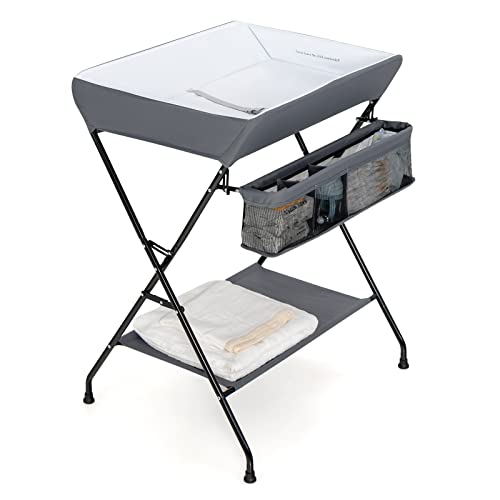
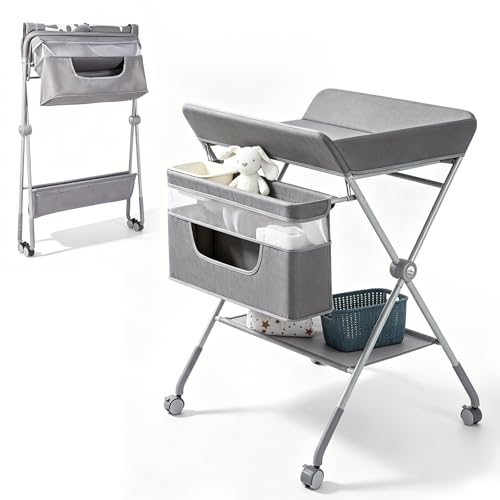
4. Portable Changing Station
A folding mat or travel pad with its own storage pocket turns any stable surface into a changing station in seconds. It is the most flexible option for shared rooms and small apartments, and it packs away completely when not in use. Pair it with a nearby changing pad cover for quick swaps during messy changes.
Best for: Shared bedrooms • travel and multi-room use
5. Convertible Changing Console
A slim console with a lift-off changing tray that converts into a shelving unit or bench once your child is out of diapers. Premium materials and reinforced joinery make it a long-term investment piece for small nurseries that cannot afford furniture that outlives its purpose.
Best for: Design-conscious small nurseries
6. Over-Crib or Over-Changing-Pad Organizer
Vertical storage is the secret weapon of small-space diapering. A hanging organizer that clips over the side of the changing surface holds diapers, wipes, and creams without taking up a single inch of floor. It works with every option above and keeps essentials within arm's reach during a change.
Best for: Any setup • maximizing vertical space
Compare the Options at a Glance
Use this table to narrow down which configuration fits your room layout and stage of use. The tier column reflects relative market positioning rather than a numeric figure, so the guidance stays useful over time.
| Option | Tier | Floor Space Used | Best For | Longevity |
|---|---|---|---|---|
| Dresser-Top Changing Pad | Essential tier | None extra | Rooms with an existing dresser | High — dresser stays in use |
| Wall-Mounted Fold-Down Unit | Mid-range | Zero when folded | Very small rooms and narrow nooks | High — sturdy hardware |
| Compact Changing Dresser | Mid-tier | One furniture footprint | Nurseries needing storage | Medium — converts to dresser |
| Portable Changing Station | Starter tier | None — packs away | Shared bedrooms and travel | Medium — stage-specific use |
| Convertible Changing Console | High-end tier | One slim footprint | Design-led compact nurseries | High — multi-use furniture |
| Over-Crib Organizer | Balanced tier | None — vertical only | Any setup needing storage | High — reusable elsewhere |
Safety Rules That Apply to Every Small-Space Setup
A compact changing area is only as good as its safety foundation. These non-negotiables apply whether you use a dresser pad or a wall-mounted unit:
- Anchor every furniture piece. Dressers and consoles must be secured to the wall with the supplied anti-tip strap. In small rooms where furniture is tightly packed, a tip-over risk is amplified.
- Keep one hand on your baby at all times. Never step away, even for a second, from an elevated changing surface. If you need to fetch something, place the baby on the floor first.
- Use a contoured pad with a security strap. A flat pad without a raised lip is easier for a wriggling baby to roll off. Contoured designs with a belly or buckle strap add a meaningful layer of restraint.
- Match surface height to your body. The changing surface should sit around hip height, roughly 36 to 40 inches from the floor. Too low strains your back; too high reduces your control.
- Install wall-mounted units into studs. Follow the manufacturer's hardware exactly. If you are unsure about your wall structure, have it professionally installed.
- Keep the area clear of clutter. In a small space it is tempting to use the changing surface as a shelf. Store essentials in a caddy or organizer instead, and keep the pad free of loose items.
Practical tip: Set up a diaper changing station with drawers directly beside the changing surface so that refills happen without leaving your baby. In a small nursery, a single well-organized drawer can replace an entire shelving unit.
Organizing a Compact Changing Station
In a small room, organization is not a nice-to-have — it is what makes the setup work. Think vertically and in layers: a wall-mounted organizer or over-the-side caddy for the items you touch every change, a drawer or bin within arm's reach for refills, and a lidded disposal system placed just out of the walkway. If you use cloth diapers, a dedicated wet bag or a diaper pail designed for daily laundry will keep odors contained without adding furniture.
Consider how the changing station transitions as your baby grows. A dresser-top pad can be swapped for a standing-height toddler setup later, and the dresser becomes a standard bedroom piece. If your nursery also stores toys and books, keep the changing zone visually distinct so middle-of-the-night changes stay calm and quick. A toy storage organizer with bookshelf placed on the opposite wall keeps play items out of the diapering area while making the most of the room's height.
For parents planning ahead, the same principles of vertical storage and multi-purpose furniture apply across the nursery. Our guide to storage solutions covers the wider room, and if you are still deciding on the overall look, browse boho nursery and gender-neutral nursery themes for layouts that keep the changing station integrated rather than crowded.
Final Checklist Before You Set Up
- Measured clear floor space in front of the changing spot (24 inches minimum).
- Confirmed wall type and stud location for any wall-mounted unit.
- Selected a contoured pad with raised lip and security strap.
- Checked surface height against your hip height (36–40 inches).
- Purchased and installed anti-tip anchoring hardware.
- Placed a caddy or wall organizer within arm's reach of the pad.
- Positioned a lidded disposal container outside the walkway.
- Cleared the changing surface of all loose items and decorations.
Frequently Asked Questions
What is the best changing table for a small nursery?
A dresser-top changing pad offers the best balance of space efficiency and longevity for small nurseries. It converts into a standard dresser once diapering days are over, so the footprint never goes to waste. Wall-mounted units are a strong second option for rooms with very little free floor space.
How much clearance do I need around a changing table?
Aim for at least 24 inches of clear floor space in front of the changing surface so you can stand comfortably and turn safely while keeping one hand on your baby. Keep the surface at hip height, roughly 36 to 40 inches from the floor, to reduce back strain.
Can I use a changing pad on top of a dresser safely?
Yes, provided the dresser is sturdy, at least 30 inches tall, and anchored to the wall with an anti-tip strap. Choose a contoured pad with a raised lip and a security strap, and always keep one hand on your baby during changes. Never leave a baby unattended on any elevated surface.
Are wall-mounted changing tables safe?
Wall-mounted changing tables are safe when installed correctly into wall studs using the manufacturer's hardware. They are designed with weight limits and safety straps, and folding models lock securely in the open position. Professional installation is recommended if you are unsure about your wall structure.
What should I keep within reach of a small changing station?
Keep diapers, wipes, a changing pad liner, diaper cream, a spare outfit, and a hands-free light source within arm's reach. A small caddy or wall-mounted organizer keeps essentials contained without eating into floor space, and a lidded diaper pail placed nearby handles disposal.