
Breast Pumps Recommended by Lactation Consultants
Evidence-based guidance on choosing a pump that supports comfort, output, and long-term breastfeeding success.
Choosing a breast pump is one of the most consequential purchases a new parent makes. A pump that fits well, empties the breast efficiently, and suits your daily routine can protect your milk supply and make the entire feeding journey smoother. A poorly matched pump, on the other hand, can cause discomfort, reduced output, and frustration during an already demanding season.
Lactation consultants see this firsthand. They work with parents who are establishing supply, returning to work, managing oversupply, or navigating premature birth. Over time, their recommendations cluster around a handful of design principles: effective suction, comfortable flanges, closed-system hygiene, and portability that matches real life. This guide distills those principles so you can shortlist a pump with confidence before you commit.
Why consultant input matters: A pump's specs on paper rarely tell the full story. Lactation consultants evaluate how a pump performs in actual use — how it feels during letdown, how consistently it maintains suction, and how easy it is to clean between sessions. Their recommendations reflect real-world performance across thousands of pumping sessions.
What Lactation Consultants Look For in a Pump
Before comparing specific pump categories, it helps to understand the criteria professionals use. Consultants typically evaluate pumps against a consistent set of standards:
- Suction efficiency and breast emptying: The pump must be able to fully drain the breast. Incomplete emptying is one of the most common causes of low supply and clogged ducts.
- Adjustable suction and cycle speed: Comfort depends on finding the right rhythm. Pumps with independent suction and speed controls let you mimic your baby's natural feeding pattern more closely.
- Flange fit: A correctly sized flange is essential. Many pumping problems trace back to a flange that is too small or too large, which causes pain and reduces output.
- Closed-system design: A barrier between the milk path and the motor prevents milk from entering the pump mechanism. This improves hygiene and makes the pump safer to share between sessions or between parents.
- Noise level and portability: Parents who pump at work or while traveling need a pump that is quiet, lightweight, and straightforward to assemble in a small space.
- Ease of cleaning: Fewer parts and dishwasher-safe components reduce the daily friction that leads to skipped sessions.
- Durability of the motor: A pump used multiple times per day for months needs a motor built for sustained performance.
With these criteria in mind, the recommended pumps tend to fall into distinct categories. Understanding those categories is the fastest way to narrow your options.
The Main Pump Categories Consultants Recommend
Hospital-Grade Multi-User Pumps
The gold standard for establishing and protecting supply, especially in the early weeks or when output is a concern.
- Strong, consistent suction with independent speed control
- Closed-system design suitable for multi-user settings
- Heavy-duty motor built for frequent, long sessions
- Typically larger and intended for home or hospital use
Personal-Use Double Electric Pumps
The most common recommendation for daily pumping at home and at work.
- Double pumping cuts session time and supports higher output
- Adjustable suction and cycle settings for comfort
- Portable enough for a work bag or commute
- Closed-system models available at the mid-range level
Wearable and Hands-Free Pumps
A practical supplement for parents who need to pump while moving, working, or caring for older children.
- Fits inside a bra for discreet pumping
- Best used as a secondary pump rather than a primary one
- Output varies more between users — test carefully
- Ideal for travel, commuting, and short sessions
Manual and Single Electric Pumps
A sensible backup or occasional-use option, particularly for parents who pump infrequently.
- Manual pumps offer full control and no power dependency
- Single electric pumps suit occasional relief pumping
- Lightweight and easy to store in a diaper bag
- Not recommended as a primary pump for daily use
Many parents end up with a combination: a personal-use double electric pump as the primary workhorse, plus a wearable pump for on-the-go sessions and a manual pump as a backup. Consultants often endorse this layered approach because it matches different pumping scenarios without over-relying on a single device.
Comparing Pump Features at a Glance
The table below summarizes how each category performs across the criteria consultants care about most. Use it as a quick reference when comparing specific models.
| Category | Best For | Suction Strength | Portability | Cleaning Ease |
|---|---|---|---|---|
| Hospital-grade multi-user | Establishing supply, exclusive pumping | Strong and consistent | Low — intended for home use | Moderate — more parts to manage |
| Personal-use double electric | Daily pumping at home and work | Strong and adjustable | Moderate to high | Moderate — closed-system models simplify |
| Wearable / hands-free | Travel, commuting, multitasking | Moderate and variable | Very high | High — fewer external parts |
| Manual / single electric | Occasional use, backup, relief | Moderate, user-dependent | Very high | High — simple assembly |
If you are planning to return to work, a double electric pump with a closed system is usually the most practical primary choice. Pair it with a wearable pump for commute sessions, and keep a manual pump in your bag for emergencies. For more on matching a pump to a working schedule, see our guide on breast pumps for working moms.
Key Features to Prioritize
Flange Fit and Comfort
Flange sizing is the single most overlooked factor in pumping comfort. A flange that is too small can cause pinching and reduced milk flow; one that is too large can pull too much areola into the tunnel and cause swelling. Consultants typically recommend measuring nipple diameter and adding a few millimeters, then adjusting based on how pumping feels. Many pump brands offer multiple flange sizes, and aftermarket flanges are widely available. If pumping is painful, flange fit should be the first thing you check.
Closed-System Hygiene
A closed-system pump uses a barrier to keep milk out of the tubing and motor. This design is easier to clean, reduces the risk of moisture and mold in the tubing, and is essential if the pump will ever be used by more than one person. For parents who pump at work and store parts in a shared refrigerator or bag, a closed system also simplifies cleaning logistics.
Suction and Cycle Controls
Comfortable pumping depends on matching the pump's rhythm to your letdown. Pumps with independent suction and cycle controls let you start with a faster, gentler pattern to trigger letdown, then switch to a slower, stronger pattern for milk removal. This two-phase approach mirrors how a baby feeds and is a common recommendation from consultants.
Portability and Noise
If you plan to pump outside the home, noise level matters. Some motors are quiet enough for a shared office or a parked car; others are noticeably louder. Weight and battery life are the other portability factors. Rechargeable batteries and compact carrying cases make a meaningful difference for parents who pump on a commute or during travel.
Consultant tip: Before committing to a pump for daily use, test it during a session if possible. Many retailers and lactation support groups offer trial periods. A pump that feels comfortable in a five-minute trial may behave differently across a full 20-minute session, so prioritize models with generous return policies or in-person trial options.
Building a Complete Pumping Setup
The pump itself is only part of the equation. A well-organized setup reduces friction and helps you maintain a consistent pumping schedule, which is critical for supply. Consultants commonly recommend assembling the following alongside your pump:
Pumping Essentials Checklist
- A correctly sized flange set, plus one spare size for adjustment
- Extra tubing and valves, since these wear out with frequent use
- A hands-free pumping bra to keep sessions comfortable and efficient
- Milk storage bags or bottles for immediate collection
- A cooler bag for transporting milk from work or travel
- A bottle warmer for gently bringing refrigerated milk to feeding temperature
- A pump bag or tote with compartments for parts and cleaning wipes
- A cleaning brush and a schedule for sanitizing parts
For storage and transport, our guides on breast milk storage bags and portable breast milk coolers cover the practical details. If you are warming refrigerated or frozen milk, a bottle warmer for frozen breast milk helps preserve nutrients while bringing milk to a comfortable temperature.
Pump Parts and Maintenance
Valves, membranes, and tubing degrade over time. A worn valve can reduce suction without any obvious visual damage, which is a common cause of declining output after months of successful pumping. Consultants generally advise replacing valves and membranes every few months with daily use, and inspecting tubing regularly for moisture. Keeping spare parts on hand prevents a small failure from interrupting your schedule.
If you are also choosing bottles to pair with your pump, our guide on bottles recommended by lactation consultants explains how nipple shape and flow rate affect bottle acceptance, especially for breastfed babies. And if you are working on supply, breast massagers for breastfeeding can support letdown and milk flow during sessions.
Accessing a Pump Through Insurance
Many insurance plans cover breast pumps, but the process varies by provider and plan type. Understanding your options can significantly expand the pump categories available to you. Parents with commercial plans often have coverage for a personal-use double electric pump, while Medicaid coverage varies by state. If you are navigating this process, our resources on breast pumps through insurance (hands-free) and pumps covered by Blue Cross Blue Shield walk through the typical steps.
If you are eligible for a hospital-grade pump rental or a multi-user pump through insurance, that option can be especially valuable in the early weeks when supply is being established. A lactation consultant can often help you determine which category fits your situation and how to request it from your provider.
How to Choose the Right Pump for Your Situation
The best pump depends on how often you plan to pump, where you will pump, and whether you are establishing supply or maintaining it. Consider these common scenarios:
- Establishing supply in the first weeks: A hospital-grade or strong personal-use double electric pump is usually the most effective choice. Frequency matters more than any single feature — aim for a consistent schedule and consult a lactation professional if output is low.
- Returning to work: A portable, quiet double electric pump with a closed system and a rechargeable battery is the standard recommendation. Pair it with a wearable pump for commute sessions and a manual pump as backup.
- Occasional pumping: A manual pump or a single electric pump may be sufficient. These are also useful as backups for parents who primarily breastfeed directly.
- Exclusive pumping: Prioritize a pump with strong, consistent suction, durable motor construction, and a comfortable flange system. Many exclusive pumpers use a hospital-grade pump at home or a high-end personal-use model.
- Travel and on-the-go: A wearable pump or a compact double electric with a carrying case makes the most sense. Check battery life and noise level before committing.
If you are comparing specific models, our broader guide to breast pumps covers additional selection criteria and category comparisons. For parents navigating supply concerns, how to increase breast milk outlines evidence-based strategies that work alongside a well-matched pump.
Top Breast Pumps Recommended by Lactation Consultants
⚠️ AFFILIATE DISCLOSURE: This website contains affiliate links. As an Amazon Associate, we earn from qualifying purchases. If you make a purchase through these links, we may receive a small commission at no additional cost to you. Read our full affiliate policy.

Lactation Breast Model with Realistic Milk Expression Function, Soft Silicone Breastfeeding Educational Tool for Lactation Consultants, Midwives & Nurses, Breast Pump & Hand Expression Training Aid
Check price on Amazon
Momcozy M5 Smart APP Controlled Wearable Breast Pump, 2-Pack Cozy Red | Hands-Free and Wireless, 3 Modes 9 Suction Levels, BPA-Free, Portable Lightweight, 24mm Flange
Check price on Amazon
Momcozy Wellness 1 Wearable Breast Pump, Warm-Massage Hands-Free Pump with Heated Flange&Simulated Massage for Comfortable Breastfeeding&Let-Down, App-Controlled, 4 Modes 12 Levels, 180ml/6oz
Check price on Amazon
Medela Harmony Manual Breast Pump, On-the-Go, More Milk Output | Soft-Rim PersonalFit Flex Comfort Shield (24mm), 2-Phase Expression, Lightweight & Portable, 5 oz, BPA-Free, Hand Pump
Check price on Amazon
haakaa Manual Breast Pump Milk Collector for Breastfeeding 4oz/100ml | Soft Food-Grade Silicone, Hands-Free Letdown Collection, No Assembly, Boil-Safe, for Home, Work & Travel
Check price on Amazon
Legendairy Milk Pump Princess Lactation Supplement, Fenugreek Free, 60 Ct | 1200 mg Organic Black Cumin, Fennel and Dill Support For Milk Supply and Digestion; Fenugreek-Free Breastfeeding Supplement
Check price on Amazon
Mammanuwa Electric Breast Pump - Lightweight, Portable, & Hands-Free with Baby Mouth Technology - BPA-Free, 4 Modes, 9 Levels - Elevate Your Breastfeeding Style with Mammanuwa S32
Check price on Amazon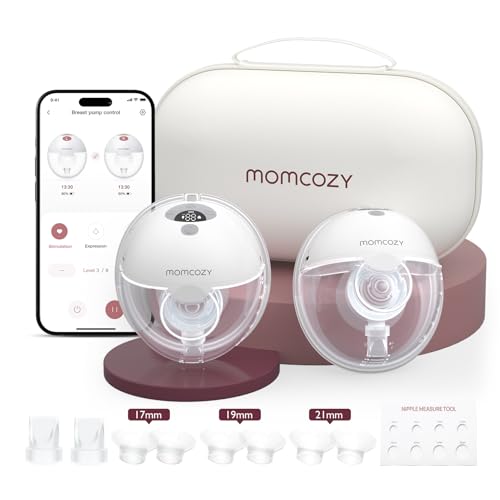
Momcozy M5 Smart APP Controlled Wearable Breast Pump, 2-Pack Quill Gray | Hands-Free and Wireless, 3 Modes 9 Suction Levels, BPA-Free, Portable Lightweight, 24mm Flange
Check price on AmazonFrequently Asked Questions
Do lactation consultants recommend a specific pump brand?
Lactation consultants generally avoid endorsing a single brand because fit and comfort vary between parents. Instead, they recommend pumps that meet specific criteria: strong and consistent suction, adjustable settings, a closed-system design, and a flange sizing system that accommodates different body types. A pump that works well for one parent may not suit another, so the emphasis is on matching features to your pumping routine rather than following a brand recommendation.
Is a hospital-grade pump necessary for every parent?
No. Hospital-grade pumps are most valuable when supply is being established, when output is a concern, or when a parent is exclusively pumping. Many parents do well with a personal-use double electric pump for daily sessions. A lactation consultant can help you decide whether the stronger suction and durability of a hospital-grade pump are worth the trade-off in portability and setup complexity for your situation.
How do I know if my flange size is correct?
A correctly sized flange should allow your nipple to move freely in the tunnel without excessive rubbing against the sides, and only a small amount of areola should be pulled in. If pumping is painful, if the nipple appears compressed or blanched after a session, or if output seems lower than expected, flange size is the first thing to reassess. Many pump brands offer sizing guides, and lactation consultants can help you measure accurately.
Can I use a wearable pump as my primary pump?
Wearable pumps are convenient, but their suction and output tend to be less consistent than a double electric pump with a traditional motor. For parents who pump daily, consultants usually recommend a double electric pump as the primary device and a wearable pump as a supplement for travel, commuting, or multitasking. If you plan to use a wearable pump as your main pump, test it carefully during the first weeks and monitor output closely.
How often should I replace pump parts?
Valves and membranes are the parts most likely to wear out first. With daily use, many manufacturers recommend replacing them every few months, or sooner if you notice reduced suction. Tubing should be inspected regularly for moisture or milk residue and replaced if either is present. Keeping spare parts on hand ensures a worn valve does not interrupt your pumping schedule.
Does insurance cover breast pumps recommended by consultants?
Many insurance plans cover breast pumps, but coverage details depend on your provider and plan type. Commercial plans often cover a personal-use double electric pump, while Medicaid coverage varies by state. The process typically involves requesting a pump through your provider or a durable medical equipment supplier. Our guides on insurance-covered pumps walk through the typical steps so you can confirm what your plan offers before choosing a model.
Final Thoughts
A breast pump is a long-term investment in your feeding journey. The pumps lactation consultants recommend most often share a common profile: they empty the breast efficiently, they are comfortable to use across a full session, and they fit the realities of your daily routine. Start by identifying your primary pumping scenario, match it to a pump category, and prioritize flange fit and closed-system hygiene. If you are uncertain, a consultation with a lactation professional is the most reliable way to confirm that your chosen pump supports your goals.
Once your pump is in place, pair it with the right accessories and a consistent schedule. Our related guides on breast pump essentials and pumps covered by UnitedHealthcare can help you complete your setup and navigate coverage. With the right pump and a bit of planning, you can protect your supply and make pumping a manageable part of your day.