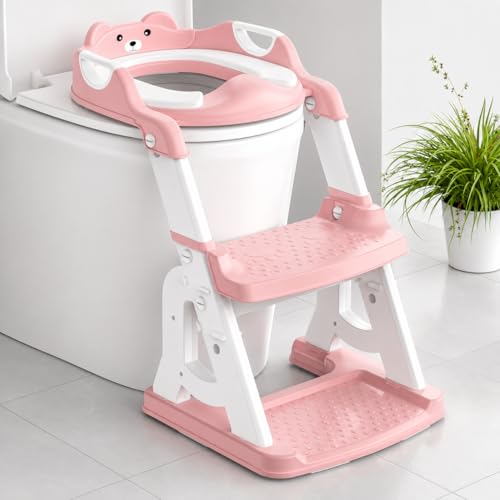
Potty Training Toilet Seat with Step Stool Ladder: The Complete Guide
Everything parents need to know before choosing a training seat that helps toddlers climb, sit, and succeed with confidence.
Transitioning from diapers to the adult toilet is one of the biggest milestones in early childhood. A potty training toilet seat with step stool ladder combines two jobs in one clever piece of gear: it shrinks the toilet opening to toddler size and gives little feet a stable platform to climb up and rest on. For families who want to skip the standalone potty chair phase, or who want a bridge between a floor potty and the real toilet, this style of seat is often the most practical choice.
This guide walks you through how these seats work, the features that matter most, safety considerations, and how to pick the right model for your bathroom and your child. By the end, you will have a clear picture of which tier of product fits your needs and be ready to compare options with confidence.
How a Toilet Seat with Step Stool Ladder Works
A potty training toilet seat with step stool ladder is a detachable toddler seat that sits on top of your regular toilet bowl. Attached to it, or sold as a matched set, is a small ladder with wide, non-slip steps. The child climbs the steps, turns around, and sits on the reduced-size seat while their feet rest firmly on the platform.
Most models fold up and away when not in use, either collapsing against the toilet or standing upright beside it. That foldability is what makes this design so popular in smaller bathrooms, because it avoids the permanent floor space a standalone potty chair occupies.
The two main configurations
- Integrated ladder seat: the ladder is permanently attached to the seat frame. These tend to be more stable but bulkier to store.
- Detachable ladder seat: the seat and ladder separate, or the whole unit folds flat. Easier to tuck away, though you should check the locking mechanism carefully.
For parents still deciding between this design and a classic floor potty, our overview of potties for potty training compares both approaches in detail. Many families actually use both: a floor potty for the first few weeks and a ladder seat once the child is comfortable sitting on the toilet.
Why Choose a Seat with a Ladder
There are several practical reasons this style has become a favorite among parents and childcare providers:
- Independence: once the child learns to climb, they can use the toilet without being lifted, which builds confidence and reduces frustration.
- Familiar environment: using the real toilet means no second transition later from a training potty to the adult toilet.
- No extra floor space: the unit folds away, which matters in small bathrooms.
- Hygiene: the child never touches the rim directly, and most seats wipe clean easily.
- Correct posture: feet resting on the step encourage a relaxed sitting position, which helps with bowel movements.
If you are weighing this against a simpler ring-style seat, the comparison in our guide to a potty training seat with splash guard covers the trade-offs around splash protection and portability. And for families who travel, a portable potty is worth keeping in the car alongside your home setup.
Key Features to Compare
Not all ladder seats are built the same. When comparing models, focus on these points rather than marketing claims:
Step surface and grip
Look for textured, rubberized treads on every step. Smooth plastic steps become slippery when wet, and bathrooms are wet environments. Wide steps are also easier for small feet than narrow rungs.
Ladder stability
The base of the ladder should sit flat on the floor with no wobble. Rubber feet are a good sign. Some models use a wide A-frame base, which is more stable than a narrow single-column design.
Seat fit and adjustability
Check whether the seat fits standard and elongated toilet bowls, since the two shapes require different dimensions. Adjustable models that accommodate both are more versatile. Our article on potty training seats for oval toilets explains the fit issues in more detail.
Weight capacity and build
Most toddler seats are rated for children up to a certain weight. Heavy-duty construction with reinforced hinges and high-grade plastic or steel framing will last through multiple children. A solid build is one of the clearest markers of a well-made unit.
Foldability and storage
If your bathroom is small, a folding design that collapses against the toilet is a major convenience. Test whether the folding mechanism locks securely in both the open and closed positions.
Cleaning
Removable, wipeable seat cushions and smooth surfaces are easier to sanitize. Avoid designs with deep crevices where residue can collect.
Product Tiers Explained
To help you compare without getting lost in specifications, we group these seats into three broad tiers based on build quality, features, and intended use.
| Tier | Best For | Typical Characteristics |
|---|---|---|
| Entry-level | Short-term use, single child, occasional travel | Lightweight plastic, basic non-slip steps, simple fold, fewer adjustment options |
| Mid-range | Everyday home use, families with one or two children | Reinforced hinges, wider grip steps, adjustable fit for standard and elongated bowls, easier cleaning |
| Premium | Heavy daily use, multiple children, long-term investment | High-grade materials, ergonomic seat cushion, sturdy A-frame base, smooth folding mechanism, detailed safety testing |
Mid-range models usually offer the best balance for most homes: a smoother folding mechanism and better step grip than entry-level designs, without the extra refinement of premium models. If you plan to use the seat for more than one child, the premium tier is generally the more efficient long-term investment.
The same tier logic applies to related gear. Our guide to a potty training step stool explains how a separate stool can complement a basic seat, and the potty training toilet seat with ladder overview covers models where the ladder is the defining feature.
Safety Checklist Before You Buy
Safety is the deciding factor with any product a toddler climbs on. Run through this list before purchasing:
- Non-slip feet: the ladder base must grip the floor firmly on tile, vinyl, and wood.
- Locking mechanism: the seat should lock onto the toilet rim and not shift when the child climbs on.
- No pinch points: check the folding joints for gaps that could catch fingers.
- Age and weight guidance: follow the manufacturer's stated limits and do not exceed them.
- Supervision: always supervise a toddler on a ladder seat, especially in the early weeks.
- Bathroom hazards: keep the floor dry and remove loose mats that could slide under the ladder.
Fit and Bathroom Setup
Before ordering, measure your toilet bowl from the hinge to the front rim and across the widest point. Compare those numbers with the manufacturer's compatibility list. Elongated bowls need longer seats, while round bowls need shorter ones. Models that adjust to both are the safest choice if you have more than one bathroom.
Also measure the clearance between the toilet and any nearby wall or vanity. A ladder seat extends forward, so you need enough floor space in front of the toilet for the steps to sit flat. In very tight bathrooms, a folding seat that stores vertically is the better fit.
If you are preparing the bathroom for a toddler in general, our nursery and home safety content pairs well with this guide, and the potty training hub links to related articles on timing, readiness, and setbacks.
Training Tips for Success
The seat is a tool; the routine is what makes it work. A few habits that help:
- Introduce the seat early. Let your child explore it before training begins, so it feels familiar rather than strange.
- Practice the climb. Do a few dry runs with clothes on so the child learns the steps safely.
- Keep feet supported. The step should be positioned so feet rest flat, not dangle. This relaxes the pelvic floor and makes sitting easier.
- Use a consistent schedule. Offer the toilet at predictable times, such as after meals and before bed.
- Celebrate effort, not just results. Praise the climbing and sitting, not only successful use.
- Expect setbacks. Accidents are part of learning. Stay calm and keep the routine steady.
For a fuller plan, our potty training tips article covers readiness signs, timing, and how to handle resistance. If your child is close to graduating from diapers, the guide to potty training underwear explains when to switch.
Frequently Asked Questions
At what age should I introduce a ladder seat?
Most children are ready between 18 months and 3 years, but readiness matters more than age. Signs include staying dry for longer stretches, showing interest in the bathroom, and being able to follow simple instructions. A ladder seat works best once the child can climb steps with some confidence.
Is a ladder seat better than a floor potty?
It depends on your child and your bathroom. A floor potty is often easier for very young toddlers because they can sit immediately. A ladder seat suits children who are already comfortable with the toilet and want independence. Many families use both.
Will it fit my toilet?
Check the manufacturer's compatibility list for round and elongated bowls. Adjustable models cover both, while fixed models are shaped for one or the other. Measuring your bowl before ordering avoids returns.
How do I clean the seat?
Most models have removable cushions and smooth plastic surfaces that wipe clean with a mild bathroom cleaner. Avoid abrasive pads that scratch the plastic, and dry the steps after cleaning to keep the grip effective.
Can my child use it without supervision?
Supervise until the child is consistently steady on the steps and understands the routine. Ladder seats are stable, but a wet floor or a rushed climb can still cause a slip.
What about travel?
Ladder seats are not ideal for travel because of their size. For trips, a foldable travel seat or a portable potty is more practical. Some families keep a lightweight travel seat in the car and the ladder seat at home.
Final Thoughts
A potty training toilet seat with step stool ladder is one of the most practical pieces of training gear available. It gives toddlers the independence to use the real toilet, supports correct posture with a stable step, and folds away when not in use. When comparing options, prioritize non-slip steps, a secure fit to your toilet bowl, and a sturdy build, then choose the tier that matches how long and how intensively you plan to use it.
With the right seat and a patient routine, most children move through this stage smoothly. Take your time, keep the bathroom setup safe, and let your child lead the pace.
Ready to Compare Options?
Browse our curated selection of potty training seats with step stool ladders and find the one that fits your bathroom and your child.
View Recommended Products