Portable Potty Buying Guide: Travel-Ready Toilets for Toddlers
Potty training does not pause when you leave the house. A well-chosen portable potty keeps your toddler comfortable, hygienic, and confident during outings, road trips, and visits. This guide explains the types, features, and practical considerations so you can choose with confidence.
Researched & Editorially ReviewedWho this guide is for: Parents and caregivers who have already decided to introduce a portable potty and now need clear, trustworthy information before choosing a model. We explain how each design works, what to prioritize for different situations, and how to avoid common frustrations. For a broader look at the training journey, see our guide to potty training.
Why a Portable Potty Matters During Training
Consistency is the backbone of successful potty training. When toddlers use the same familiar routine at home and on the go, accidents decrease and confidence grows. A portable potty bridges that gap by offering a recognizable, comfortable place to go wherever you are. Parents often pair a travel potty with potties for potty training at home to keep the experience consistent.
Beyond training, portable potties are practical for long car journeys, park visits, camping, and trips to relatives. They reduce reliance on public restrooms, which can be intimidating for small children, and they give parents peace of mind during the unpredictable early weeks of training.
Types of Portable Potties
Portable potties fall into a few broad designs. Each serves a different primary use case, and understanding the trade-offs helps you match the product to your lifestyle.
Foldable Travel Potty Seats
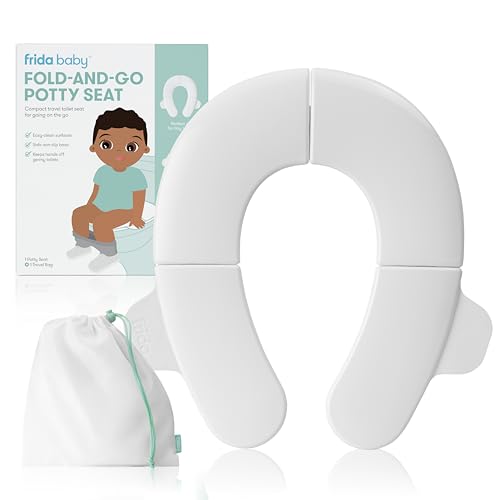
Lightweight seats that fold flat and fit into a diaper bag. They typically rest on a standard toilet or on the ground with a disposable liner. Best for short outings and families who want maximum portability.
Standalone Travel Potties
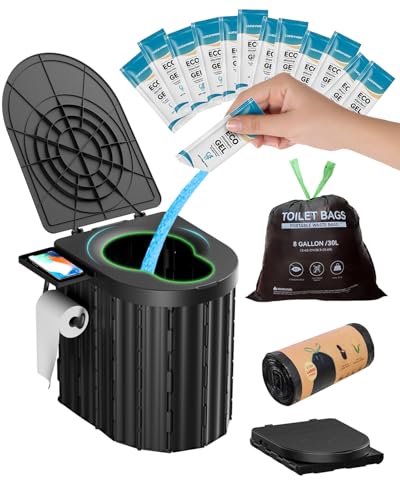
Self-contained units with a small bowl and lid. They work independently of public toilets, making them ideal for road trips and outdoor use. Slightly bulkier but more versatile.
Potty Training Seats with Splash Guard
Designed to sit on an adult toilet, these seats add a child-sized opening and a splash guard to reduce mess. Portable versions fold for travel. See our detailed guide to potty training seats with splash guard.
Multi-Stage Travel Systems
Convertible designs that work as a standalone potty, a toilet topper, and sometimes a step stool. Feature-rich for their class and suited to families who want one product to cover multiple stages.
Key Features to Evaluate
When comparing models, focus on the features that directly affect comfort, hygiene, and ease of use. The following checklist covers the most important considerations.
- Foldability and packed size: Determine whether the potty needs to fit in a diaper bag, under a stroller, or in a car trunk. Fold-flat designs are ideal for urban outings.
- Stability on uneven surfaces: A wide base and non-slip feet prevent tipping on grass, gravel, or uneven pavement.
- Removable bowl or liners: Easy cleanup is essential. Some models use disposable liners, while others have a removable inner bowl.
- Splash guard design: A well-shaped splash guard reduces mess for both boys and girls, especially during the early training phase.
- Seat comfort: Rounded edges and a smooth surface encourage toddlers to sit longer.
- Weight and carry handle: A lightweight model with a handle is easier to transport on foot.
- Compatibility with adult toilets: If you plan to use the potty as a topper, confirm the seat shape fits standard and elongated toilets. Our guide to potty training seats for oval toilets explains fit considerations.
Comparing Portable Potty Types
Use the table below to match a design to your most common use case. The tier labels describe market positioning rather than any specific figure.
| Tier | Best For | Portability | Cleanup |
|---|---|---|---|
| Entry-Level Tier | Short errands and diaper-bag carry | Very high | Uses liners |
| Essential Tier | Home-to-outing transitions | High | Removable seat |
| Mid-Range Tier | Road trips and outdoor use | Moderate | Removable bowl |
| High-End Tier | Multi-stage families | Moderate | Convertible parts |
How to Use a Portable Potty Effectively
Success with a portable potty depends as much on routine as on the product itself. Introduce the potty at home first so your toddler associates it with a calm, familiar setting. When you move to outings, bring the potty along and offer it at natural transition points, such as before leaving the car or after a meal.
Keep a small kit with the potty: disposable liners, wipes, a change of underwear, and hand sanitizer. For toddlers who are transitioning from diapers, our guide to potty training underwear explains how to choose absorbent options that support the process. If your child is still using pull-ups, our article on potty training pull-ups that turn cold discusses how sensation-based products can reinforce awareness.
Safety and Hygiene Considerations
Always supervise your child when using a portable potty, especially on elevated surfaces. Clean the potty after each use with mild soap and water, and allow it to dry fully before folding or storing. If you use the potty as a toilet topper, wipe the contact surfaces before and after each use. For families also using a step stool, our guide to potty training step stool covers stability and height considerations.
Check the product instructions for weight limits and age recommendations. Replace any part that shows cracks or loose fittings, since stability is critical for a toddler who may shift their weight while seated.
Ready to Choose the Right Portable Potty?
Explore our curated selection of travel-friendly potties and training seats below. Each option is chosen for practicality, comfort, and ease of cleaning.
View Recommended OptionsFrequently Asked Questions
What age is a portable potty suitable for?
Most portable potties are designed for toddlers who are actively potty training, typically between 18 months and 4 years. Always check the manufacturer's age and weight guidance, and introduce the potty when your child shows readiness signs such as staying dry for longer periods.
Can a portable potty be used on an adult toilet?
Many foldable seats are designed to rest on an adult toilet, while standalone travel potties are used on the ground. Some multi-stage models work in both configurations. Confirm the seat shape fits your toilet before relying on it as a topper.
How do I clean a portable potty while traveling?
Use disposable liners where possible to minimize cleanup. For reusable bowls, wipe with mild soap and water, then dry with a paper towel. Keep a small pack of wipes and a sealable bag in your travel kit for quick cleanups.
Is a travel potty necessary if my child uses a public restroom?
Not strictly necessary, but many toddlers feel more secure on a familiar seat. A portable potty also helps when public restrooms are unavailable, such as during road trips, camping, or park visits.
How do I encourage my toddler to use the potty while out?
Keep the routine consistent: offer the potty at the same transition points you use at home, praise cooperation, and avoid pressure. Bringing a familiar toy or book can help your child relax. For more strategies, see our guide to potty training tips.