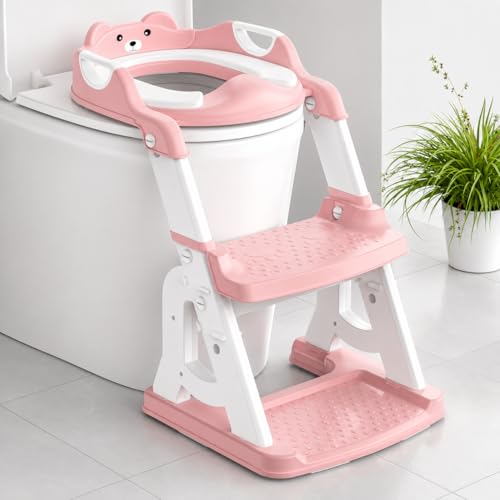
Potty Training Seat with Step Stool Ladder: The Complete Guide
Help your toddler build confidence and independence with a toilet seat that grows with them. Learn how to choose, install, and use a potty training seat with a step stool ladder for a smoother transition.
EXPLORE THE GUIDEWhat Is a Potty Training Seat with Step Stool Ladder?
A potty training seat with a step stool ladder is a transitional toileting accessory that attaches to your regular adult toilet. It combines three functions in one: a child-sized seat reducer that prevents small bottoms from falling through, a splash guard to keep messes contained, and an integrated ladder with non-slip steps that lets your toddler climb up independently.
Unlike a standalone potty chair that sits on the floor, this design introduces your child directly to the family toilet. That means no separate emptying routine, no extra cleaning bucket, and a more natural progression toward using the bathroom like everyone else. For parents who want to skip the phase of cleaning a separate potty, a potty training toilet seat with ladder is often the preferred route.
Why it matters: Toddlers thrive on routine and imitation. A ladder seat lets them participate in the same bathroom habits they see at home, which can shorten the training timeline and reduce resistance.
Key Benefits for Toddlers and Parents
Choosing the right equipment can make or break the potty training experience. Here is what a well-designed ladder seat brings to the table:
- Promotes independence: Your child can climb up, sit down, and get off with minimal help, which builds self-confidence and reduces power struggles.
- Eliminates a separate cleaning task: Because waste goes directly into the toilet, there is no potty bowl to empty, rinse, and sanitize after every use.
- Fits the family bathroom: No need to dedicate floor space to a standalone potty. The seat stays on the toilet or stores compactly nearby.
- Grows with your child: Many models feature adjustable ladder height and a seat that accommodates toddlers through early childhood.
- Encourages proper posture: A stable step platform lets little feet plant firmly, which supports the pelvic floor relaxation needed for easier bowel movements.
- Reduces fear of the adult toilet: The familiar seat reducer and secure ladder make the full-size toilet feel less intimidating.
If you are still deciding between a floor potty and a toilet-mounted option, our overview of potties for potty training breaks down the trade-offs in more detail.
How to Choose the Right Model
Not all ladder seats are built the same. Use these criteria to narrow your options and find a model that matches your bathroom, your child, and your training approach.
Stability and Weight Rating
Look for a wide base with non-slip feet and a ladder that locks securely into place. Check the manufacturer's weight recommendation and ensure the frame does not wobble when your child climbs.
Step Surface
Textured, non-slip steps are essential. Some models use rubberized treads; others use molded grip patterns. Wider steps are easier for small feet and reduce the chance of slipping.
Seat Fit and Attachment
Verify compatibility with your toilet shape (round or elongated). A secure locking mechanism or adjustable brackets prevent the seat from shifting during use.
Splash Guard
A raised front guard keeps urine inside the bowl, especially for boys. Removable guards are easier to clean and can be adjusted as your child grows.
Foldability and Storage
If bathroom space is tight, a folding ladder seat that collapses flat or hangs on a hook is a practical choice. Check the folded dimensions before buying.
Material and Durability
High-grade plastic with reinforced hinges holds up to daily use. Avoid models with thin joints or sharp edges that can pinch fingers.
For a broader look at seat options that address different bathroom layouts, see our guide to potty training seats for oval toilets and the comparison of potty training seats with splash guard features.
Types and Tiers Compared
The market segments ladder seats into distinct tiers based on construction, adjustability, and added features. Use this table to match a tier to your household's needs. No numeric figures are used here; the descriptors reflect relative market positioning.
| Tier | Best For | Typical Characteristics |
|---|---|---|
| Essential tier | First-time training, straightforward bathrooms | Basic ladder with molded steps, simple seat reducer, minimal adjustability, lightweight build |
| Balanced tier | Families wanting durability and comfort | Reinforced frame, cushioned seat, adjustable ladder height, removable splash guard, non-slip treads |
| High-end tier | Long-term use across multiple children | Heavy-duty construction, soft-close hinges, tool-free installation, foldable design, ergonomic step platform |
| Premium tier | Design-conscious households and extended use | Premium materials, integrated handles, anti-slip everything, seamless folding, easy-clean surfaces, refined aesthetics |
Entry-level models typically cover the basics well, while mid-range and high-end tiers add smoother mechanisms and better ergonomics. If you want a dedicated floor option alongside a toilet seat, a potty training step stool can complement the ladder setup for sink access and handwashing.
Setup and Safety Checklist
Proper installation is the difference between a confidence-building tool and a hazard. Follow this checklist before your child's first session.
- Read the manual fully. Each model has specific assembly steps and torque requirements for locking mechanisms.
- Verify toilet compatibility. Measure your toilet rim and compare it to the seat's stated fit. Elongated and round toilets require different adapter shapes.
- Lock the seat onto the rim. Push down firmly until you hear or feel the locking mechanism engage. Tug gently to confirm it will not slide.
- Position the ladder feet. The ladder base should rest flat on the floor with all non-slip pads in contact. Adjust the height if the model allows.
- Test stability yourself. Apply gentle pressure to the steps and seat before letting your child climb. Any wobble means the setup needs adjustment.
- Clear the surrounding area. Remove rugs that can slip, and ensure there is nothing sharp or unstable within arm's reach.
- Supervise every session. Stay within arm's length until your child consistently climbs and sits without assistance.
Safety note: Never leave a toddler unattended on a toilet seat with a ladder. The elevated position and hard bathroom surfaces make falls more consequential than with a floor-level potty.
Using the Seat During Training
Equipment alone does not train a child, but the right seat removes friction. Here is how to weave the ladder seat into a positive training routine:
- Start with familiarization: Let your child climb the ladder and sit fully clothed for a few days before expecting any output.
- Schedule regular sits: Offer the seat after meals, before bath time, and at consistent intervals rather than waiting for accidents.
- Celebrate effort, not just results: Praise climbing, sitting, and handwashing to reinforce the whole routine.
- Keep sessions short: Two to five minutes is enough. Long sits breed frustration and resistance.
- Use a footrest feel: The ladder steps double as a footrest, which helps your child relax rather than dangle.
- Transition to underwear: Once your child is comfortable, switch to potty training underwear during the day to build awareness of wetness.
For a step-by-step plan that covers timing, rewards, and setbacks, read our full potty training guide and the practical potty training tips collection. If your child is showing resistance, the resources on professional help with toilet training outline when to seek additional support.
Cleaning and Maintenance
Hygiene matters in a shared bathroom. A ladder seat that is easy to clean will get used more consistently. Follow these habits to keep it fresh:
- Wipe the seat surface after every use with a baby-safe disinfectant or mild soap and water. Pay attention to the splash guard and the underside of the seat reducer.
- Remove and wash the cushion if your model has one. Most are machine-washable on a gentle cycle or simple to wipe down.
- Clean the ladder steps weekly to remove dust and spills that can reduce grip.
- Check hinges and locking tabs monthly for cracks, residue buildup, or loosening. Replace worn parts according to the manufacturer's guidance.
- Dry thoroughly before folding or storing to prevent mold and odor in damp bathrooms.
Proper care extends the life of the seat and keeps it ready for the next child. If you are also setting up a travel-friendly routine, a portable potty can cover outings while the ladder seat stays at home.
Ready to Make Potty Training Easier?
Explore our recommended potty training seats with step stool ladders and find a model that matches your bathroom and your child's stage.
VIEW RECOMMENDED PRODUCTS