Educational Toys for 12-18 Month Olds: Complete Buying Guide
Your toddler is entering a remarkable phase of discovery. Learn how to choose toys that nurture cognitive growth, fine motor skills, and language development during this critical developmental window.
Developmental Milestones at 12-18 Months
Between 12 and 18 months, toddlers undergo rapid neurological development. Understanding what your child is learning helps you select toys that support their growth rather than overwhelm them. During this period, children typically achieve several key milestones that educational toys can directly support.
Fine Motor Skills
Your toddler is refining their grasp, learning to pick up small objects with thumb and forefinger, and beginning to stack, sort, and place items with intention. Toys that encourage grasping, releasing, and manipulating objects help strengthen these crucial hand-eye coordination abilities. The fine motor skills toys for 12-18 months guide offers deeper insight into targeted options.
Gross Motor Skills
Many toddlers begin walking independently or with support during this window. Push toys, pull toys, and ride-on options encourage balance, coordination, and confidence in movement. These physical milestones are directly supported by the right educational toys for 1 year olds that promote active exploration.
Cognitive Development
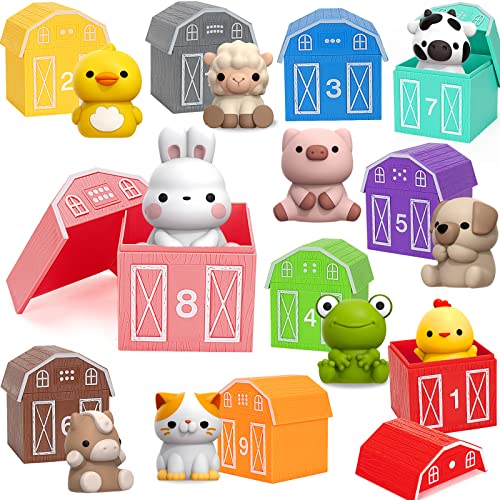
Object permanence is solidifying, and toddlers begin to understand cause-and-effect relationships. They experiment with how things work, enjoy repetition, and start solving simple problems like fitting shapes into corresponding holes. This is where shape sorters, stacking toys, and simple puzzles become invaluable.
Language Acquisition
Vocabulary expands rapidly during this period, from first words to short phrases. Toys that involve naming, singing, and interactive sound play support language development. Board books, simple picture books, and toys with clear verbal labels are excellent choices for this stage.
Key Insight: The most effective educational toys for this age group engage multiple developmental domains simultaneously—a stacking toy, for instance, supports fine motor skills, cognitive understanding of size relationships, and language development when parents name colors and shapes.
Essential Types of Educational Toys for 12-18 Month Olds
The market offers a vast array of options, but certain toy categories consistently prove valuable for toddlers in this age range. Each category targets specific developmental needs while remaining engaging and age-appropriate.
1. Stacking and Nesting Toys
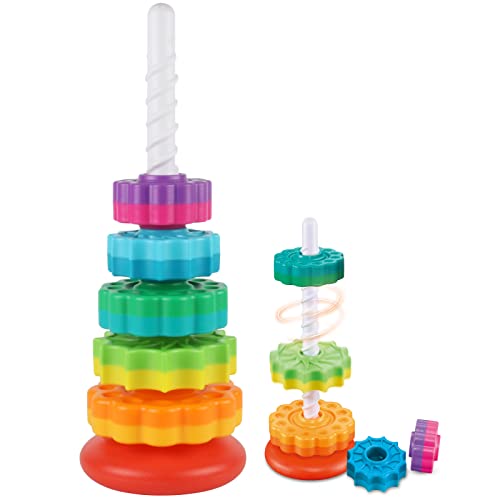
These classic toys teach size relationships, spatial awareness, and cause-and-effect. Toddlers learn to stack rings by size or nest cups within each other, developing problem-solving skills and patience. Look for sets with varied textures and colors to add sensory richness. Entry-level sets typically feature simple plastic rings, while mid-range options often include textured surfaces and multiple stacking configurations.
2. Shape Sorters
Shape sorters are quintessential educational toys for this age. They combine fine motor practice with cognitive challenge as toddlers match shapes to corresponding holes. Start with simple two-shape sorters for younger toddlers and progress to multi-shape versions as skills develop. Premium options often feature tactile feedback or sound effects that reinforce correct placements.
3. Push and Pull Toys
For toddlers learning to walk, push toys provide stability and encourage forward movement. Pull toys add a layer of coordination as children learn to move while watching what follows. These toys support gross motor development and spatial awareness. Look for models with adjustable handle heights and sturdy bases for safe walking practice.
4. Simple Puzzles
Wooden puzzles with large knobs and bold pictures are ideal for this age. They teach shape recognition, problem-solving, and pincer grasp development. Start with single-piece puzzles and progress to multi-piece versions. Board book puzzles and chunky wooden puzzles are particularly well-suited for 12-18 month olds.
5. Board Books and Interactive Books
Language-rich toys are crucial during this period. Board books with textures, flaps, or sound buttons engage multiple senses while building vocabulary. Look for books with clear, realistic images and simple text. Interactive books that encourage pointing and naming are especially effective for language development.
6. Sensory Toys
Toddlers learn through their senses. Toys with varied textures, sounds, and visual elements support sensory integration. Balls with different surfaces, musical instruments designed for small hands, and sensory bins with safe materials all provide valuable sensory experiences. The explore and more 3-stage activity center offers a multi-sensory approach for this developmental stage.
7. Building Blocks
Large, soft blocks or chunky wooden blocks introduce early engineering concepts. Toddlers learn to stack, balance, and create simple structures. These toys support spatial reasoning, creativity, and fine motor skills. Look for blocks sized appropriately for small hands—large enough to prevent choking hazards but small enough to manipulate easily.
Editor's Note: The best toy collections for this age include a balanced mix from each category. The educational toys for 6 months to 1 year guide provides context for understanding how toy needs evolve, while the educational toys for two year olds resource helps you plan ahead.
Safety Guidelines for Toy Selection
Safety is paramount when selecting toys for toddlers. Children in the 12-18 month range are naturally curious and explore objects with their mouths, which creates specific safety considerations. Always prioritize safety features over novelty or entertainment value.
Choking Hazard Awareness
Any toy or toy part that can fit entirely inside a standard toilet paper roll is a potential choking hazard. Avoid toys with small detachable parts, marbles, balloons, or small batteries. For this age group, ensure all components are securely attached and large enough to prevent swallowing.
Material Safety
Choose toys made from non-toxic materials. Wooden toys should use water-based, non-toxic paints. Plastic toys should be BPA-free and phthalate-free. Avoid toys with strong chemical odors, which may indicate unsafe manufacturing processes. Look for toys that meet safety standards from recognized organizations.
Structural Safety
Inspect toys for sharp edges, loose parts, and potential pinch points. Avoid toys with long strings or cords longer than 12 inches, as these pose strangulation risks. Ensure hinges and joints are secure and cannot pinch small fingers. For push and pull toys, verify that handles are securely attached and sized appropriately.
Age-Appropriate Design
Always follow the manufacturer's age recommendations. Toys designed for older children may contain small parts or features unsuitable for toddlers. The 12-18 month age range is specifically addressed by toys labeled for "12 months and up" or "1 year and up."
Safety Checklist: Before introducing any new toy, verify: (1) No small parts that could detach, (2) Non-toxic materials and finishes, (3) No sharp edges or points, (4) No long strings or cords, (5) Meets CPSC or equivalent safety standards, (6) Appropriate size for the child's hand and mouth exploration.
Toy Category Comparison by Developmental Benefit
The following table summarizes how different toy categories support various developmental domains. Use this as a quick reference when building a balanced toy collection for your toddler.
| Toy Category | Primary Benefit | Best For | Tier Consideration |
|---|---|---|---|
| Stacking & Nesting Toys | Size recognition, spatial awareness | Problem-solving practice | Entry-level sets suffice; premium options add texture variety |
| Shape Sorters | Fine motor skills, cognitive matching | Hand-eye coordination | Mid-range models often include sound feedback |
| Push & Pull Toys | Gross motor development | Walking confidence | Sturdy construction matters more than tier |
| Simple Puzzles | Problem-solving, pincer grasp | Concentration building | Wooden versions offer durability across tiers |
| Board Books | Language acquisition | Vocabulary building | Content quality varies by publisher, not tier |
| Sensory Toys | Sensory integration | Multi-sensory exploration | Premium options offer more varied textures |
| Building Blocks | Spatial reasoning, creativity | Early engineering concepts | Soft blocks for safety; wooden for durability |
How to Choose the Right Educational Toys
Selecting toys for a 12-18 month old requires balancing developmental appropriateness, safety, and engagement. Rather than accumulating a large collection, focus on quality and variety. A curated selection of 10-15 well-chosen toys is more beneficial than a room full of random options.
Observe Your Child's Interests
Every toddler has unique preferences. Some gravitate toward physical play, while others prefer quiet, focused activities. Observe which toys your child returns to repeatedly and use those observations to guide future selections. A child who loves stacking will likely enjoy building blocks; one who enjoys sound-making toys may appreciate simple musical instruments.
Rotate Toys Strategically
Keep only a subset of toys accessible at any time. Rotating toys every two to three weeks maintains novelty and engagement. Store unused toys out of sight and reintroduce them periodically. This approach makes a smaller collection feel larger and prevents toy fatigue.
Prioritize Open-Ended Play
Toys that can be used in multiple ways—blocks, balls, simple dolls, and basic vehicles—offer more long-term value than single-purpose toys. Open-ended toys encourage creativity and grow with your child as their play becomes more sophisticated.
Consider Durability and Maintenance
Toddlers are not gentle with toys. Choose items that can withstand dropping, throwing, and mouthing. Easy-to-clean surfaces and machine-washable fabrics simplify maintenance. For wooden toys, verify that finishes are water-based and non-toxic.
Involve Your Child in Play
The most educational toy is one shared with a caregiver. Demonstrate how toys work, narrate play, and ask simple questions. Your engagement transforms a basic toy into a rich learning experience. The educational toys for 12-18 month olds guide emphasizes that parental involvement amplifies educational value.
Recommendation: Build your toddler's toy collection gradually. Start with a core set of stacking toys, shape sorters, board books, and push toys. Add categories as you observe your child's emerging interests and developmental progress. Avoid purchasing entire collections at once—let your child's needs guide your choices.
Frequently Asked Questions
What types of educational toys are best for 12-18 month olds?
The best educational toys for 12-18 month olds include stacking blocks, shape sorters, push-pull toys, board books, simple puzzles, and sensory toys that encourage fine motor skills, cognitive development, and language acquisition. Focus on toys that engage multiple developmental domains simultaneously for maximum benefit.
How do I choose safe toys for a 12-18 month old?
Choose toys that are age-appropriate, free from small parts that could be choking hazards, made from non-toxic materials, and have no sharp edges. Look for toys that meet CPSC or equivalent safety standards and avoid those with long strings or cords. Always inspect toys before introducing them to your child.
How many toys does a 12-18 month old need?
A 12-18 month old does not need many toys. A curated selection of 10-15 high-quality educational toys that support different developmental areas is sufficient. Rotating toys every few weeks keeps engagement high and prevents overwhelm. Quality matters far more than quantity.
What developmental milestones should toys support at 12-18 months?
Toys for 12-18 month olds should support fine motor skills like grasping and stacking, gross motor skills like pushing and pulling, cognitive skills like problem-solving and object permanence, and language development through naming and sounds. A balanced toy collection addresses all these areas.
Should I buy electronic toys for my 12-18 month old?
Electronic toys can be engaging but should be used sparingly. Choose simple electronic toys with clear cause-and-effect relationships over overstimulating models with flashing lights and complex sounds. Traditional toys that require active child participation generally offer greater developmental value than passive electronic entertainment.
How often should I rotate my toddler's toys?
Rotate toys every two to three weeks to maintain novelty and engagement. Keep a smaller selection accessible and store the rest out of sight. When reintroducing toys, your child will experience them as new, extending the useful life of your collection and preventing toy fatigue.