Educational Toys for 1 Year Old: A Complete Buying Guide
Everything parents need to choose safe, developmentally appropriate toys that spark curiosity and support your toddler's growth through play.
Why this guide matters: At twelve months, your child is transitioning from baby to toddler. The right toys at this stage do more than entertain — they build fine motor skills, encourage problem-solving, and introduce early concepts like sorting, stacking, and cause-and-effect. This guide walks you through the categories, safety standards, and selection criteria so you can purchase with confidence.
Why Educational Toys Matter at 12 Months
By the first birthday, most toddlers are pulling to stand, cruising, and developing a pincer grasp. Their brains are forming millions of neural connections every second, and play is the primary vehicle for that development. Educational toys for a 1 year old are designed to channel this natural curiosity into structured discovery.
Unlike passive entertainment, open-ended toys invite experimentation. A stacking ring set teaches size sequencing and hand-eye coordination. A shape sorter reinforces spatial reasoning. A simple push-along toy encourages gross motor movement and balance. Each category targets a different developmental domain:
- Cognitive development: cause-and-effect toys, puzzle boards, and object permanence boxes
- Fine motor skills: grasping toys, peg boards, and nesting cups
- Gross motor skills: push toys, pull toys, and ride-on walkers
- Language and sensory: musical toys, textured balls, and board books
- Social-emotional: pretend-play props and soft dolls
If you're also planning ahead, our guide to educational toys for 12-18 month olds covers the next developmental phase in detail.
Safety First: Non-Negotiable Standards
Before evaluating features or developmental benefits, safety must be your first filter. Toddlers explore with their mouths, so choking hazards are the primary concern. Follow these guidelines:
Safety Checklist for Toys for 1 Year Olds
- Check for small parts that fit inside a toilet-paper tube — if they do, they are choking hazards
- Confirm the toy is labeled for ages 12 months and up
- Avoid toys with loose magnets or button batteries, which cause severe internal injuries if swallowed
- Inspect for sharp edges, protruding screws, and loose joints
- Choose non-toxic, lead-free finishes and paints
- Avoid long strings or cords longer than seven inches
- Verify stability for push toys and ride-ons so they don't tip during use
Reputable brands comply with ASTM F963 (United States), EN71 (Europe), or equivalent regional safety standards. Always check for recalls on the manufacturer's website before purchasing, and inspect toys regularly for wear and tear.
Best Categories of Educational Toys for 1 Year Olds
1. Stacking and Nesting Toys
Classic stacking cups and ring towers teach size relationships, sequencing, and hand-eye coordination. Look for rounded edges and BPA-free materials. These are among the most durable developmental staples and grow with your child through toddlerhood.
2. Shape Sorters and Puzzle Boards
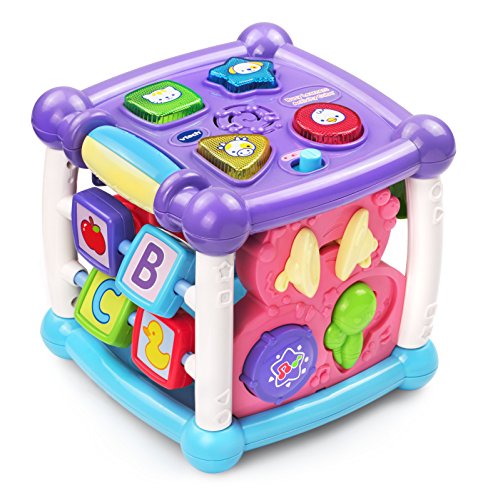
Simple shape sorters with large, easy-to-grip pieces build spatial reasoning and problem-solving. Start with a single-shape board and progress to multi-shape sorters as your toddler gains confidence. Chunky wooden puzzles with knob handles are excellent for developing the pincer grasp.
3. Sensory and Textured Toys
Textured balls, crinkle fabric toys, and soft blocks expose toddlers to different tactile sensations. Sensory play supports neural development and helps children learn to process different stimuli. If you want a broader overview of the 6-to-12-month window, see our educational toys for 6 months to 1 year guide.
4. Push, Pull, and Walk-Along Toys
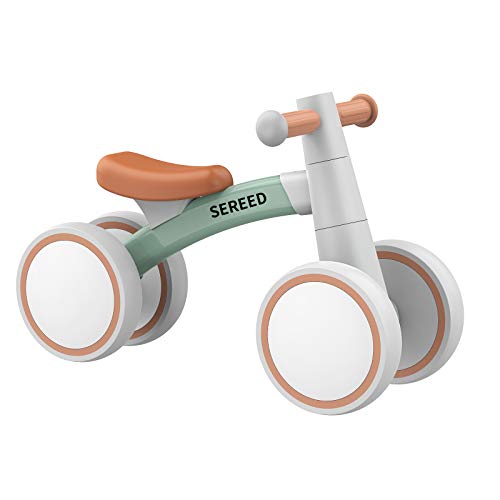
As your toddler gains mobility, push toys and walk-along wagons encourage balance and gross motor coordination. Choose models with adjustable resistance so beginners aren't overwhelmed. Pull toys with strings should be supervised to prevent entanglement.
5. Musical and Sound Toys
Simple instruments — tambourines, maracas, xylophones — introduce rhythm and cause-and-effect learning. Avoid electronic toys with constant flashing lights or loud volume, which can overstimulate. A balanced approach favors analog instruments that let the child create the sound.
6. Fine Motor Skill Toys
Peg boards, lacing cards, and posting boxes develop dexterity. Our dedicated guide on fine motor skills toys for 12-18 months explores this category in depth, including how to progress difficulty as skills develop.
7. First Board Books and Language Toys
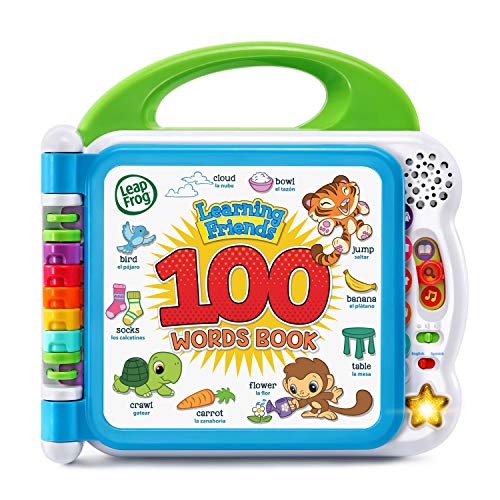
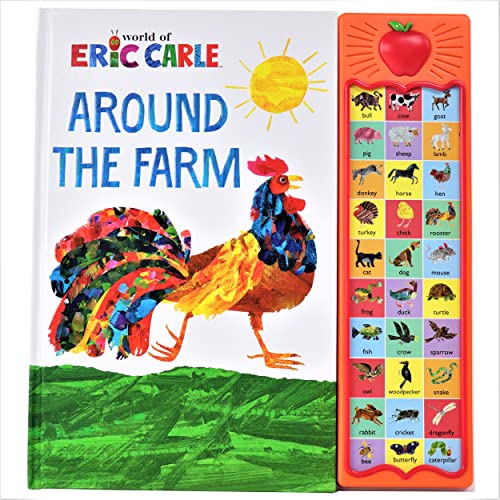
Sturdy board books with bold images and simple text build vocabulary and print awareness. Interactive flaps and touch-and-feel pages engage multiple senses. Reading together daily remains one of the highest-impact developmental activities you can do.
How to Evaluate Toy Quality: A Tier-Based Framework
Rather than getting lost in brand comparisons, evaluate toys on a consistent tier framework. This helps you match each purchase to your priorities without relying on fluctuating market figures.
| Tier | Best For | Typical Characteristics |
|---|---|---|
| Essential tier | Core developmental staples | Simple designs, plastic or basic wood construction, limited features, reliable function |
| Mid-tier | Balanced feature set | Better finishes, more durable joints, multi-stage designs that grow with the child |
| Premium tier | Long-term investment pieces | Solid hardwood, non-toxic water-based finishes, heirloom-quality construction, refined design |
| Flagship tier | Design-led, high-specification picks | Montessori-aligned aesthetics, premium materials, exceptional craftsmanship, curated learning progression |
A mid-tier stacking toy typically offers smoother sanded edges and tighter tolerances than an essential-tier alternative, which matters for longevity and safety. Premium and flagship tiers are worthwhile investments when the toy will be used daily and passed down to siblings.
Key Criteria When Choosing Educational Toys
- Age-appropriate labeling: Confirm the manufacturer recommends the toy for 12 months and older
- Open-ended design: Toys that can be used in multiple ways sustain engagement longer than single-function electronics
- Durability: Reinforced joints, solid wood, and high-grade plastic outlast thin molded parts
- Ease of cleaning: Wipeable surfaces and machine-washable fabrics simplify hygiene
- Storage footprint: Nesting toys and compact sets save space in small nurseries
- Noise level: Avoid toys with non-adjustable volume; check for volume-limiting switches
What to Avoid
- Toys with loose magnets or button batteries
- Screen-based electronics marketed as educational for this age group
- Toys with sharp edges, splinters, or exposed fasteners
- Overly complex toys that require adult assembly for every use
- Anything with small removable parts that could be swallowed
- Flashing, loud toys with no volume control
Frequently Asked Questions
What types of educational toys are best for a 1 year old?
The best options include stacking blocks, shape sorters, sensory balls, push-and-pull toys, and simple musical instruments. These support fine motor skills, cause-and-effect learning, and sensory exploration while remaining safe for mouthing and handling.
How many toys should a 1 year old have?
A focused collection of 8 to 12 educational toys rotated regularly works better than an overflowing toy box. Fewer choices help toddlers engage more deeply, reduce overstimulation, and make cleanup manageable for parents.
What safety features should I look for in toys for 1 year olds?
Look for toys with no small detachable parts, rounded edges, non-toxic finishes, and clear age-appropriate labeling. Avoid loose magnets, button batteries, and long strings that pose choking or strangulation risks. Check for current recalls before purchasing.
Do educational toys really help a 1 year old's development?
Yes, when they match the child's developmental stage. Open-ended toys that encourage stacking, sorting, grasping, and cause-and-effect exploration support cognitive, motor, and language development during the toddler years.
When should I introduce a shape sorter?
Most toddlers are ready for a simple single-shape sorter around 12 to 14 months. Begin with one shape and a large, easy-to-grip piece, then add complexity as your child masters the motion.
Related Reading
Continue your research with our companion guides on educational toys for two year olds and toys for 12-18 month olds to plan the next stages of your child's play collection.
Ready to shop? Browse our curated selection of educational toys for 1 year olds below. Each product has been evaluated for developmental value, safety, and durability.