Educational Toys for 6 Months to 1 Year: The Complete Buying Guide
Learn how to choose age-appropriate toys that support fine motor skills, cause-and-effect thinking, and sensory discovery during one of the fastest growth windows in your baby's life.
Explore Toy CategoriesWhy this stage matters: Between 6 months and 1 year, your baby transitions from sitting with support to crawling, pulling up, and possibly taking first steps. Each new motor skill unlocks fresh ways to explore, which is exactly why the right toys can make daily play more purposeful.
This guide walks you through the developmental milestones that define this window, the toy categories that best support them, and the safety checks every parent should perform before handing a new toy to a baby. If you are planning ahead, you can also review our educational toys for 1-year-olds guide and our roundup of toys for 12–18 month olds to build a longer-term toy rotation.
Our goal is to help you shop with confidence, whether you are buying your first play gym or adding a few stacking cups to an existing collection. Every recommendation here is framed around developmental benefit, safety, and long-term play value.
Developmental Milestones from 6 Months to 1 Year
Understanding what your baby is working on helps you choose toys that meet them where they are. The milestones below are general guides, not strict timelines, because every baby develops at their own pace. Use them to match toy features to emerging skills rather than to measure progress.
6–8 Months: Reaching & Grasping
Babies begin to reach deliberately, transfer objects between hands, and mouth everything. Toys that are easy to grip, lightweight, and safe for teething support this phase.
8–10 Months: Cause & Effect
Your baby starts to understand that actions produce results. Buttons, rattles, pop-up toys, and simple musical toys reinforce this cognitive leap.
10–12 Months: Stacking & Problem-Solving
Fine motor control improves rapidly. Stacking cups, shape sorters, and nesting toys challenge hand-eye coordination and early planning skills.
Throughout: Sensory Exploration
Textures, sounds, and contrasting colors remain engaging all year. Sensory toys help babies build neural pathways through touch, sight, and hearing.
Best Educational Toy Categories for 6–12 Months
The strongest toy collections for this age group are built around a few core categories rather than dozens of random items. Each category below targets a specific set of skills, and together they form a balanced play rotation.
-
Sensory Balls & Textured Rattles
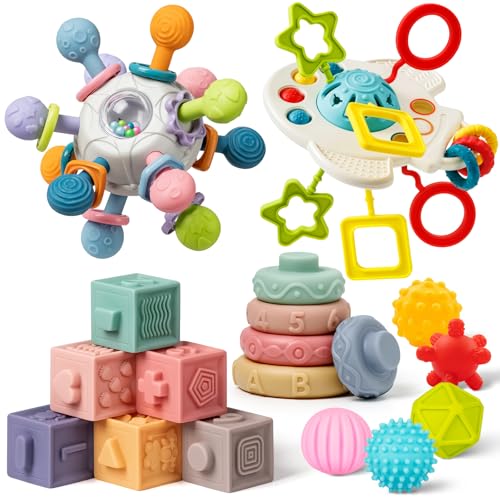
Lightweight balls with bumps, ridges, and soft spikes encourage grasping, rolling, and mouthing. Look for entry-level to mid-range options with sealed seams and non-toxic finishes.
Best for: 6–9 months
-
Play Gyms & Activity Mats
A well-designed play gym supports tummy time, visual tracking, and reaching. High-contrast patterns and hanging toys that are easy to bat at work well for younger babies in this range.
Best for: 6–8 months
-
Stacking Cups & Nesting Toys
These simple toys grow with your baby. Early on they are fun to knock over; later they become tools for stacking, nesting, and bath-time play. Mid-tier sets often include textured edges and drainage holes.
Best for: 8–12 months
-
Shape Sorters & Posting Toys
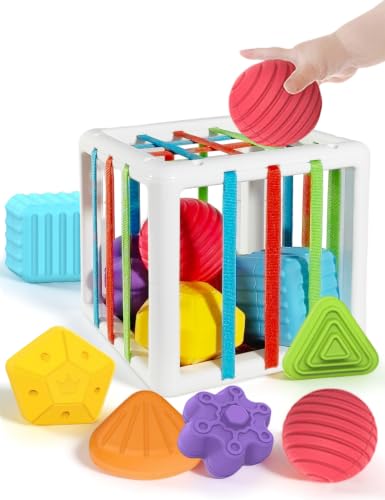
Shape sorters introduce problem-solving and hand-eye coordination. Choose models with rounded edges and chunky pieces sized for small hands. A balanced-tier sorter with 3–5 shapes is usually enough.
Best for: 9–12 months
-
Cause-and-Effect Toys
Pop-up toys, busy boards, and simple button toys teach babies that their actions matter. Look for models with smooth mechanisms and no small detachable parts.
Best for: 8–12 months
-
Board Books & Soft Books
Books build language exposure and page-turning skills. Soft or indestructible books are ideal for babies who still mouth everything. High-contrast images and simple text keep attention longer.
Best for: 6–12 months
If you are also exploring fine motor development specifically, our guide to fine motor skills toys for 12–18 months is a useful next step once your baby approaches their first birthday. For activity centers that combine multiple play modes, see our overview of the 3-stage activity center.
Toy Category Comparison at a Glance
Use this table to quickly match toy types to developmental goals and recommended age windows. The tier column reflects relative market positioning, not a judgment of quality.
| Toy Category | Primary Skill | Best Age Window | Typical Market Tier |
|---|---|---|---|
| Sensory balls & rattles | Grasping, mouthing, tracking | 6–9 months | Entry-level to mid-range |
| Play gyms & activity mats | Tummy time, reaching, visual focus | 6–8 months | Mid-range to premium |
| Stacking cups & nesters | Fine motor control, spatial reasoning | 8–12 months | Entry-level to mid-range |
| Shape sorters & posting toys | Problem-solving, hand-eye coordination | 9–12 months | Mid-range |
| Cause-and-effect toys | Cognitive understanding, persistence | 8–12 months | Entry-level to premium |
| Board books & soft books | Language exposure, page-turning | 6–12 months | Entry-level |
Safety Checklist Before You Buy
Babies in this age range explore primarily through their mouths, so safety should be the first filter for every toy. Run through the checks below before adding any item to your cart.
- No small parts: Avoid anything that fits through a toilet-paper tube, including loose eyes, buttons, and beads.
- Secure construction: Tug on eyes, seams, and joints to confirm they are firmly attached and cannot be pulled loose.
- Non-toxic finishes: Choose toys labeled with non-toxic paint and finishes, especially for items likely to be mouthed.
- No long cords or strings: Anything longer than 12 inches poses a strangulation risk and should be avoided.
- Age-appropriate labeling: Check the manufacturer's age recommendation and confirm the toy is intended for children under one year.
- Rounded edges: Inspect for sharp corners or rough seams that could scratch delicate skin.
For babies prone to skin sensitivities, it is also worth reviewing our guide to eczema-friendly baby products to ensure toy materials and cleaning routines are gentle on the skin.
How to Build a Balanced Toy Rotation
More toys do not automatically mean more learning. A small, thoughtfully selected rotation often keeps babies more engaged because each item feels novel when it returns to the shelf. Here is a practical approach:
Start with five core categories: a sensory toy, a stacking or nesting toy, a cause-and-effect toy, a book, and a soft comfort item. This covers the main developmental domains without overwhelming your baby.
Rotate every one to two weeks: Store half the collection out of sight and swap it in when engagement drops. This keeps play fresh and makes each toy feel new again.
Prioritize open-ended play: Toys that can be used in multiple ways, like stacking cups that double as bath toys, deliver more long-term value than single-purpose items.
Leave room for everyday objects: Safe household items such as wooden spoons and silicone spatulas can be just as engaging as commercial toys and support the same developmental goals.
Frequently Asked Questions
What educational toys are best for a 6-month-old baby?
At 6 months, babies benefit from sensory toys like soft rattles, textured balls, teething toys, and high-contrast play gyms. These support grasping, mouthing, and visual tracking, which are key developmental milestones at this age.
How many toys does a 6–12 month old really need?
A focused collection of 8 to 12 high-quality toys is generally sufficient. Rotating a small selection every one to two weeks keeps engagement high without overwhelming your baby with too many choices.
Are electronic learning toys good for babies under 1 year?
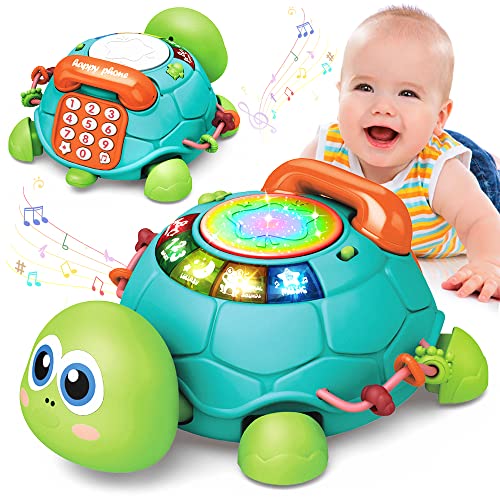
Electronic toys can be engaging, but simple, open-ended toys often support more active exploration. If you choose electronic toys, look for models with volume control, few flashing lights, and features that encourage cause-and-effect learning rather than passive watching.
What safety features should I check before buying toys for a 6–12 month old?
Check for the absence of small parts that fit through a toilet-paper tube, non-toxic finishes, securely attached eyes and buttons, no sharp edges, and age-appropriate labeling. Avoid toys with long strings or cords longer than 12 inches.
How do educational toys support development from 6 months to 1 year?
Educational toys support fine motor skills through grasping and stacking, cognitive development through cause-and-effect play, language through naming and imitation, and social-emotional growth through shared play with caregivers.
Ready to Build Your Baby's Toy Collection?
Browse our curated product recommendations below to find educational toys that match your baby's current stage and your family's play style.
View Recommended Toys