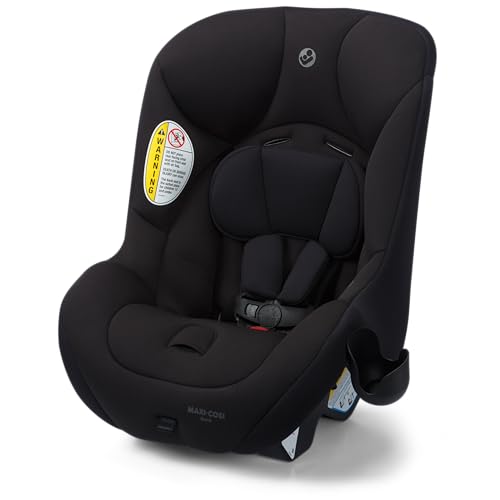
Travel-Friendly Convertible Car Seat: The Complete Buying Guide
Everything you need to know about choosing a portable, lightweight convertible car seat that moves with your family — from road trips to airplane travel.
Why this guide matters: A convertible car seat that stays home on travel days is a car seat you can't fully rely on. Whether you're navigating an airport terminal, squeezing into a rental car, or switching between caregivers, a travel-friendly convertible car seat bridges the gap between long-term safety and everyday mobility. This guide breaks down the exact features that make a convertible seat genuinely portable — without compromising crash protection or installation integrity.
Key Takeaways
- Weight and bulk are the primary portability factors — look for seats that balance a reinforced shell with a manageable carry weight.
- Installation method matters more than installation speed — a travel-friendly seat should install correctly in unfamiliar vehicles without excessive struggle.
- FAA approval determines whether a convertible seat can be used on aircraft, which is essential for air travel.
- Folding and compact designs are a separate category worth exploring if storage or trunk space is your main constraint.
- Safety is non-negotiable — portability features should never come at the expense of a five-point harness, side-impact protection, or a secure lower-anchor connection.
What Makes a Convertible Car Seat Travel-Friendly?
A convertible car seat is designed to grow with your child — typically from the rear-facing infant stage through forward-facing and sometimes into booster mode. That growth span is exactly why these seats are bulky: they need a reinforced shell, adjustable harness paths, and multi-position recline mechanisms to accommodate years of development.
Travel-friendliness, then, is a matter of engineering trade-offs. A genuinely travel-friendly convertible car seat delivers three things simultaneously:
- Manageable physical dimensions — not necessarily the lightest seat on the market, but one whose weight and footprint are realistic for lifting into a vehicle, carrying through a terminal, or stowing in a trunk.
- Predictable installation — the seat should install correctly using either the vehicle's lower anchors or the seat belt path, with clear routing and accessible tensioning points. A seat that takes twenty minutes to install properly is not travel-friendly, no matter how light it is.
- Travel compatibility — FAA approval for aircraft use, a shell narrow enough to fit three-across in many vehicles, and a profile that works in rental cars and rideshares.
It's worth distinguishing between two related but different categories. A travel convertible car seat focuses on portability for frequent movers, while a portable car seat for travel may lean toward ultra-compact folding designs. If you're specifically comparing long-term growth seats with travel priorities, our guide to the travel-friendly convertible car seat category covers the full spectrum.
Portability Features That Actually Matter
Weight and Carry Ergonomics
The most obvious portability factor is weight, but raw weight is only half the story. A seat that weighs more but has a well-balanced carry handle or shoulder strap can feel easier to move than a lighter seat with awkward geometry. Look for seats in the mid-range weight class that offer reinforced carry handles, and consider whether you'll realistically be carrying the seat any meaningful distance or simply lifting it in and out of vehicles.
Compact Footprint and Narrow Shell Design
A narrow shell makes a convertible seat easier to fit into small rental cars, three-across bench configurations, and rideshare vehicles. Seats designed with a tapered base or slim side wings can often achieve a narrower profile without sacrificing the side-impact protection that comes from deeper headrest geometry. When evaluating footprint, check the seat's width at the base and at the widest point of the shell — both matter for real-world fit.
Installation Systems: Lower Anchors vs. Seat Belt
Travel-friendly seats typically offer both a lower-anchor connection and a clearly marked seat belt path. The lower-anchor route is usually faster when the vehicle's anchors are accessible, while the seat belt path is essential for vehicles without lower anchors or for center-seat installations. Premium-tier models sometimes include push-button or rigid lower-anchor connectors that reduce installation effort, while essential-tier models rely on flexible strap connectors that require manual tensioning. Neither approach is inherently less safe — the difference is convenience and repeatability across unfamiliar vehicles.
FAA Approval for Air Travel
If air travel is part of your plan, FAA approval is non-negotiable. Most convertible car seats are FAA approved for aircraft use in harness mode, but approval is seat-specific and should be verified on the manufacturer's label. A seat that's FAA approved and narrow enough for an airplane seat is the true definition of travel-ready — and it saves you from checking a car seat as luggage, which introduces risk of damage or loss.
Quick Portability Checklist
- Reinforced carry handle or integrated shoulder strap
- Weight that you can realistically lift overhead into a vehicle
- Narrow base for three-across and compact vehicle fit
- Dual installation options (lower anchors + seat belt path)
- FAA approval label clearly visible on the shell
- Harness adjustment accessible without uninstalling the seat
- Machine-washable, easily removable fabric covers
Comparing Convertible Car Seat Tiers for Travel
The convertible car seat market segments into recognizable quality tiers. The table below compares what each tier typically delivers for travel-focused families — using relative positioning rather than absolute figures.
| Tier | Best For | Typical Portability Strengths | Trade-offs to Expect |
|---|---|---|---|
| Essential Tier | Occasional travel and secondary-vehicle use | Straightforward design, lighter shell construction, simple harness routing | Fewer recline positions, basic padding, manual lower-anchor tensioning |
| Balanced Tier | Frequent road trips and mixed vehicle use | Good weight-to-protection ratio, dual installation paths, accessible harness adjusters | Moderate shell width, fabric covers that require careful reinstallation |
| Mid-Range Tier | Families who travel monthly and switch caregivers | Refined lower-anchor connectors, smoother recline mechanisms, narrower profiles | Slightly higher weight due to reinforced side wings, more complex cover removal |
| Premium Tier | Frequent flyers and families with multiple vehicles | Push-button or rigid lower-anchor systems, premium fabrics, deep side-impact protection | Heavier shell, larger overall footprint, steeper learning curve for installation |
| Flagship Tier | Travel-heavy lifestyles and long-term investment | Engineered weight distribution, rotating or modular features on select models, top-tier crash protection | Highest weight in the category, most complex installation documentation |
As the table shows, the relationship between tier and portability is not linear. An essential-tier seat may be lighter, but a mid-range seat often installs more predictably in unfamiliar vehicles — which is arguably the more important travel quality. The best approach is to decide whether your priority is lifting weight or installation reliability, then choose the tier that aligns with it.
Installation in Unfamiliar Vehicles: The Hidden Travel Challenge
Here's the scenario most travel guides overlook: you've arrived at a rental counter with your convertible car seat, and the vehicle you reserved has recessed lower anchors, stiff seat belt buckles, and a bench seat that slopes more than your car at home. A seat that installs in sixty seconds at home can take fifteen frustrating minutes in an unfamiliar vehicle — and rushed installations are where errors happen.
Travel-friendly convertible seats mitigate this in several ways:
- Clearly marked belt paths with color-coded or numbered routing guides reduce the chance of misrouting in low-light or cramped conditions.
- Lock-off mechanisms on the seat belt path eliminate the need for a locking clip in vehicles with free-sliding latch plates.
- Level indicators (bubble or line-based) help you confirm the correct recline angle on seats that don't match your reference vehicle.
- Accessible harness adjustment lets you resize the harness without uninstalling — critical when switching between children or loaning the seat to a grandparent.
If your travels frequently involve rideshares or taxis, consider pairing your convertible seat strategy with guidance on a travel car seat setup that prioritizes quick, verifiable installation. And if you're building a full travel system around your child's seat, the infant convertible car seat and stroller combination approach can reduce the number of separate items you're managing.
Safety Features You Should Never Compromise for Portability
Portability is a convenience feature. Safety is the foundation. No matter how travel-friendly a convertible car seat is, it must retain the following:
- Five-point harness with a chest clip — the standard for convertible seats. A properly fitted harness sits snug against the body with no slack at the collarbone.
- Side-impact protection — deep headrest wings or energy-absorbing foam in the shell. Narrow travel designs should still provide meaningful side coverage.
- Rear-facing weight and height limits — extended rear-facing capacity is a major safety benefit. Check that the travel seat you choose supports rear-facing for as long as your child needs it.
- Steel-reinforced frame or shell — particularly important for seats that will be moved frequently and subjected to handling stress.
- Current safety standard compliance — FMVSS 213 in the United States, or the equivalent standard in your region. Verify recalls before purchasing any seat.
It's also worth understanding adjacent categories. A rotating convertible car seat offers loading convenience but typically adds weight and complexity — a trade-off that may not suit frequent travel. Similarly, an all-in-one convertible car seat covers more stages but is rarely the most portable option. Travel-friendliness usually means accepting a narrower growth range in exchange for manageability.
Travel-Friendly Convertible vs. Other Car Seat Strategies
A convertible car seat isn't the only way to handle travel. Here's how the alternatives compare:
Dedicated Travel Car Seat
A dedicated travel seat is typically lighter and simpler than a full convertible seat, often with fewer recline positions and a narrower shell. The trade-off is a shorter usable lifespan and sometimes reduced padding. If your primary goal is a seat that lives in a travel bag and comes out for trips, a travel convertible car seat balances both priorities. For families who already own a primary convertible seat and want a secondary travel option, a lightweight travel-specific seat can complement the setup.
Infant Car Seat + Base System
Infant car seats are inherently more portable in the early months — they click into strollers and bases and can be carried with a handle. But they're outgrown relatively quickly. A convertible seat takes over from there, and choosing a travel-friendly convertible model means you don't lose portability when you transition. If you're planning a travel system, the travel stroller and car seat pairing is worth reviewing alongside your convertible seat choice.
Rental Car Seat Services
Renting a car seat at your destination eliminates the need to travel with one, but introduces uncertainty about the seat's history, condition, and installation. For many parents, the peace of mind of using a known, correctly installed seat outweighs the convenience of renting. A travel-friendly convertible seat that you've practiced installing at home is the most reliable option.
Practical Tips for Traveling With a Convertible Car Seat
- Practice installation before you leave. Install the seat in your own vehicle, then reinstall it in a friend's or family member's car to build familiarity with different anchor and belt configurations.
- Carry the manual — or photograph it. Installation instructions vary by vehicle, and having the manual accessible (or photographed on your phone) prevents guesswork.
- Use a car seat travel bag. A padded bag protects the seat during gate-checking and keeps the harness and fabric clean. Look for bags with backpack straps for hands-free carrying. Our guide to a travel bag for stroller and car seat covers options that fit convertible seats.
- Verify FAA approval before booking. Confirm the approval label on your specific seat model, and check your airline's policy for car seat use on board.
- Pack a harness cleaning kit. Travel exposes the seat to spills and dust. A small kit with wipes and a spare cover (if available) keeps the seat hygienic.
- Consider a sun shade accessory. For road trips, a sun shade for strollers and car seats protects your child from direct sunlight during long drives.
Frequently Asked Questions
Are convertible car seats allowed on airplanes?
Most convertible car seats are FAA approved for aircraft use in harness mode, but approval is model-specific. Check the manufacturer's label on the seat shell for the FAA approval statement. Airlines generally permit FAA-approved seats to be used in a window seat, and some allow them in other seats depending on aircraft configuration. Always confirm with your airline before flying.
How light does a convertible car seat need to be to count as travel-friendly?
There's no universal threshold, because carry ergonomics matter as much as raw weight. A seat in the mid-range weight class with a balanced carry handle can be easier to manage than a lighter seat with awkward geometry. Focus on whether you can lift the seat into a vehicle and carry it a short distance comfortably — that's the practical test.
Can I use a convertible car seat in a rental car?
Yes. Convertible car seats install in rental vehicles using the same lower-anchor or seat belt methods as your own car. The key is to verify the installation in the rental vehicle before driving, using the seat's level indicator and checking for movement at the belt path. Practicing installation at home beforehand makes this much faster.
Is a narrow convertible car seat less safe than a wider one?
Not inherently. A narrow shell can still provide robust side-impact protection if it's engineered with deep headrest wings and energy-absorbing foam. The safety standard compliance (such as FMVSS 213) applies regardless of width. What matters is that the seat is correctly installed, the harness is properly fitted, and the seat is appropriate for your child's height and weight.
Should I buy a travel-specific car seat or use my convertible seat for travel?
If you already own a convertible seat that installs predictably and is FAA approved, using it for travel is often the most reliable choice — you're familiar with its installation and your child is comfortable in it. A dedicated travel seat makes sense if your primary convertible seat is particularly heavy or difficult to install, or if you want a secondary seat that stays packed for trips. A travel car seat guide can help you compare the two approaches.
Final Recommendations: Matching the Seat to Your Travel Style
The right travel-friendly convertible car seat depends on how you travel:
- Occasional road trips and secondary-vehicle use: An essential-tier or balanced-tier convertible seat with dual installation paths and a manageable weight is a solid choice. Prioritize clear belt routing and accessible harness adjustment.
- Monthly travel and caregiver switching: A mid-range seat with refined lower-anchor connectors and a narrower shell pays off in installation reliability and vehicle fit.
- Frequent air travel: FAA approval, a narrow profile, and a padded travel bag are the must-haves. Premium-tier seats with push-button lower anchors reduce installation friction in rental cars.
- Long-term investment with heavy travel: A flagship-tier seat with engineered weight distribution and top-tier crash protection justifies itself over years of use — provided you've practiced installation and confirmed FAA approval.
Whichever tier you choose, the fundamentals don't change: a five-point harness, verified installation, correct recline angle, and a seat that fits your child's current height and weight. Portability is what makes the seat practical for your lifestyle — safety is what makes it worth using.
Ready to Compare Travel-Friendly Convertible Car Seats?
Explore our curated selection of travel-ready convertible car seats and find the one that matches your family's travel style.
View Top Picks Below