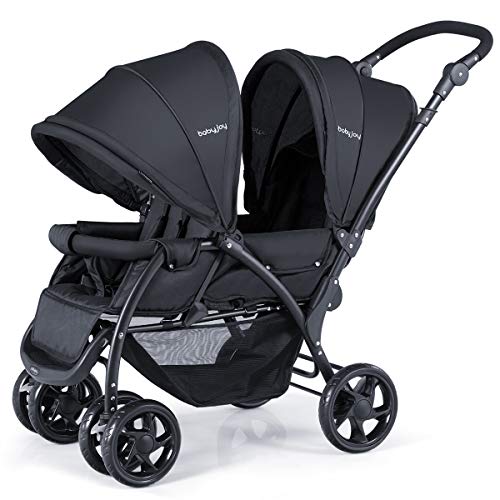
Double Stroller With Reversible Seats: The Complete Buying Guide
Everything you need to know about parent-facing double strollers — how reversible seating works, which families benefit most, what to compare before you buy, and how to choose the right configuration for twins or siblings of different ages.
What Is a Double Stroller With Reversible Seats?
A double stroller with reversible seats is a two-child stroller in which one or both seats can be rotated to face either the parent or the direction of travel. Unlike fixed-seat double strollers, where children always face forward, a reversible-seat model lets you switch orientation in seconds — often with a single lever or latch — without removing the child from the seat.
This feature is especially valuable for families with a newborn and a toddler. The newborn can ride parent-facing for eye contact, monitoring, and reassurance, while the older sibling faces forward to take in the world. Some models allow independent reversing, so each seat can be adjusted separately; others require both seats to face the same direction.
Why Families Choose Reversible Seating
Reversible seats solve several real-world parenting challenges that fixed-seat double strollers cannot address as gracefully:
- Newborn reassurance: Infants under six months benefit from parent-facing rides, which support bonding, visual tracking, and easier monitoring of breathing and comfort.
- Sibling flexibility: A toddler who wants to chat with mom or dad can face backward, while a curious older child can face forward — or you can switch mid-walk based on mood.
- Weather and sun management: Facing a child toward you can shield their face from wind, sun glare, or rain depending on the canopy design.
- Feeding and soothing on the go: A parent-facing seat makes it easier to hand a bottle, pacifier, or snack without stopping.
- Long-term use: As children grow, you can flip the seats to suit their preferences, extending the stroller's useful life across multiple stages.
If you are still deciding between a reversible-seat model and other configurations, our guide to the broader double stroller category explains how side-by-side, tandem, and travel-system designs compare.
How Reversible Seat Mechanisms Work
The reversible mechanism is the heart of these strollers, and the quality of that mechanism affects daily usability more than almost any other feature. There are three common designs:
1. Rotating Seat on a Central Pivot
The seat unit lifts slightly and rotates 180 degrees on a central post. This is the most common design on premium and mid-range models. Look for a locking indicator that clicks audibly when the seat is secured in either position.
2. Lift-and-Flip Seat
The seat detaches from the frame, is flipped, and re-attached. This design is simpler and often lighter, but requires two hands and a place to set the seat down. It is more common on entry-level and compact models.
3. Independent Dual-Reverse
Each seat has its own reversible mechanism, allowing one child to face forward while the other faces backward. This is the most flexible configuration and is typically found on top-tier tandem strollers.
Key Features to Compare Before Buying
Beyond the reversible seats themselves, these are the features that separate a stroller you will love from one you will tolerate:
| Feature | What to Look For | Why It Matters |
|---|---|---|
| Recline range | Flat recline (180°) on at least one seat; multi-position recline on both | Newborns need a flat, parent-facing position; toddlers need upright options |
| Fold mechanism | One-hand or foot-operated fold; compact folded footprint | You will fold this stroller daily — ease of folding is critical |
| Weight and folded size | Compare folded dimensions to your vehicle trunk and storage space | Reversible mechanisms add weight; confirm you can lift it comfortably |
| Canopy coverage | Extendable, UPF-rated canopies with peek-a-boo windows | Protects both orientations from sun and rain; windows let you check on parent-facing children |
| Brake system | One-step dual-wheel brake, ideally with a visual indicator | Essential safety feature, especially on slopes and during seat adjustment |
| Storage basket | Large, accessible basket with a high weight limit | Double strollers carry double the gear; basket access matters |
| Car seat compatibility | Adapter support for infant car seats (check specific models) | Lets you move a sleeping newborn without waking them |
| Handlebar adjustment | Adjustable height and telescoping options | Parents of different heights can share the stroller comfortably |
Seat Configurations and Sibling Age Gaps
The best configuration depends on the ages and needs of your children. Here is how reversible seating fits common family scenarios:
Newborn + Toddler (Most Common)
Set the newborn's seat to a flat, parent-facing recline, and let the toddler face forward. If the stroller allows independent reversing, you can flip the toddler's seat to face you during mealtimes or fussy moments. Models that also accept a bassinet or car seat are worth considering — see our guide to double strollers with a bassinet option.
Twins
Twins often do best with both seats facing the parent in the early months, then one or both facing forward as they become more curious. Independent dual-reverse strollers are ideal here. Explore double strollers with car seats for twins if you need travel-system flexibility.
Two Toddlers
Both children can face forward for the walk, but reversible seats let you flip one or both toward you when a child needs comfort, a snack, or a nap in a reclined position.
Entry-Level vs Mid-Range vs Premium Tiers
Double strollers with reversible seats fall into three broad market tiers. Use these descriptors to compare models relatively, without reference to specific figures:
| Tier | Typical Characteristics | Best For |
|---|---|---|
| Entry-Level | Lift-and-flip reversible seats, simpler fold, basic canopy coverage, fewer accessories | Occasional use, families who prioritize a lightweight frame and straightforward operation |
| Mid-Range | Rotating seat mechanism, smoother recline, better suspension, larger storage, more adapter options | Daily use, mixed-age siblings, families who want a balance of features and maneuverability |
| Premium | Independent dual-reverse seats, premium materials, one-hand fold, superior suspension, extensive travel-system compatibility | Frequent use, twins or close-in-age siblings, families who want a long-term investment |
As a general rule, mid-range models offer the most balanced feature set for most families, while premium models justify their position with smoother mechanisms and more durable construction. Entry-level models are a solid choice if you need a second stroller for travel or grandparents' use.
Safety Considerations and Best Practices
Reversible seats introduce a few specific safety points that every parent should understand:
- Lock the seat before use: After reversing, confirm the seat is locked in place with an audible click or visual indicator. Never lift a child into an unlocked seat.
- Recline limits for newborns: Always follow the manufacturer's minimum age and recline specifications. A flat recline is essential for newborns; do not use an upright position for a baby who cannot yet sit independently.
- Brake on slopes: Engage the brake before reversing seats or loading children, especially on inclines.
- Weight distribution: Reversing seats changes the center of gravity. Keep heavy items in the basket low and centered, and avoid hanging bags from the handlebar.
- Harness fit: Re-check the five-point harness after every seat reversal. The harness should be snug and positioned correctly for each child.
- Check recalls: Register your stroller with the manufacturer and check recall databases periodically, particularly for models with complex mechanisms.
For a broader safety overview, consult your pediatrician and the manufacturer's manual. If you are comparing harness styles across models, our guide to five-point harness car seats explains the safety principles that also apply to stroller harnesses.
Practical Buying Checklist
Before you commit to a model, run through this checklist:
- Measure your trunk and storage: Folded dimensions matter more than unfolded dimensions for daily use.
- Confirm independent reversing: Decide whether you need each seat to reverse separately.
- Test the fold: If possible, fold and unfold the stroller in-store. If buying online, watch a demonstration video.
- Check recline specifications: Confirm flat recline for newborns and multi-position recline for toddlers.
- Verify car seat compatibility: If you plan to use it as a travel system, confirm the adapter supports your specific infant car seat. Our guide to double strollers with car seat adapters covers this in detail.
- Assess maneuverability: Consider the turning radius, wheel type, and suspension for your usual walking surfaces. For rough terrain, see our guide to double strollers with all-terrain wheels.
- Review the storage basket: A double stroller needs a large, accessible basket.
- Check the warranty and parts availability: A long-term investment deserves long-term support.
Frequently Asked Questions
What is a double stroller with reversible seats?
A double stroller with reversible seats is a two-child stroller where one or both seats can be rotated to face either the parent or the direction of travel. This allows you to keep a newborn parent-facing while an older child faces forward.
Are reversible seat double strollers good for newborns?
Yes, many reversible-seat models recline flat and can face the parent, which supports a newborn's need for eye contact and monitoring. Always check the manufacturer's stated minimum age and recline specifications.
Do reversible seats make a double stroller heavier?
Reversible mechanisms add some weight compared to fixed-seat designs, but mid-range and premium models offset this with lighter frames and improved fold engineering. Always compare the folded weight and folded dimensions before choosing.
Can both seats be reversed at the same time?
It depends on the model. Some strollers allow independent reversing of each seat, while others require both seats to face the same direction. Check the seat configuration options in the product specifications.
How do I fold a double stroller with reversible seats?
Most reversible-seat double strollers require the seats to be in a specific position, often forward-facing or removed, before folding. Practice the fold at home and confirm it fits your vehicle trunk before relying on it daily.
Can I use a car seat with a reversible-seat double stroller?
Many models support infant car seats via adapters, but compatibility varies. Confirm the specific adapter supports your car seat model before buying. Our guide to double strollers with car seat adapters covers the common compatibility combinations.
Are side-by-side or tandem reversible strollers better?
Side-by-side models offer easier access to both children and often more independent seat adjustment, but they are wider. Tandem models are narrower for tight aisles but may have limited seat configurations. The best choice depends on your walking environment and storage space.
Ready to Compare Models?
Now that you understand how reversible seating works, compare the specific features, seat configurations, and travel-system compatibility of leading models before you decide.
Explore Recommended Models