Why a Double Stroller Deserves Careful Research
Families with a newborn and an older infant face a unique mobility challenge. The older child may still need rest periods during long outings, while the newborn requires a fully reclined, well-supported seating position for healthy spinal and respiratory development. A double stroller solves this by letting both children ride simultaneously without compromising on safety or comfort.
Unlike single strollers, double strollers introduce geometry trade-offs: width affects doorway clearance, length affects turning radius, and weight distribution affects pushing effort. Understanding these trade-offs before purchase prevents the frustration of discovering that a stroller does not fit through your front door, car trunk, or favorite grocery aisle.
Parents who plan for a second child often find that a well-chosen double stroller also serves as a long-term investment that adapts from the newborn stage through toddlerhood. If you are still deciding between a dedicated double stroller and a convertible travel system, our guide to a double stroller with car seat compatibility explains how infant car seats integrate with double frames.
Side-by-Side vs Tandem: Understanding the Two Core Configurations
Every double stroller falls into one of two architectural families. Choosing between them is the single most consequential decision in the buying process.
Side-by-Side Double Strollers
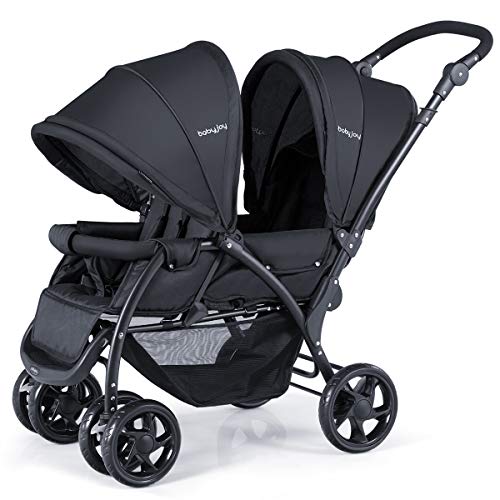
Both children sit next to each other, sharing the same forward-facing orientation. This layout gives each child an unobstructed view, equal legroom, and a sense of parity that reduces sibling friction. Side-by-side models typically fold flatter and handle uneven terrain more predictably because the weight is distributed laterally.
The main drawback is width. Standard side-by-side models measure between 28 and 32 inches across, which can exceed the width of older doorways and narrow store aisles. Parents who prioritize compactness often research the narrowest side-by-side double stroller options, while those who want the most compact footprint overall may look at the smallest double stroller on the market for tight urban environments.
Tandem Double Strollers
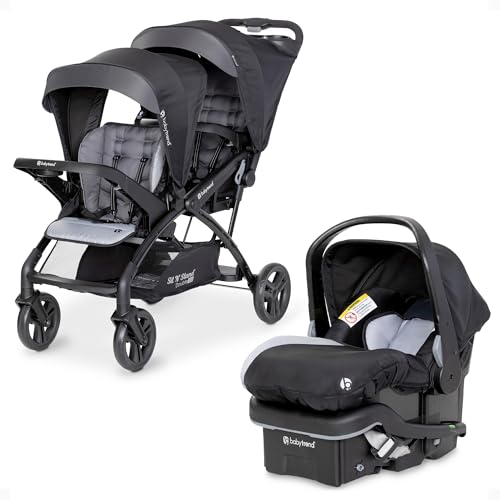
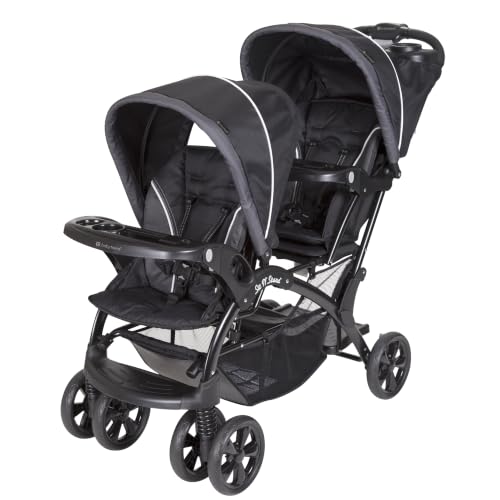
Children sit one behind the other, either in a front-and-back arrangement or in a stacked configuration. Tandem strollers match the width of a single stroller, making them easier to navigate through doorways and crowded spaces. The trade-off is length: tandem models have a longer wheelbase, which affects turning radius and can make tight cornering feel less intuitive.
Tandem designs also introduce seating asymmetry. The rear seat often has less legroom and a more restricted view. Some premium tandem models mitigate this with elevated rear seats or reversible seating so the younger child can face the parent. If you are considering a jogging-oriented tandem, our overview of a double jogging stroller front and back covers how running-focused frames handle this layout.
Newborn-Ready Features You Should Not Compromise On
A newborn cannot sit upright or hold their head steady. The stroller seat must therefore provide a near-flat recline, typically at least 170 degrees, ideally approaching full lie-flat. Anything less risks compromising the newborn's airway and spinal alignment during longer rides.
Near-Flat or Full Recline
Check the recline specification carefully for each seat, not just the primary seat. Some double strollers offer full recline on one seat and partial recline on the other. If both children are young, both seats should recline adequately. A stroller that reclines fully on both sides is the safest baseline for a newborn-plus-infant combination.
Head and Neck Support
Newborn inserts, sometimes called head huggers or infant supports, cradle the head and prevent lateral slumping. Look for strollers that include removable newborn inserts or that are explicitly compatible with branded infant inserts. A stroller without adequate head support forces parents to improvise, which is never ideal.
Infant Car Seat Compatibility
Many families prefer to keep the newborn in an infant car seat that clicks directly onto the stroller frame. This avoids transferring a sleeping newborn between seat and stroller. Compatibility is brand-specific, so verify that your car seat model is listed as compatible with the stroller you are considering. Our guide to a side-by-side double stroller with car seat attachment explains how attachment mechanisms differ across brands.
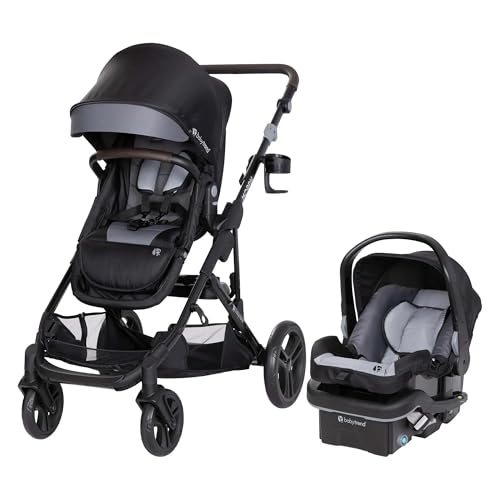
For families who want maximum flexibility, a single-to-double side-by-side stroller can start as a single unit and expand when the second child arrives, which is often more efficient than buying two separate strollers.
Five-Point Harness on Both Seats
A five-point harness distributes restraint across the shoulders, hips, and crotch, preventing a child from slipping forward or sideways. Both seats must have a five-point harness, not a three-point lap belt. Verify that the harness adjusts easily, because you will tighten and loosen it many times per day.
Safety Standards, Brakes, and Structural Integrity
Double strollers carry more weight and have a higher center of gravity than single strollers, which makes safety engineering especially important. Prioritize models that meet recognized safety standards and that include the following features.
Linked Brakes
A single foot pedal that engages brakes on both rear wheels is safer than independent wheel brakes, because it prevents the stroller from pivoting when parked on a slope. Test that the brake engages firmly and releases smoothly.
Robust Frame and Axle
Look for reinforced frames, high-grade steel or aircraft-grade aluminum, and axles rated for the combined weight of two children plus cargo. A stroller that flexes noticeably when both seats are occupied is a warning sign. Heavy-duty construction is not a luxury in this category; it is a safety requirement.
Stability and Tip Resistance
A double stroller should remain stable when a child climbs in or out of one seat while the other seat is occupied. Check the wheelbase and the position of the center of gravity. Models with a wider rear wheel stance resist tipping better. Avoid hanging heavy bags on the handlebar, which is a leading cause of tip-overs regardless of stroller quality.
Canopy and Ventilation
Both seats should have independent canopies with ventilation panels. Newborns are sensitive to heat, and a fully enclosed canopy without airflow can cause overheating. Mesh side panels and peek-a-boo windows improve airflow and let you monitor the child without stopping.
Configuration Comparison at a Glance
The table below summarizes how the major double stroller configurations compare across the factors parents weigh most heavily. Tiers describe market positioning, not numerical value.
| Configuration | Tier Positioning | Best For | Key Strength | Main Trade-Off |
|---|---|---|---|---|
| Side-by-side (standard) | Essential to mid-range tier | Everyday neighborhood walks, siblings close in age | Equal seating, unobstructed views, easy folding | Wider footprint can struggle through older doorways |
| Side-by-side (narrow) | Mid-range to premium tier | Urban parents, public transit, small vehicles | Doorway-friendly width without sacrificing side-by-side layout | Often reduced storage and smaller seats |
| Tandem front-and-back | Essential to premium tier | Newborn plus older infant, narrow hallways | Single-stroller width, car-seat friendly | Longer wheelbase, rear seat has less legroom |
| Jogging double | Mid-range to high-end tier | Active parents, running, uneven terrain | Large air-filled tires, handbrake, sturdy frame | Heavier and bulkier, not ideal for tight indoor spaces |
| Convertible single-to-double | Premium to top-tier | Growing families planning a second child | Adapts over time, long-term investment | Higher upfront positioning, add-on components needed |
If running is part of your routine, a dedicated jogging model with a handbrake is worth considering; our review of a double jogging stroller with handbrake explains braking systems and safety tethers in detail. Parents who want the most highly regarded side-by-side options can review our roundup of the top-rated side-by-side double stroller models.
Maneuverability, Foldability, and Real-World Handling
A double stroller is only as good as its handling on the surfaces you actually encounter. Test or research the following handling characteristics before committing.
Wheel Type and Suspension
Air-filled tires absorb bumps best and are the preferred choice for jogging and uneven sidewalks. Foam-filled or solid rubber tires require less maintenance and are puncture-proof but transmit more vibration. Front-wheel suspension and swivel front wheels dramatically improve tight-space navigation.
Turning Radius
Tandem strollers have a longer wheelbase, which makes U-turns in narrow aisles more demanding. Side-by-side models pivot more intuitively but need width. If you frequently shop in small stores or navigate narrow apartment corridors, test the turning radius with both seats occupied.
Fold Mechanism
Double strollers fold into larger packages than single strollers. A one-hand, standing fold is a genuine quality-of-life feature when you are holding a newborn in one arm. Verify the folded dimensions against your vehicle trunk and storage closet before purchase. If air travel is in your plans, our guide to a stroller that fits under airplane seat clarifies which compact configurations are realistic for cabin use.
Storage, Canopy Coverage, and Everyday Practicality
Double strollers consume more cargo capacity by default because two children generate more gear: diapers, bottles, snacks, spare clothing, and toys. Evaluate storage with both children seated.
- Underseat basket: Check accessibility from the rear and whether the basket remains usable when a seat is fully reclined. Reclined newborn seats often block basket access on tandem models.
- Parent console: A dedicated cup holder and zippered parent pocket keep essentials within reach without hanging bags on the handlebar.
- Independent canopies: Each child should have separate canopy coverage so one can nap in shade while the other looks around.
- Reversible seats: Some premium models allow one or both seats to face the parent, which is valuable for monitoring a newborn.
If you are assembling a complete travel system, pairing your double stroller with a well-organized diaper backpack with insulated pocket keeps feeding supplies separate from stroller storage and reduces clutter in the underseat basket.
Common Buying Mistakes to Avoid
Most double stroller regrets trace back to a small number of predictable errors. Avoid these pitfalls by planning around your actual daily routine rather than an idealized version of it.
- Assuming car seat compatibility without verification. Attachment systems vary by brand and model year. Always confirm your specific infant car seat is listed as compatible.
- Ignoring doorway and elevator dimensions. Measure your front door, building elevator, and vehicle trunk before choosing a side-by-side model.
- Overlooking the second seat's recline. If both children are young, both seats need adequate recline, not just the primary seat.
- Underestimating weight. A loaded double stroller can be substantially heavier than a single. Consider how you will lift it into a trunk and up stairs.
- Hanging bags on the handlebar. This is the leading cause of tip-overs. Use the underseat basket and a parent console instead.
- Skipping a physical test push. If possible, test the stroller with weight in both seats. Handling changes dramatically under load.
Frequently Asked Questions
Can a newborn go in a double stroller right away?
Yes, provided the seat reclines to near-flat and includes adequate head and neck support, or provided the newborn rides in a compatible infant car seat attached to the frame. Never place a newborn in a partially upright seat, as this can compromise the airway. Always follow the stroller manufacturer's minimum age and recline guidance.
Is a side-by-side or tandem double stroller better for a newborn and infant?
Both can work. Tandem models are easier to fit through narrow doorways and often accommodate infant car seats more naturally on one side. Side-by-side models give both children equal views and legroom and generally handle uneven terrain better. The right choice depends on your home, vehicle, and typical outings rather than on a universal winner.
Do I need a double stroller if my older child can walk?
Walking endurance varies enormously by age and temperament. A toddler who walks confidently for short errands may still need a seat on longer outings, during nap windows, or in crowded environments where holding hands is not always practical. Many families use a double stroller with one seat reserved for gear or a tired toddler.
How wide is too wide for a side-by-side double stroller?
A useful threshold is your narrowest regular passage: the front door, the building elevator, and the checkout aisle you use most. Measure these openings and compare them to the stroller's stated width. Narrow side-by-side models are specifically designed for tighter clearances, but even they have limits.
Can I use an infant car seat on both seats of a double stroller?
Some premium tandem and side-by-side models support car seat attachment on both sides, but many support only one. This is a common point of confusion, so verify the maximum number of car seat adapters the frame accepts. Dual car-seat capability is most valuable for twins, while a newborn-plus-infant pairing typically needs only one car seat adapter.
How long does a double stroller typically last?
A well-constructed double stroller can serve from the newborn stage through the older child's preschool years, especially if it offers adjustable recline, expandable canopies, and a weight capacity that accommodates growing children. Convertible models extend usable life further because they adapt as family needs change.
Final Checklist Before You Decide
Run through this checklist against any candidate stroller to confirm it fits your family's real-world requirements.
- Both seats recline to near-flat, or the newborn has a compatible car seat attachment.
- Five-point harnesses on both seats, adjustable without tools.
- Linked brake pedal that engages both rear wheels.
- Stated width fits your front door, elevator, and common aisles.
- Folded dimensions fit your vehicle trunk and storage space.
- Underseat basket remains accessible with both seats reclined.
- Independent canopies with ventilation on both sides.
- Verified car seat compatibility for your specific infant seat model.
- Frame does not flex under the combined weight of two children.
- Handlebar height is comfortable for all caregivers who will push it.
For families building a complete travel system around a double stroller, pairing the frame with an infant car seat and stroller combo simplifies compatibility decisions. If you also need a compact secondary stroller for quick errands, a lightweight travel stroller with car seat adapter can complement a full-size double stroller without duplicating its role.