Double Stroller That Holds 100 Pounds: The Complete Buying Guide
Everything you need to know about heavy-duty double strollers with a 100-pound weight capacity — from frame construction and seating configurations to safety standards and real-world maneuverability.
Explore the GuideWhy a 100-pound capacity matters: As your family grows, you need a stroller that can keep pace. A double stroller rated for 100 pounds total gives you the flexibility to carry two growing toddlers, a newborn and a preschooler, or a child plus gear — without straining the frame, wheels, or harness system. This guide helps you understand what that rating really means and how to choose a model that fits your lifestyle.
What Does "Holds 100 Pounds" Really Mean?
When a manufacturer advertises a double stroller as holding 100 pounds, that figure typically refers to the combined weight capacity — the maximum total weight the stroller is engineered to support, including both children and any cargo stored in baskets or parent consoles. However, there are important nuances:
- Combined vs. individual seat limits: A 100-pound combined capacity might mean two seats rated at 50 pounds each, or a 60/40 split. Always check the individual seat weight limits, because two heavier children could exceed a per-seat rating even if the total stays under 100 pounds.
- Cargo weight: Most manufacturers specify a separate maximum for storage baskets, often around 10 to 15 pounds. Exceeding cargo limits can affect stability and steering.
- Frame and wheel engineering: A stroller rated for 100 pounds should have a reinforced frame, heavy-duty wheel bearings, and a wide wheelbase to distribute weight evenly and prevent tipping.
Understanding these distinctions helps you avoid overloading your stroller and ensures you get a model that will remain stable and safe as your children grow.
Tandem vs. Side-by-Side: Which Configuration Works Best?
Double strollers with a 100-pound capacity generally fall into two categories: tandem (one seat behind the other) and side-by-side (two seats next to each other). Each has distinct advantages depending on your family's needs and daily routine.
Tandem Double Strollers
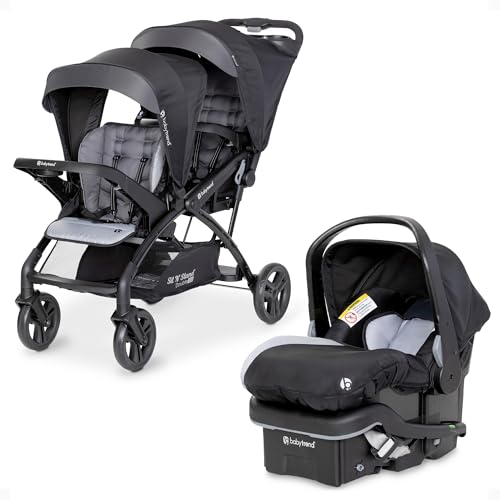
Tandem models are narrower, making them easier to navigate through doorways, store aisles, and crowded sidewalks. They often allow different seating configurations — such as a bassinet for a newborn in the rear and a toddler seat in front. Many tandem strollers with a 100-pound capacity are designed to accept infant car seats, which is a major convenience for families with a newborn and an older child.
If you're looking for a model that accommodates an infant car seat, explore our guide to a double stroller travel system with car seat for setup options and compatibility tips.
Side-by-Side Double Strollers
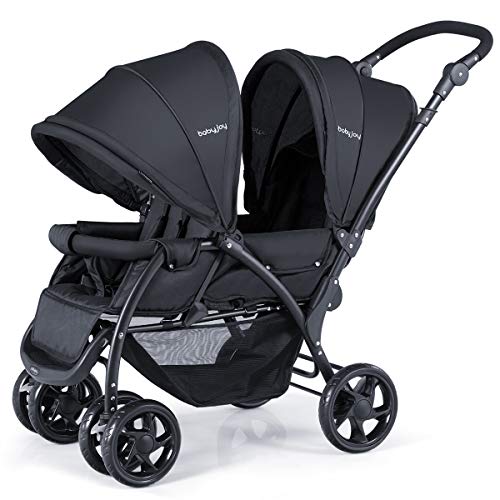
Side-by-side strollers give each child an equal view and often provide more shoulder room. They are typically easier to fold and can be more maneuverable on uneven terrain. However, they are wider and may not fit through standard doorways. Heavy-duty side-by-side models with a 100-pound capacity often feature independent reclining seats, large canopies, and all-terrain wheels.
For families who prioritize easy access and equal seating, a double side-by-side stroller with infant car seat compatibility can be an excellent choice.
Key Features to Evaluate in a 100-Pound Double Stroller
Beyond weight capacity, several features determine whether a double stroller will serve your family well over the long term. Here's what to prioritize:
Frame and Build Quality
A stroller rated for 100 pounds should have a robust frame — typically aluminum or high-grade steel — with reinforced joints and a solid build. Look for models that specify heavy-duty construction and have a reputation for durability. A sturdier frame not only supports the weight but also reduces wobble and flex during turns.
Wheels and Suspension
Larger wheels with sealed bearings and all-terrain tires provide better shock absorption and easier pushing over curbs, gravel, and uneven pavement. If you frequently walk on rough surfaces, consider a model with all-terrain wheels. Front swivel wheels improve maneuverability in tight spaces, while lockable rear wheels add stability on slopes.
Harness and Safety Systems
Each seat should have a five-point harness with adjustable straps to secure children of different sizes. A linked brake system that engages both rear wheels simultaneously is a significant safety advantage, especially on inclines. Also look for a stroller that meets JPMA certification or ASTM F833 safety standards.
Storage and Accessibility
A large under-seat basket is essential for diaper bags, groceries, and everyday essentials. Some models offer parent consoles with cup holders and zippered pockets. If you need extra storage, consider a double umbrella stroller with storage for lighter trips, or check models with expandable baskets.
Fold Mechanism and Portability
Heavy-duty double strollers are naturally heavier than single strollers, but a well-designed fold mechanism can make transport much easier. Look for a one-step fold, a standing fold, and a compact footprint when folded. If you frequently travel by car or public transit, a foldable stroller for travel may complement your full-size double stroller.
Comparing Double Stroller Tiers by Feature Set
The table below outlines how double strollers with a 100-pound capacity typically differ across market tiers. Use this as a framework for evaluating models based on your priorities — not as a specific product recommendation.
| Feature Category | Essential Tier | Mid-Tier | Top-Tier |
|---|---|---|---|
| Frame Construction | Standard aluminum frame with basic joints | Reinforced aluminum frame with improved weld quality | High-grade steel or aircraft-grade aluminum with precision joints |
| Wheel System | Basic EVA wheels, limited suspension | Larger wheels with front swivel and basic suspension | All-terrain tires, sealed bearings, full-wheel suspension |
| Harness | Five-point harness, basic adjustability | Five-point harness with easy-adjust sliders | Five-point harness with magnetic buckles or one-pull tightening |
| Brake System | Individual rear wheel brakes | Linked brake with foot pedal | Linked brake with hand-operated parking brake |
| Storage | Under-seat basket with basic access | Large basket with easy-access opening | Extra-large basket, parent console, and additional pockets |
| Fold Mechanism | Two-hand fold, bulky footprint | One-hand fold, stands independently | One-step self-standing fold, compact footprint |
| Seat Recline | Multiple recline positions, manual adjustment | Independent recline for each seat | Independent multi-position recline with near-flat option |
| Car Seat Compatibility | Limited or adapter-dependent | Compatible with major brands via adapters | Universal adapter system or included car seat integration |
Entry-level models cover the basics and are a solid choice for occasional use. Mid-range strollers often offer a better balance of durability and convenience for everyday errands. Top-tier models provide the smoothest push, the most refined features, and the highest long-term durability — ideal for families who use their stroller daily or on varied terrain.
Weight Distribution and Stability: What to Know
A 100-pound weight capacity is only meaningful if the stroller remains stable when loaded. Here are the key factors that affect stability:
- Wheelbase width: A wider wheelbase improves lateral stability, especially in side-by-side models. Narrower tandem strollers rely on a low center of gravity and rigid frame to stay stable.
- Center of gravity: Strollers with a lower seat position and a battery-style low-mounted basket tend to feel more grounded. Avoid hanging heavy bags on the handlebar, as this can cause tipping.
- Brake engagement: Always engage the brake when loading or unloading children. A linked brake system that locks both rear wheels is the safest option.
- Terrain awareness: On slopes or uneven ground, keep both hands on the handlebar and avoid sharp turns. All-terrain models with lockable front wheels offer better control on rough surfaces.
If you frequently navigate curbs or trails, consider a double jogging stroller with infant seat compatibility, which is engineered for stability at higher speeds and on varied terrain.
Explore Related Double Stroller Guides
Choosing the right double stroller is a personal decision shaped by your family's size, daily routine, and the ages of your children. These in-depth guides cover specific configurations and use cases to help you narrow down your options:
Frequently Asked Questions
Is a 100-pound weight capacity enough for a double stroller?
A 100-pound total capacity is generally sufficient for two average-sized toddlers or a combination of a newborn and an older child. However, consider the individual seat weight limits, as some models have a combined capacity of 100 pounds but seat-specific limits that may not accommodate two heavier children.
What is the difference between combined and individual weight limits?
Combined weight limit refers to the total weight the stroller can hold, including both children and any cargo. Individual seat weight limit refers to the maximum weight per seat. A stroller with a 100-pound combined limit may have two 50-pound seats, or a 60-pound and a 40-pound seat, depending on the design.
Do heavier double strollers maneuver well?
Heavy-duty double strollers with reinforced frames and larger wheels can maneuver well, especially models with swivel front wheels and all-terrain tires. However, they may feel heavier to push uphill and are less nimble in tight spaces compared to lightweight umbrella strollers.
Can a 100-pound double stroller fold compactly?
Folding compactness varies by design. Tandem models often fold more compactly than side-by-side models. Some premium and mid-range double strollers offer a one-step fold and stand independently, making them convenient for storage and transport.
What safety features should I look for in a heavy-duty double stroller?
Look for a five-point harness for each seat, a robust braking system (ideally with a linked brake), a sturdy frame with reinforced joints, and a wide wheelbase for stability. Also check for JPMA certification or compliance with ASTM safety standards.
Ready to Find Your Ideal Double Stroller?
Browse our curated selection of double strollers with a 100-pound weight capacity. Compare features, read detailed product descriptions, and check availability — all in one place.
View Recommended Models