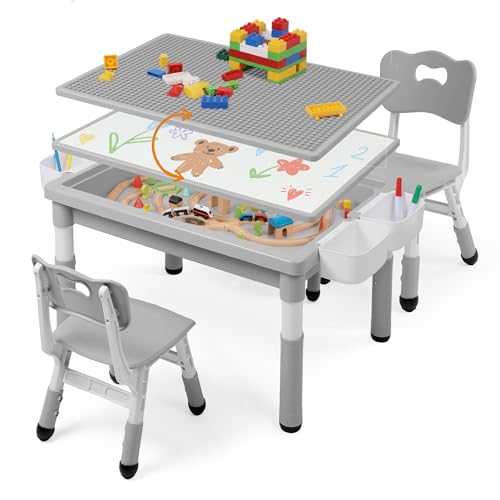
Child's Table with Storage: The Complete Buying Guide
Everything you need to know about choosing a functional, safe, and long-lasting storage table for your child's play and learning space.
Explore Top PicksWhy a storage table makes sense: A child's table with storage combines a dedicated activity surface with smart organization. Instead of toys, crayons, and books piling up on the floor, built-in bins, drawers, and shelves keep everything within your child's reach — and make clean-up a natural part of playtime.
Why a Table with Storage Is a Smart Choice
Children thrive in spaces that feel like their own. A child's table with storage does more than provide a flat surface for drawing or snack time. It creates a self-contained activity zone where everything has a place.
Parents often discover that once toys have a designated home, children are more willing to tidy up on their own. The storage component also reduces clutter in shared living areas, which is especially valuable in apartments and smaller homes. If you are working with limited space, our guide to changing table ideas for small spaces shares complementary organizing principles that apply to any compact children's area.
✔ Advantages
- Keeps toys, art supplies, and books organized
- Encourages independent clean-up habits
- Consolidates play and storage in one footprint
- Often doubles as a snack or homework surface
✘ Considerations
- Assembly is usually required
- Storage capacity may be limited on compact models
- Heavier than a plain folding table
- Needs periodic tightening of hardware
Key Features to Evaluate Before You Buy
1. Storage Configuration
Storage comes in several forms: removable fabric or plastic bins, wooden drawers, open cubbies, and reversible tabletops with a recessed play area underneath. Bins are easiest for young toddlers, while drawers suit older children who can pull them open without tipping the unit. Consider what your child owns most of — small toys fit well in bins, while books and puzzles need taller shelves.
2. Tabletop Size and Height
A tabletop of roughly 24 to 30 inches across comfortably fits two children for art projects or a snack. Table height should let your child sit with feet flat on the floor and elbows resting naturally. Most models list a recommended age range; always cross-check with your child's height rather than relying on age alone.
3. Materials and Finish
Solid wood, engineered wood with a sealed finish, and high-density plastic are the three main categories. Wooden tables offer a warm look and long service life. Plastic models resist spills and wipe clean easily. Whichever you choose, confirm the finish is non-toxic, lead-free, and free of sharp edges. Rounded corners and smooth sanded surfaces are a must for younger children.
4. Stability and Safety
A storage table is only useful if it stays put. Look for wide legs, anti-slip feet, and a low center of gravity. If the model includes a chair, check that the chair has a stable base and that the seat height matches the table. Avoid units with exposed screws or hardware that a curious toddler could loosen.
5. Cleaning and Maintenance
Children spill things — constantly. Removable bins and wipe-clean tabletops save time. For wooden models, a damp cloth and mild soap are usually sufficient. Avoid harsh chemicals that could leave residue near food surfaces. If your child is still in the messy-eating stage, pair the table with a changing pad on a nearby surface for quick clean-ups after snack time.
Comparing Tiers: What to Expect at Each Level
Child's tables with storage span a wide range of construction quality and features. The table below uses universal tier descriptors so you can match your expectations to the category, not to any specific listing.
| Tier | Typical Construction | Storage Style | Best For |
|---|---|---|---|
| Entry-level | High-density plastic or thin engineered wood | One or two open bins | First table for a toddler; casual art play |
| Mid-range | Engineered wood with sealed finish or sturdy plastic | Multiple bins plus a small shelf | Daily use for two children; mixed toys and books |
| Premium | Solid wood or high-grade engineered wood | Drawers, cubbies, and reversible play surface | Long-term use through early elementary years |
| Luxury | Hardwood with reinforced joinery | Full drawer banks and integrated shelving | Design-forward playrooms; multi-child families |
The jump from entry-level to mid-range usually brings smoother drawer glides and thicker panels. Premium and luxury tiers add solid-wood frames and more generous storage volume. If you are also furnishing a nursery or toddler room, our overview of changing tables with drawers and shelves follows a similar tier logic that can help you align storage decisions across the room.
Quick Buying Checklist
- Measure your available floor space before ordering
- Confirm the table height matches your child's seated elbow height
- Check that storage bins are removable and easy to wipe
- Verify non-toxic, lead-free finishes and rounded edges
- Look for anti-slip feet or wide leg bases
- Read the assembly instructions preview if available
- Confirm the weight limit if your child likes to lean on the table
- Consider whether a matching chair is included or sold separately
Storage Tables in the Broader Play Space
A child's table with storage rarely lives in isolation. It often sits alongside a bookcase, a toy bin, or a small desk. If your child is transitioning into school-age activities, you may eventually pair the table with a children's desk with storage to create a dedicated homework corner. For families with multiple children, a children's table and chairs with storage set can serve as a shared craft station while keeping each child's supplies in separate bins.
Families who prefer natural materials often lean toward a children's wooden table and chairs configuration, which pairs a warm finish with the durability needed for years of use. And if you are still assembling the nursery, the storage principles in our changing table with storage guide translate directly to playroom organization.
Ready to see the shortlist? Our curated selection below features storage tables that balance durability, safety, and practical organization.
View Recommended ProductsFrequently Asked Questions
What age is a child's table with storage suitable for?
Most models are designed for children between 2 and 8 years old, depending on tabletop height and chair seat height. Always check the manufacturer's age recommendation and compare it with your child's actual height.
What materials are best for a kids storage table?
Solid wood and engineered wood with a non-toxic finish are durable choices. High-density plastic is lightweight and easy to clean. Look for BPA-free, lead-free, and GREENGUARD-certified materials for safety.
How much storage space should a child's table have?
It depends on your child's toy collection and room size. Built-in bins and drawers work well for small items, while open shelves accommodate books and larger toys. A table with multiple compartments offers the most versatility.
Is assembly required for most storage tables for kids?
Yes, most models require some assembly. Entry-level and mid-range options typically include basic tools and instructions, while premium models may have more complex assembly. Allow 30 to 60 minutes for setup.