Children's Desk with Storage: Complete Buying Guide for Parents
Everything you need to know about choosing the perfect study desk with storage for your child — from essential features and safety standards to organization strategies and tier comparisons.
Why a Dedicated Study Space Matters: A well-organized children's desk with storage does more than hold school supplies — it creates a consistent homework routine, encourages independence, and helps your child develop lifelong organizational habits. This guide walks you through every consideration to make an informed decision.
If you are researching a children's desk with storage, you likely already know that your child needs a dedicated space for homework, creative projects, and screen-based learning. What you probably want to understand is how to evaluate the options on the market: which storage configurations actually work, what safety certifications matter, and how to match a desk to your child's age, room size, and daily routine.
This guide answers those questions directly. We cover the main types of children's desks with storage, the materials and construction details that affect durability, safety features you should not overlook, and practical organization strategies that keep the workspace functional as your child grows. By the end, you will have a clear framework for choosing a desk that serves your family well for years.
Types of Children's Desks with Storage
The storage configuration is often the deciding factor when parents compare desks. Each type serves different room layouts and study habits. Here are the most common options:
Desk with Built-in Drawers
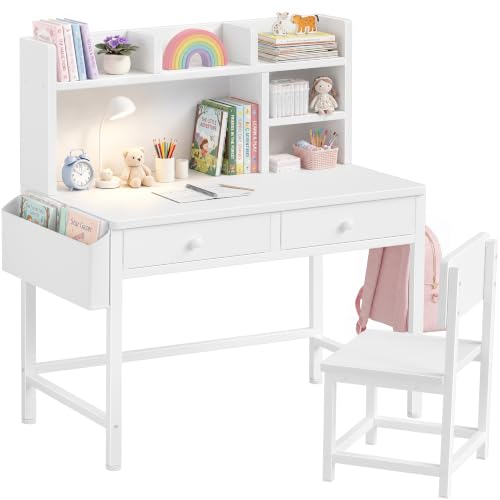
Drawers under the desktop keep supplies hidden and dust-free. This configuration suits children who need a clutter-free work surface and parents who prefer a tidy room. Look for drawers with smooth glides and safety stops to prevent pinched fingers.
Desk with Shelves or Hutch
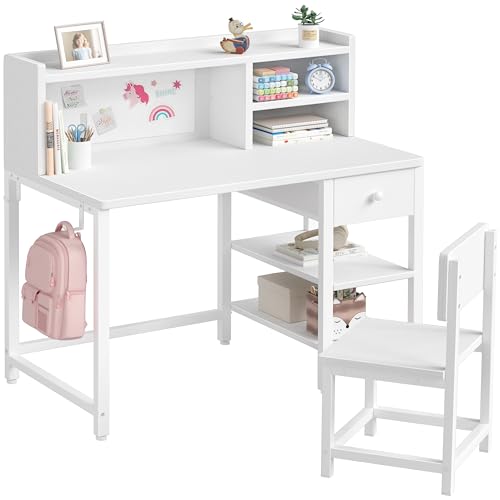
Open shelving above or beside the desktop keeps books and frequently used items within reach. A children's desk with hutch adds vertical storage without consuming floor space — ideal for smaller bedrooms.
Desk with Integrated Bookcase
A desk combined with a bookcase offers generous storage for a growing library. This setup works well for older children who accumulate textbooks and reference materials. It functions as a complete study station in one footprint.
Corner Desk with Storage
Corner units maximize floor space in compact rooms. Storage often appears in the form of corner shelves or a triangular drawer stack. This layout keeps the central floor area open for movement and play.
Desk with Chair and Storage Set
A matched set pairs a desk, chair, and storage components designed to work together ergonomically. These sets simplify shopping and ensure proportional sizing between the desk height and chair seat. Browse related options like a children's desk with chair for coordinated solutions.
Activity Table with Storage
For younger children, an activity table with storage blends play and study. These lower-height tables often include bins or cubbies underneath for toys and art supplies, making them a versatile choice for early learners.
Materials and Construction: What to Look For
Children's furniture takes heavy use — spilled drinks, dropped supplies, and years of daily wear. The material determines how well a desk holds up over time.
Solid Wood
Durable and repairable. Solid wood desks can be sanded and refinished if scratched. They are heavier but offer the longest service life. Look for sustainably sourced hardwoods with rounded edges.
Engineered Wood (MDF/Particleboard)
Common in mid-range and entry-level desks. Quality varies widely — look for sealed edges and water-resistant coatings. These materials are lighter and easier to move but less resistant to moisture damage.
Metal Frames
Often combined with wood or laminate desktops. Metal legs and frames provide stability and a modern look. Powder-coated finishes resist rust and scratches. Check for capped leg ends to avoid sharp edges.
Laminate Surfaces
Easy to clean and resistant to stains and scratches. Laminate desktops work well for craft-heavy households. The finish quality matters — premium laminates resist peeling at edges.
Safety Features Every Parent Should Verify
Safety is non-negotiable in children's furniture. Before purchasing any desk, confirm the following:
- Tip-over protection: Desks with drawers or shelving should include wall-anchoring hardware or meet stability standards for tip-over resistance.
- Rounded edges and corners: Sharp corners on desktops and drawer fronts pose injury risks. Rounded or beveled edges are a sign of child-conscious design.
- Non-toxic finishes: Look for low-VOC or water-based finishes. Certification labels for emissions standards provide additional assurance.
- Safety stops on drawers: Drawers that pull out completely can be a hazard. Drawer stops keep them in place and prevent pinched fingers.
- No pinch points: Check hinges, folding mechanisms, and adjustable components for gaps that could catch small fingers.
- Age-appropriate height: A desk that is too tall encourages poor posture. Adjustable-height models accommodate growth spurts.
- Sturdy construction: The desk should not wobble when your child leans on it or writes. Stability is especially critical for desks with elevated storage.
Comparing Desks by Tier: What Each Level Offers
Children's desks with storage span a wide range of market positions. Understanding what each tier typically includes helps you match your investment to your expected usage duration and quality expectations. The tiers below describe relative market positioning — not absolute figures.
| Tier | Typical Features | Best For |
|---|---|---|
| Entry-Level / Starter Tier | Basic engineered wood construction, simple drawer or open cubby storage, laminate finish. Lighter weight and simpler assembly. | Younger children (ages 4–7) who need a first study space, temporary setups, or households that plan to upgrade as the child grows. |
| Mid-Range / Balanced Tier | Better materials (thicker panels, improved hardware), multiple storage types (drawers plus shelves), adjustable-height options, stronger finishes. | School-age children (ages 7–12) with daily homework routines. A balanced option that supports several years of use. |
| Premium / High-End Tier | Solid wood or high-grade engineered wood, soft-close drawers, integrated cable management, ergonomic design, longer warranties. | Older children and teens who need a long-term study station. Also suited to families who prioritize durability and refined design. |
| Luxury / Flagship Tier | Solid hardwood construction, custom-fit storage modules, professional-grade finishes, design-forward aesthetics, exceptional build quality. | Long-term investment pieces intended to serve multiple children or transition into teen and young-adult workspaces. |
Note: Mid-range models typically offer smoother drawer mechanisms and more consistent finishes than entry-level options. Premium and luxury tiers add refinements in materials and longevity that matter most for extended daily use.
Organization Strategies for a Functional Workspace
A desk with storage is only as effective as the system behind it. These practical strategies help your child maintain an organized workspace:
Zone the Storage by Function
Assign specific drawers or shelves to categories: writing tools in one, paper and notebooks in another, and electronics in a third. Clear zones reduce decision fatigue and make cleanup faster.
Keep Daily Items Within Arm's Reach
The most-used supplies belong on the desktop or the nearest shelf. Reserve deeper drawers and upper shelves for occasional-use items. This layout supports independence for younger children.
Use Labels and Bins
Open shelves benefit from labeled bins or baskets. Labels with words or icons help early readers put things back correctly. Bins also make it easy to pull out an entire category for project work.
Establish a Weekly Reset Routine
A five-minute weekly tidy-up prevents accumulation. Involve your child in the process so they learn to maintain the system themselves. Consistent routines build long-term habits.
Matching the Desk to Your Child's Age and Room
The right desk changes as your child grows. Use these guidelines to narrow your options:
Preschool (Ages 3–5)
Low-height activity tables with open storage work best. Children at this age need easy access to art supplies and toys. Look for rounded edges and lightweight construction. Related: children's table and chair set with storage.
Early Elementary (Ages 6–8)
A first proper desk with a drawer and a shelf supports homework routines. Height should allow feet to rest flat on the floor. Adjustable-height models extend usability. Consider a children's desk with storage designed for this transition period.
Older Elementary to Middle School (Ages 9–12)
Increased homework volume demands more storage: a bookcase section, multiple drawers, and space for a laptop or tablet. Cable management becomes relevant. Mid-range tier desks fit this stage well.
Teens (Ages 13+)
Desk usage shifts toward extended study sessions and screen time. Ergonomic considerations (monitor height, keyboard placement) matter more. Premium-tier desks with solid construction and generous storage serve this stage.
Room size also shapes the decision. Small bedrooms benefit from corner desks or vertical storage (hutches, tall bookcases). Shared rooms may call for compact desks with integrated storage to minimize footprint. For storage-intensive alternatives that double as play furniture, explore children's table and chairs with storage and child's table with storage options.
Frequently Asked Questions
Ready to Choose the Right Desk?
Explore our recommended children's desks with storage below. Each option is selected for build quality, safety features, and practical storage design — so you can compare features and find the best fit for your child's study space.
Pairing your desk with complementary storage furniture creates a cohesive study zone. If you are furnishing a full room, consider a children's bookcase and toy storage unit for books and play items. For multi-child households, a children's rectangular table and chair set provides shared workspace. And if you are planning a flexible setup that moves between rooms, a children's folding table and chairs set offers portability without sacrificing function.