Children's Desk with Hutch: Complete Buying Guide
A desk with a hutch transforms a simple study surface into an organized learning station. Learn how to evaluate storage, ergonomics, materials, and safety so you can choose the right setup for your child's homework and creative projects.
START EXPLORINGWhy a desk with a hutch makes sense: Children accumulate books, art supplies, and school materials faster than most furniture can absorb them. A hutch uses vertical space above the work surface, keeping essentials within arm's reach while freeing the desktop for actual work. For families short on floor space, this combination delivers double the function of a standard desk without expanding the room footprint.
What Exactly Is a Children's Desk with Hutch?
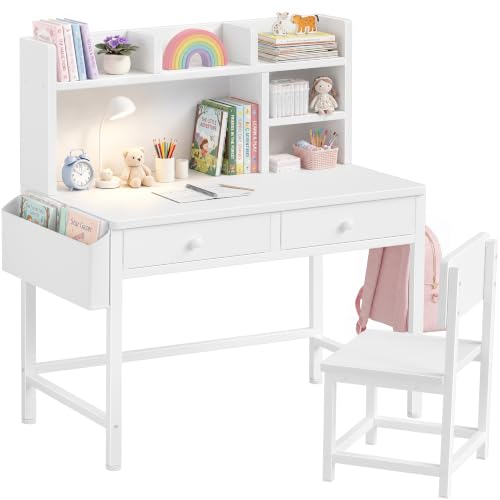
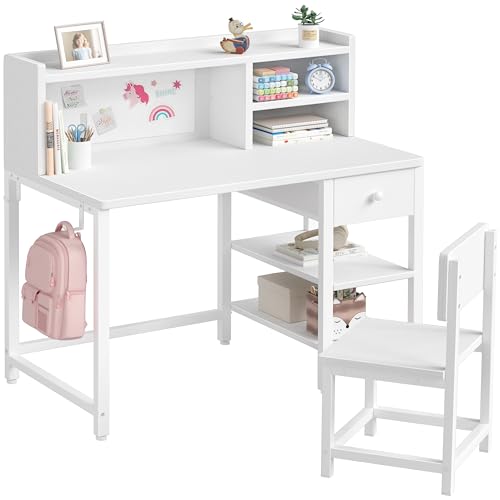
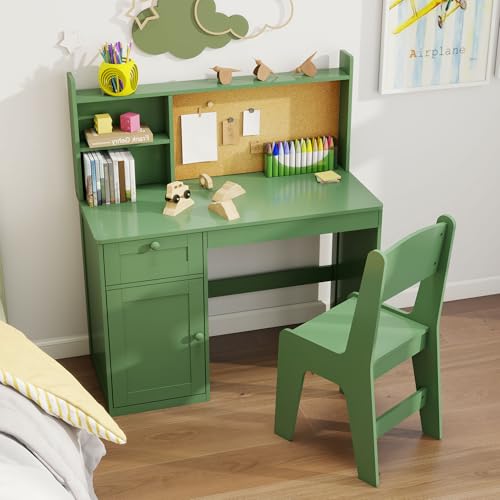
A children's desk with hutch pairs a scaled-down work surface with an integrated shelving unit mounted above the back edge. The hutch typically includes open shelves, cubbies, small drawers, or a mix of all three. Some designs attach the hutch permanently to the desk, while others offer a detachable top that can be removed as your child's needs change.
These desks differ from adult versions in several important ways. Seat height is lower, edges are rounded, materials are often lighter, and many models include height-adjustable legs to accommodate growth spurts. If you are comparing configurations, our guide to a children's desk with storage covers drawer-based alternatives, while the children's desk with chair page explains coordinated seating options.
The hutch itself is the defining feature. Without it, you have a standard study desk. With it, you gain a self-contained organization system that encourages children to put things back where they belong — a habit worth cultivating early.
Why the Hutch Deserves Serious Attention
Parents researching this category usually already know they want a desk. The real decision is whether the hutch adds genuine value or just visual bulk. Here is what the hutch contributes in practice:
- Vertical organization: Books, binders, and supply bins move off the desktop and onto shelves, leaving room for a laptop, notebook, and lamp.
- Visual cue for tidiness: Open shelving makes it obvious when items are out of place, which gently encourages children to reset their workspace.
- Study-zone definition: A hutch creates a psychological boundary between "play" and "work," helping children focus during homework time.
- Space efficiency: The hutch occupies zero additional floor area, making it ideal for shared bedrooms and compact study nooks.
- Display opportunity: A top shelf can hold achievement awards, favorite books, or decorative items that personalize the space.
If your child shares a room or the study area doubles as a play zone, pairing the desk with dedicated toy storage keeps categories separate. The children's bookcase and toy storage guide explains how to divide those functions cleanly.
Key Buying Factors to Evaluate Before You Decide
1. Desk Height and Adjustability
Children grow quickly, so a fixed-height desk may become uncomfortable within a year or two. Height-adjustable legs — either manual pin settings or smooth crank mechanisms — let the desk follow your child's development. For a child just entering school age, an adjustable model is usually the wiser long-term choice. Sibling-shared desks benefit even more from adjustability.
As a rule of thumb, the desktop should sit roughly at elbow height when your child is seated with feet flat on the floor. If the desk is too high, shoulders tense; if too low, posture slumps. Some adjustable desks pair well with matching seating, which is why our children's desk with chair guide is worth reading alongside this one.
2. Hutch Configuration and Storage Mix
Hutches vary widely in how they divide space. Common layouts include:
- Open shelving only: Simplest to access, easiest to keep clean, and usually the lightest option.
- Cubbies plus shelves: Cubbies corral small items like crayons and glue sticks, while shelves handle books and binders.
- Shelves with small drawers: Drawers hide clutter but add weight and complexity; they suit children who are ready to manage small compartments.
- Pegboard or bulletin panels: Some hutches include a back panel for pinning schedules or artwork, which appeals to older children.
Match the storage mix to your child's actual possessions. A child with many picture books needs deeper shelves, while one with mostly art supplies benefits from cubbies and small bins. If storage is the primary concern, the children's desk with storage overview compares drawer-heavy designs against hutch-based ones.
3. Material and Construction Quality
Material choice affects durability, weight, and safety. Engineered wood with laminated finishes is common in entry-level and mid-range models; solid wood appears in premium and high-end tiers. Look for:
- Reinforced joinery: Screws, dowels, or cam locks at stress points rather than staples alone.
- Stable base: A wide footprint or anti-tip design reduces wobble during enthusiastic use.
- Non-toxic finishes: Low-emission paints and sealants matter in a room where a child spends hours each day.
- Edge treatment: Rounded or bullnose edges on the desktop and hutch shelves reduce injury risk.
4. Safety and Stability
A tall hutch raises the center of gravity. Even well-built units should include wall-anchoring hardware or a tip-over restraint strap. Check that the hutch is either permanently fixed to the desk or locked into place with a secure bracket. Shelves should have lips or rails if they will hold heavy books. Also confirm that the finish is free of sharp hardware and that adjustable legs lock firmly.
For families furnishing a complete study corner, coordinating the desk with other pieces helps maintain safety standards across the room. Our children's activity table with storage guide discusses similar stability considerations for multi-use furniture.
5. Desktop Depth and Working Area
The hutch consumes part of the desk's rear edge, so usable depth matters more than raw dimensions suggest. A desktop that is too shallow forces the child to work at the very front edge, which strains posture. Aim for enough depth to place a notebook and reference book side by side while leaving space beneath the hutch for a lamp or small organizer. Deep hutches reduce the usable surface; shallow hutches with tall shelves are often the better balance.
Market Tiers: Matching the Desk to Your Needs
Rather than fixating on any single figure, think in terms of market position. The table below groups typical desks with hutches into three broad tiers based on construction and features.
Entry-Level
Lightweight engineered wood, open-shelf hutch, fixed height. A solid choice for a first desk or a secondary study spot. Good value for its tier when assembled carefully and anchored to the wall.
Mid-Range
Adjustable legs, a mix of cubbies and shelves, reinforced joinery, and better finishes. The most common choice for families who want a desk that lasts through several growth stages.
Premium
Solid wood or high-grade engineered panels, detachable or configurable hutch, smooth height mechanisms, and refined edge detailing. A long-term investment in a study environment that can be handed down.
| Feature | Entry-Level | Mid-Range | Premium |
|---|---|---|---|
| Typical material | Laminated engineered wood | Reinforced engineered wood | Solid wood or high-grade panels |
| Height adjustment | Fixed | Manual pin or crank | Smooth crank or multi-position |
| Hutch style | Open shelves | Shelves + cubbies | Detachable or configurable |
| Best for | First desk, secondary study spot | Long-term daily homework use | Multi-child households, heirloom use |
| Safety hardware | Basic anti-tip strap | Wall anchor included | Reinforced anchor + locked hutch |
Choosing the Right Configuration for Your Space
Room layout shapes which hutch design works best. In a narrow bedroom, a desk that fits flush against a wall with a shallow hutch preserves walking space. In a shared study corner, a corner-friendly or L-shaped arrangement may suit better. If you are weighing desk-only options against combination furniture, the children's desk with chair page and the children's adjustable table and chairs guide both discuss footprint trade-offs.
Consider the direction of natural light as well. Placing the desk so that light falls over the child's non-writing shoulder reduces glare on the hutch shelves and the desktop. A hutch with an open back lets ambient light pass through, which helps in small rooms.
Finally, think about future flexibility. A detachable hutch can be removed when your child prefers a clean, open desktop for art projects or a computer. Fixed hutches offer more rigidity but less adaptability. Neither is universally better — the right answer depends on how you expect the desk to be used over the next several years.
Pre-Purchase Checklist
- Measure the intended wall space and confirm the desk's full width, including any hutch overhang.
- Verify that the desktop height matches your child's seated elbow height, or that the legs adjust to it.
- Confirm the hutch includes wall-anchoring hardware and that the shelves have book rails if needed.
- Check that the finish is low-emission and the edges are rounded or bullnosed.
- Decide whether the hutch should be permanently attached or detachable for future reconfiguration.
- Review the storage mix against your child's actual belongings — books, supplies, or both.
- Plan for lighting: a clamp lamp on the hutch or a desk lamp beneath it should not block shelf access.
Related Study and Storage Guides
Furnishing a study area rarely stops at one piece. These guides cover complementary choices:
- Children's desk with storage — drawer-based alternatives to hutch shelving.
- Children's desk with chair — coordinated seating and ergonomic pairing.
- Children's activity table with storage — multi-use surfaces for crafts and play.
- Children's bookcase and toy storage — keeping books and toys organized nearby.
- Children's adjustable table and chairs — growth-friendly furniture for younger children.
- Child's table with storage — compact options for smaller rooms.
Frequently Asked Questions
What age is a children's desk with hutch suitable for?
Most models are designed for ages 5 to 12, though height-adjustable versions can serve children from preschool through early teens. Always check the manufacturer's recommended age range and weight capacity before purchasing.
How do I choose between an attached and a detachable hutch?
An attached hutch offers maximum stability and a unified look, while a detachable hutch provides flexibility to reconfigure the desk as your child grows. Detachable models are easier to move and clean behind.
What safety features should I look for?
Prioritize rounded edges, tip-over restraints or wall-anchoring hardware, non-toxic finishes, and sturdy construction. Avoid hutches with heavy top shelves that could make the unit top-heavy if not secured.
How much storage does a hutch actually provide?
A typical hutch adds two to four shelves plus cubbies or small drawers, roughly doubling the usable storage of a bare desk. This is ideal for books, art supplies, and homework materials without occupying floor space.
Ready to Compare Options?
Explore recommended children's desks with hutches and check availability through our curated product selection.
VIEW RECOMMENDED MODELS