
360 Rotating Convertible Car Seat
Your complete guide to understanding swivel car seats — how they work, why they simplify daily travel, and what to check before choosing a model that grows with your child.
START EXPLORINGWhy this matters: A 360 rotating convertible car seat lets you swivel the seat toward the door for easier loading and unloading, then lock it into a rear-facing or forward-facing position for travel. It combines the convenience of a rotating base with the longevity of a convertible seat designed to serve your child across multiple stages.
What Is a 360 Rotating Convertible Car Seat?
A 360 rotating convertible car seat is a child restraint that pairs a rotating base — commonly called a swivel or turn mechanism — with a convertible seat shell. The seat pivots up to 360 degrees so parents and caregivers can face the seat toward the vehicle door during loading and unloading. Once your child is buckled in, the seat rotates back and locks into a certified travel position: rear-facing for infants and younger toddlers, then forward-facing for older toddlers and preschoolers as they meet the height and weight limits.
Unlike a traditional all-in-one convertible car seat that stays fixed in place, the rotating design targets one of the most common pain points of daily travel: reaching across a seat while holding a child, a diaper bag, or both. The rotation mechanism reduces twisting and bending, which matters most during the infant and toddler years when you are lifting your child in and out many times a day.
If you are comparing styles, it helps to understand where this category sits relative to related options. A 360 car seat and a 360 convertible car seat generally describe the same rotating convertible concept, while a 360-degree rotating car seat emphasizes the full swivel range. If you are also weighing fixed-position seats, the broader 3-in-1 convertible car seat and all-in-one rotating car seat guides provide useful comparison points.
How the Rotation Mechanism Works
Most rotating convertible seats use one of two designs: a seat shell that swivels on a circular base, or a base with a release handle that unlocks the rotation. In both designs, the seat must click or lock firmly into a designated position before travel. The rotation feature is a loading aid — it is not meant to be used while the vehicle is moving.
The typical sequence looks like this:
- Unlock: Press or squeeze the rotation release, usually located at the front of the seat or on the base.
- Swivel: Turn the seat toward the open vehicle door, up to 90 degrees for side access or further depending on the model.
- Load and buckle: Place your child in the seat and fasten the harness while the seat faces outward.
- Rotate back: Swivel the seat into the rear-facing or forward-facing position.
- Confirm the lock: Listen for the click and visually confirm the lock indicator before driving.
Installation still follows the same core methods as other convertible seats: lower anchors (LATCH) or the vehicle seat belt, plus a top tether where required for forward-facing use. A rotating base does not replace correct installation — it adds a convenience layer on top of it.
Key Features to Evaluate
Rotation Lock and Indicators
Look for a clear audible click plus a visible lock indicator. The seat should not rotate unless the release is intentionally engaged, and it should lock into each certified position without play.
Rear-Facing and Forward-Facing Limits
Check the height and weight limits for each mode. A seat that supports extended rear-facing gives you more time in the safest orientation for young children.
Harness System
A five-point harness with a no-rethread or easy-adjust headrest simplifies fit as your child grows. Smooth buckle release and clear harness routing matter for daily use.
Installation Method
Confirm whether the seat uses lower anchors, seat belt, or both, and whether a top tether is required. Some rotating bases are heavier, so check that your vehicle seating position accommodates the base footprint.
Recline Positions
Multiple recline angles help match the seat to your vehicle's back seat angle and your child's age. Rear-facing infants typically need a more reclined position than forward-facing toddlers.
Base Footprint and Weight
Rotating bases tend to be larger and heavier than fixed bases. Measure your vehicle's seat depth and check that the seat does not interfere with front-seat travel or adjacent seating.
Fabric and Cleaning
Removable, machine-washable covers and wipeable harness pads are practical for spills and snack crumbs. Check whether the cover can be removed without uninstalling the seat.
Safety Certification
Verify that the seat meets the applicable federal motor vehicle safety standard for child restraint systems and check the manufacturer's recall history before purchase.
Comparing Tiers: What Changes Across the Market
Rotating convertible seats are available across several market tiers. Rather than focusing on numbers, it helps to understand what typically improves as you move up the tiers — and where the differences are smaller than marketing suggests.
| Tier | Best For | Typical Characteristics |
|---|---|---|
| Entry-level | Families who want the rotating convenience with core safety features | Basic rotation lock, standard five-point harness, fewer recline positions, simpler fabric. Solid build for the tier, though padding and adjustment smoothness are more basic. |
| Mid-range | Daily use with a focus on ease of adjustment | No-rethread harness, more recline options, smoother rotation mechanism, better padding, and easier-to-clean covers. A balanced tier that covers most families' needs well. |
| Premium | Extended rear-facing and long-term use | Higher rear-facing limits, reinforced shell construction, premium fabrics, clearer lock indicators, and more refined rotation control. Feature-rich for its class. |
| Luxury | Maximum comfort and convenience | Top-tier materials, advanced harness adjustment, additional comfort inserts, and the most polished rotation mechanism. A long-term investment for families who prioritize fit and finish. |
In practice, the gap between entry-level and mid-range tends to be most noticeable in harness adjustment and fabric quality, while the step from mid-range to premium is more about rear-facing limits and shell construction. The 3-in-1 car seat with detachable base and all-in-one car seat guides are useful if you are cross-shopping fixed-base designs.
Advantages and Trade-Offs
Advantages
- Easier loading and unloading, especially in tight parking spaces
- Reduces twisting and reaching when lifting a child
- One seat covers rear-facing and forward-facing stages
- Helpful for caregivers with limited mobility or back strain
- Rotation can make harness buckling faster and more consistent
Trade-Offs
- Rotating bases are typically larger and heavier
- Requires careful confirmation that the seat is locked before travel
- Fewer model options compared with fixed convertible seats
- Some designs have a higher base profile that affects fit in smaller vehicles
- Rotation mechanisms add components that need periodic inspection
Before You Choose: A Practical Checklist
- Measure your vehicle: Check rear seat depth, available legroom, and whether the base interferes with front-seat travel.
- Confirm the seating position: Verify that the seat fits in the position where you plan to install it, and that the rotation path clears the door opening.
- Check mode limits: Compare rear-facing and forward-facing height and weight ranges against your child's current size and expected growth.
- Review installation requirements: Note whether lower anchors, seat belt, or both are used, and whether a top tether is required.
- Test the rotation lock: When possible, handle the seat in person or watch a demonstration to confirm the lock is firm and the indicator is easy to read.
- Inspect the harness: Look for a no-rethread adjustment and clear harness routing.
- Check for recalls: Search the manufacturer's recall history and the applicable safety regulator database before purchasing.
- Plan for cleaning: Confirm the cover is removable and the fabric suits your child's habits.
If your child is still in the early rear-facing stage, you may also want to review the baby car seat overview for a broader look at infant seating. Families comparing travel systems can explore the all-in-one car seat stroller guide, and those planning air travel should read the airline-approved convertible car seats breakdown.
Installation and Safety Essentials
Correct installation is the foundation of any car seat's protection. With a rotating convertible seat, the base must be installed and tightened first, and the seat shell must be locked into the correct travel position before every trip. A common mistake is rotating the seat after installation and assuming the lock engaged — always confirm the click and check the indicator.
A few practical points:
- Read the manual: Follow the manufacturer's instructions for your specific vehicle and seating position.
- Check the movement: With the seat locked in place, check that the base does not move more than the manual allows at the belt path.
- Respect the rotation lock: The seat should only rotate when the release is deliberately engaged.
- Bundle minimally: Avoid thick coats under the harness; a thin layer plus a blanket over the buckled harness keeps the fit secure.
- Register the seat: Registering the product ensures you are notified of recalls.
Families using a detachable-base design can find additional context in the 3-in-1 car seat with detachable base and all-in-one car seat with detachable base guides.
Ready to Compare Rotating Convertible Seats?
Explore curated options and feature comparisons to find the model that fits your vehicle, your child, and your daily routine.
View Recommended OptionsFrequently Asked Questions
Can the seat rotate while the car is moving?
No. The rotation feature is designed for loading and unloading only. The seat must be locked in the rear-facing or forward-facing position before the vehicle moves. Always confirm the audible click and the visible lock indicator before driving.
Does a rotating convertible car seat replace an infant car seat?
Many rotating convertible seats support rear-facing use from the newborn stage, which means they can serve as a primary seat. However, an infant carrier with a detachable base can be convenient for short trips and sleeping transfers. The right choice depends on your routine and whether you want a single seat that grows with your child.
Will a rotating seat fit in a smaller vehicle?
Rotating bases are generally larger than fixed bases, so fit varies by vehicle. Measure your rear seat depth and check whether the base interferes with front-seat travel. Some models have a more compact base profile than others, and the vehicle seating position also affects the rotation path.
How long can my child use a rotating convertible car seat?
That depends on the model's height and weight limits for each mode. A convertible seat typically covers rear-facing, forward-facing, and sometimes booster stages, but not every rotating model extends to a booster. Check the manufacturer's limits for rear-facing and forward-facing use and plan your transition accordingly.
Is a rotating seat as safe as a fixed convertible seat?
Safety depends on correct installation, proper harness fit, and the seat meeting the applicable safety standard — not on the rotation feature itself. A rotating seat that is correctly installed and locked in the travel position is designed to meet the same regulatory requirements as a fixed convertible seat. Always verify certification and recall status before purchase.
Do I still need a top tether?
Many forward-facing installations require or recommend a top tether, and some rotating models use it as part of the installation. Follow the manufacturer's instructions for your specific model and vehicle. Never skip a required tether attachment.
Recommended 360 Rotating Convertible Car Seats
⚠️ AFFILIATE DISCLOSURE: This website contains affiliate links. As an Amazon Associate, we earn from qualifying purchases. If you make a purchase through these links, we may receive a small commission at no additional cost to you. Read our full affiliate policy.

Graco EasyTurn 360 2-in-1 Rotating Convertible Car Seat, Cyran | 360° Rotation in Both Modes of Use: Rear & Forward-Facing; Easy SnugLock Installation; Slim, Space-Saving Design
Check price on Amazon
Graco EasyTurn 360 2-in-1 Rotating Convertible Car Seat, Solae | 360° Rotation in Both Modes of Use: Rear & Forward-Facing; Easy SnugLock Installation; Slim, Space-Saving Design
Check price on Amazon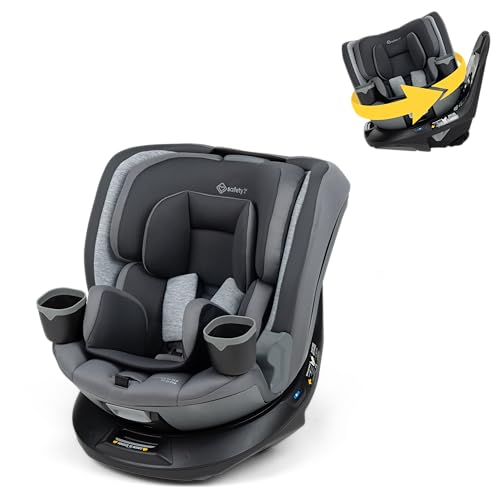
Safety 1st Turn and Go 360 DLX 360 Car Seat, Rotating All-in-One Convertible Car Seat, Stonington
Check price on Amazon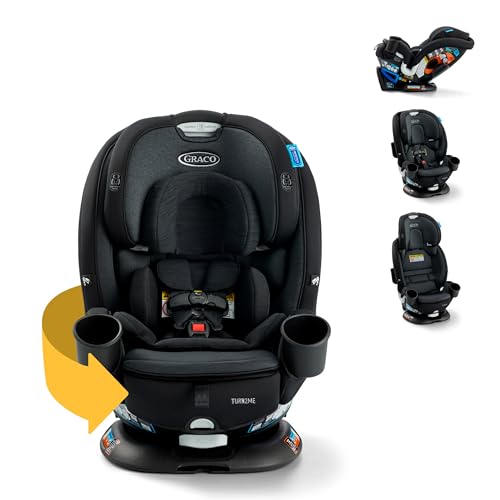
Graco Turn2Me 3-in-1 Rotating Convertible Car Seat, Cambridge | 180° Rotation in Rear-Facing Mode; 3 Modes of Use: Rear & Forward-Facing and Highback Booster; Easy SnugLock Installation
Check price on Amazon
Evenflo Revolve360 Extend All-in-One Rotating Car Seat | with Quick Clean Cover, Rear-Facing, Forward-Facing, Highback Booster Mode, Infant to 12 Years (Revere Gray)
Check price on Amazon
Joie Chili Spin SI 360 Rotating Convertible Car Seat, 2-in-1 Rear & Forward | Side impact protection, rear & forward-facing car seat, use up to 65 lb., 10-position headrest, no-rethread harness
Check price on Amazon
Safety 1st Turn and Go 360 DLX 360 Car Seat, Rotating All-in-One Convertible Car Seat, Sand Bucket
Check price on Amazon