
Toilet Seat With Built-In Potty Training Seat: The Complete Guide
Everything parents need to know about choosing a toilet seat with a built-in potty training seat—features, benefits, installation tips, and buying advice for a smoother training journey.
Explore Recommended OptionsQuick Overview: A toilet seat with a built-in potty training seat combines an adult toilet seat with a smaller child-sized seat in one unit. The child seat folds down or flips into place when needed, then folds back up so adults can use the toilet normally. It eliminates the need for a separate removable insert—no more searching for a misplaced training seat when your toddler needs to go.
Why a Built-In Potty Training Seat Makes Sense
Potty training is one of the most significant developmental milestones for toddlers—and one of the most demanding for parents. Many families start with a standalone potty chair, then transition to a toilet seat insert that sits on top of the regular seat. Both approaches work, but each has friction points: standalone potties require dumping and cleaning, while removable inserts get misplaced, slide around, or need to be stored between uses.
A toilet seat with a built-in potty training seat solves several of these problems at once. Because the child seat is permanently attached to the toilet seat, there is nothing to store, nothing to misplace, and nothing to reposition mid-use. The design also helps toddlers feel like they are using the "real" toilet—a big motivator for children who resist the idea of a separate potty chair.
For parents who are comparing options, our guide to toilet seat inserts for potty training covers the removable-insert approach in more detail. Many families eventually move toward a built-in model once they realize how often the insert gets left in another room. If you are still deciding between the two formats, a good rule of thumb is this: if you want zero storage and zero repositioning, a built-in seat is the more seamless choice.
How Built-In Potty Training Seats Work
The mechanism is straightforward. The toilet seat assembly includes two seating surfaces: the full-size adult ring and a smaller child ring. Depending on the model, the child seat either folds down from a hinge at the back of the seat or flips up from the front. Some designs use a separate child seat that sits on top of the adult seat and locks into place, while others integrate the child opening directly into a hinged component.
Most models use a single set of hinges shared by the adult seat, the child seat, and the lid. Higher-tier models often add a soft-close mechanism to prevent loud slamming, which is a small but meaningful quality-of-life feature during nighttime bathroom trips.
Common configurations
- Flip-down child seat: The child ring folds down from the back hinge and rests on the adult seat. This is the most common design and tends to be the most intuitive for toddlers.
- Pop-up child insert: A smaller seat flips up from the front of the adult ring. These can be slightly easier for a child to activate independently, but the hinge placement varies by brand.
- Two-in-one lid design: Some seats integrate the child opening into the lid itself, so the child seat and lid are a single component. These are streamlined but may require a specific motion to deploy.
Regardless of configuration, the key functional requirement is that the child seat locks securely in the down position. A seat that wobbles or shifts when a toddler sits down undermines confidence—and safety.
Key Features to Evaluate Before You Buy
Secure Fit & Hinge Quality
The seat must fit your toilet bowl shape—elongated or round—without sliding. Reinforced hinges that hold the child seat firmly in place are the single most important feature to check.
Child Opening Size
The child opening should be small enough to support a toddler's body but large enough for comfort. Check the manufacturer's recommended age and weight range before buying.
Easy-Clean Materials
Look for smooth, non-porous surfaces and removable child inserts where possible. Hinges should be easy to wipe around so moisture and residue don't accumulate.
Soft-Close Mechanism
A soft-close lid prevents loud slams and pinched fingers. It is common in mid-range and premium models and is especially useful in households with light sleepers.
Independent Child Seat Operation
Some models let the child seat fold down without moving the adult seat. This is more convenient for toddlers who want to use the toilet on their own.
Installation Hardware
Check whether the seat uses standard top-mount or bottom-mount bolts and whether the necessary hardware is included. Compatibility with your existing toilet is essential.
Built-In Seat vs. Removable Insert vs. Standalone Potty
Each potty training format has trade-offs. The table below compares them across the dimensions that matter most to parents during the training phase.
| Feature | Built-In Potty Seat | Removable Insert | Standalone Potty Chair |
|---|---|---|---|
| Storage required | None — permanently attached | Yes — must be stored between uses | Yes — occupies floor space |
| Risk of misplacement | None | High | None |
| Adult toilet use | Unaffected — child seat folds away | Unaffected — insert removed | Unaffected |
| Cleaning effort | Moderate — wipe-down plus occasional deep clean | Moderate — insert washes separately | High — bowl must be emptied and sanitized |
| Independence for toddler | High — child seat is always available | Low to moderate — child may need help placing insert | High — child-sized from the start |
| Transition to adult toilet | Seamless — same fixture | Seamless once insert is removed | Requires a second transition |
| Typical tier | Mid-range to premium | Entry-level to mid-range | Entry-level to mid-range |
For families who want the fewest moving parts and the most seamless transition, a built-in seat is generally the most convenient long-term choice. For families who want the lowest initial commitment or who are training in multiple bathrooms, a toilet seat insert for potty training may be a better starting point. And if you are still in the early research phase, our overview of toilet seats with a potty seat attached explains how the categories overlap.
How to Choose the Right Model for Your Home
Buying a built-in potty training seat is mostly a compatibility exercise. Work through these steps before you commit to a model:
- Measure your toilet bowl. Determine whether your toilet is elongated or round. Seat manufacturers list compatibility clearly, and buying the wrong shape is the most common source of returns.
- Check the hinge style. Top-mount hinges are easier to install and clean; bottom-mount hinges are more secure but require reaching under the bowl. Confirm which style your toilet supports.
- Decide on soft-close. If the bathroom is near a sleeping area, a soft-close lid is worth prioritizing. It is a standard feature on mid-range and premium models.
- Evaluate the child seat deployment. Some toddlers can flip down a child seat independently; others need a parent. If you want your child to practice independence, look for a model with a smooth, low-effort deployment mechanism.
- Confirm the weight and age range. Most built-in child seats are designed for toddlers within a specific weight range. Check that your child falls within it before relying on the seat as your primary training tool.
- Plan for cleaning. Models with removable child inserts are easier to sanitize thoroughly. If the child seat is fixed, make sure the hinge area can be reached with a brush or cloth.
If you are also outfitting the rest of your bathroom for the training phase, our toddler oral hygiene guide covers the sink-side routines that pair naturally with potty training. And for families preparing a full bathroom setup, the toddler gear overview is a useful starting point for age-appropriate equipment.
Installation and Setup Tips
Most built-in potty training seats install the same way as a standard toilet seat: two bolts through the hinge plate, tightened from above or below depending on the mount style. A few practical tips make the process smoother:
- Turn off the water supply and flush the toilet before installing, so the bowl is empty and dry.
- Use the included hardware rather than reusing old bolts—worn hardware is a common cause of a wobbly seat.
- Tighten the bolts evenly, alternating sides, so the hinge plate sits flat against the bowl.
- Test the child seat deployment several times before your toddler uses it. The seat should lock firmly and fold away cleanly.
- Check the fit after the first week of use; new seats sometimes settle and need a quarter-turn of tightening.
If you are installing the seat as part of a broader bathroom refresh, our baby proofing tools guide covers cabinet locks, outlet covers, and other safety basics that pair well with potty training setup.
Cleaning and Maintenance
Built-in potty seats have more crevices than a standard seat, so a consistent cleaning routine matters. Wipe the child seat and adult ring with a mild disinfectant after each use during the training phase. Once a week, clean the hinge area with a soft brush and check for buildup. If the model has a removable child insert, wash it separately with soap and warm water.
Avoid abrasive scouring pads and harsh chemical cleaners, which can dull the finish and degrade plastic components over time. Dry the hinges thoroughly after cleaning to prevent moisture from collecting in the mechanism. With basic care, a well-built seat should hold up through the entire training period and beyond.
Safety Considerations
No potty training seat replaces adult supervision. Always stay within arm's reach when a toddler is using the toilet. Check that the child seat is locked in the down position before your child sits, and confirm the seat is firmly attached to the bowl. If the seat wobbles, stop using it and re-tighten or replace the hardware.
Also consider the transition period: some toddlers want to climb onto the toilet independently. A sturdy step stool positioned next to the toilet reduces the risk of slips and helps your child feel more in control. For a broader look at safety equipment for this stage, our baby proofing tools guide covers the essentials.
Frequently Asked Questions
What is a toilet seat with a built-in potty training seat?
Are built-in potty training seats safe for toddlers?
How do I clean a toilet seat with a built-in potty seat?
Can adults still use the toilet normally with a built-in potty seat?
What should I look for when choosing a built-in potty training seat?
Ready to Compare Options?
Browse recommended models that fit the features discussed in this guide—secure hinges, easy-clean surfaces, and toddler-friendly deployment.
See Recommended ProductsFinal Thoughts
A toilet seat with a built-in potty training seat is one of those small upgrades that quietly removes friction from daily life. There is no insert to find, no potty chair to empty, and no separate transition later—the child simply uses the same toilet adults use, with a seat sized for them. The main decision is compatibility: match the seat to your toilet's shape and hinge style, confirm the child seat locks securely, and choose a model with materials you can clean easily.
If you are comparing formats before you commit, revisit our guides on toilet seat inserts and toilet seats with a built-in potty seat to see how the options stack up. Whichever path you choose, the goal is the same: a calm, consistent setup that lets your toddler build confidence at their own pace.
Recommended Toilet Seats With Built-In Potty Training Seats
⚠️ AFFILIATE DISCLOSURE: This website contains affiliate links. As an Amazon Associate, we earn from qualifying purchases. If you make a purchase through these links, we may receive a small commission at no additional cost to you. Read our full affiliate policy.
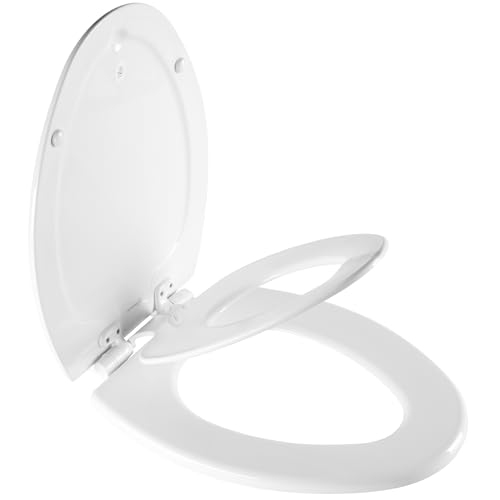
Mayfair NextStep2 Toilet Seat with Built-In Potty Training Seat, Slow-Close, Removable that will Never Loosen, Elongated, White
Check price on Amazon
Mayfair NextStep2 Toilet Seat with Built-In Potty Training Seat, Slow-Close, Removable that will Never Loosen, Round, White
Check price on Amazon
Mayfair NextStep2 Toilet Seat with Built-In Potty Training Seat, Slow-Close, Removable that will Never Loosen, Round, White, 2-Pack
Check price on Amazon
Jool Baby Quick Flip Toilet Seat, Built-in Potty & Splash Guard (Elongated) | Potty Seat Stays Out of the Way of Adults & Is Easy for Kids to Flip Down – Slow Close Minimizes Noise & Pinching
Check price on Amazon
Toilet Seat with Toddler Seat, Potty Training Toilet Seat Round 2 in 1 Soft Close Quiet No Slapping, Magnetic Absorption, Easy to Install and Clean,White
Check price on Amazon
Jool Baby Quick Flip Toilet Seat - Built-in Potty & Splash Guard (Round) | Potty Seat Stays Out of the Way of Adults & Is Easy for Kids to Flip Down – Slow Close Minimizes Noise & Pinching
Check price on Amazon