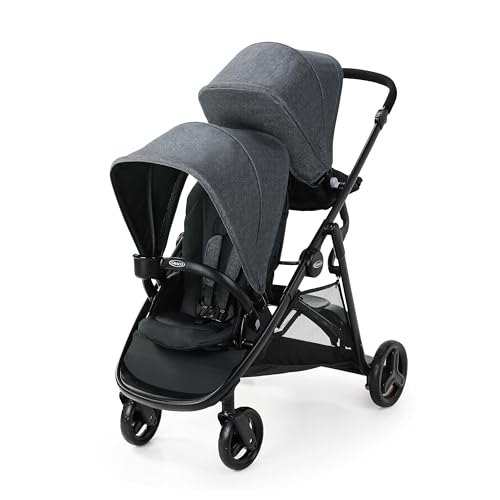
Single to Double Stroller Travel System: The Complete Buying Guide
If you are planning for a second child or expecting twins, a single to double stroller travel system is one of the smartest long-term investments you can make. It gives you the flexibility of a single stroller today and the capacity of a double stroller tomorrow, without forcing you to buy two separate products. This guide explains how these convertible systems work, what to look for, and how to match a configuration to your family's daily routine.
Parents who are researching this category usually already understand the basic idea: a stroller that grows with the family. What they need is a clear breakdown of the trade-offs. A convertible model is not simply "a double stroller that shrinks." The frame geometry, seat arrangement, and car seat adapters all change depending on how many children you are transporting. Understanding those details before you buy will save you from a configuration that looks good on paper but frustrates you in daily use.
This guide walks through the main decision points: inline versus side-by-side layouts, infant car seat compatibility, seat recline and bassinet options, fold size, and the practical weight differences between single and double mode. For parents comparing a dedicated double purchase, our overview of the single stroller that converts to double explains how the conversion mechanism works across popular models, while families with twins may prefer a purpose-built double car seat stroller combo for twins.
What Makes a Stroller a "Single to Double Travel System"?
The phrase combines two features that are often sold together but are technically separate:
- Single to double conversion: The stroller frame accepts a second seat, a second bassinet, or a ride-on board, so the same chassis can carry one or two children.
- Travel system compatibility: The stroller accepts at least one infant car seat directly onto the frame (usually via included or sold-separately adapters), so you can move a sleeping baby from the car to the stroller without waking them.
When both features are present, you get a stroller that works from the newborn stage through the toddler years, and from one child to two. That is why this category appeals to parents who want to avoid buying a single stroller and then a separate double stroller within a couple of years.
Key Takeaway
A true single to double travel system should support three modes: (1) one infant car seat, (2) one toddler seat or bassinet, and (3) two children simultaneously — either two seats, a seat plus a car seat, or a seat plus a ride-on board. Confirm all three modes exist for the specific model before purchasing.
Inline (Tandem) vs. Side-by-Side Convertible Strollers
Most single to double travel systems use an inline, or tandem, layout, where the second seat attaches in front of or behind the first. A smaller number use a side-by-side layout that widens when the second seat is added. Each has practical consequences for daily life.
| Feature | Inline / Tandem | Side-by-Side |
|---|---|---|
| Width in double mode | Narrower — fits standard doorways and aisles | Wider — may not fit narrow shop aisles or older doorways |
| Access to both children | Rear seat is easy to reach; front seat requires leaning forward | Both children are equally accessible from the sides |
| Weight distribution | Weight is spread front-to-back; steering can feel heavier with two children | Weight is spread side-to-side; can feel tippy on curbs if unbalanced |
| Best for | Urban parents, public transport, narrow store aisles | Parents who want equal interaction with both children and wider paths |
| Typical tier | Mid-range to premium convertible systems | Premium and high-end tier models |
If you regularly navigate tight spaces, an inline convertible is usually the more practical choice. If your routine involves wide sidewalks and you want both children at eye level, a side-by-side model may suit you better. Either way, test the double configuration in person if possible, because the handling changes noticeably once the second seat is attached.
Infant Car Seat Compatibility: The Core of the Travel System
The travel system aspect is what makes a convertible stroller usable from day one. Most convertible frames accept at least one infant car seat, but compatibility is brand-specific. Adapters are often required and may be included or sold separately. Before buying, confirm the following:
- Which car seat brands the frame accepts. Some strollers only accept the manufacturer's own car seats; others support a list of third-party brands through adapters.
- Whether the adapter is included. A stroller marketed as a travel system should include the adapter for at least one seat position, but always verify.
- Whether two car seats can be mounted at once. For twins, this is essential. Many convertible frames support two infant car seats simultaneously, but not all do.
- Car seat weight and age limits. Infant car seats typically have a maximum weight limit, after which you must switch to the toddler seat.
Families who want a stroller that accepts a car seat plus a bassinet from the start should look at a stroller travel system with bassinet, which is often the most newborn-friendly configuration. If you plan to use the stroller primarily for air travel, a travel stroller and car seat pairing may be more compact, though most of those models do not convert to double.
Compatibility Checklist Before You Buy
- List the car seat model you already own (or plan to buy).
- Check the stroller's official compatibility chart for that exact model.
- Confirm whether the adapter is included or sold separately.
- Verify that the car seat can be used in the position you need (upper, lower, or either).
- Check the maximum weight the stroller frame supports in double mode.
Seat Configuration Options for Two Children
A convertible stroller's usefulness depends on how many seating combinations it supports. The most common configurations are:
- Toddler seat + toddler seat: Two full seats, usually with independent recline. This is the configuration you will use longest.
- Toddler seat + infant car seat: Ideal for a newborn and an older sibling. The car seat usually clicks into the upper or lower position depending on the model.
- Bassinet + toddler seat: The most supportive option for a newborn on long walks, since a bassinet keeps the baby flat.
- Toddler seat + ride-on board: A lighter option for an older child who wants to stand or sit briefly. Ride-on boards are usually sold separately.
- Two infant car seats: Essential for twins. Confirm that the frame supports two car seats at once and that both adapters are included.
Not every convertible stroller supports every combination. Some frames allow a second seat only in one position, which limits how you can arrange a newborn and a toddler. Check the manufacturer's configuration chart, and if you are planning for twins, prioritize a model explicitly rated for two infant car seats.
Weight, Fold Size, and Portability
The biggest practical trade-off in this category is weight. A convertible stroller is heavier than a single stroller because the frame must support two children. In double mode, the total weight — stroller plus two children plus gear — can be substantial. Before buying, consider:
- Folded dimensions: Will it fit in your vehicle trunk, hallway, or storage closet in double mode?
- One-hand fold: Useful when you are holding a baby. Not all convertible models offer a true one-hand fold.
- Standing fold: A stroller that stands upright when folded is easier to store in tight entryways.
- Frame weight alone: Compare the single-mode weight and the double-mode weight, since they can differ by several kilograms once the second seat is attached.
- Carry weight: If you regularly lift the stroller into a car, a lighter convertible in the mid-range tier may be more practical than a heavier premium model.
For families who travel frequently, a lightweight double stroller for travel may be a better secondary stroller, while the convertible stays at home for daily use. Many parents end up with both: a heavier convertible for neighborhood walks and a compact stroller for trips.
Wheels, Suspension, and Terrain
Wheel type determines where the stroller is comfortable to push. As a general rule:
| Wheel Type | Best For | Trade-offs |
|---|---|---|
| Small solid wheels | Paved sidewalks, shopping malls, indoor use | Less smooth on uneven ground; can feel bumpy on gravel |
| Medium foam-filled wheels | Mixed urban terrain, parks, daily errands | Balanced ride; not ideal for rough trails |
| Large air-filled tires | Jogging, gravel paths, uneven sidewalks | Heavier; requires tire maintenance; bulkier fold |
If you plan to jog or walk on unpaved paths with two children, a jogging-style convertible is worth considering. Our guide to the double jogging stroller with handbrake covers the safety features that matter when pushing two children at speed. For families who want a car seat option on a jogging frame, a double jogging stroller with car seat combines travel system convenience with all-terrain wheels.
Safety Features to Prioritize
Because a convertible stroller carries two children, safety features deserve extra attention. Look for:
- Five-point harnesses on every seat, with adjustable shoulder height.
- Independent brakes that lock both rear wheels, ideally with a single pedal.
- Auto-lock fold to prevent the stroller from unfolding unexpectedly during transport.
- Reflective accents for evening walks.
- JPMA or equivalent safety certification where applicable in your region.
- Stable center of gravity in double mode, especially when a heavier child sits in the front seat.
Always register your stroller with the manufacturer so you receive recall notifications. Check the stroller's weight limit for each seat and for the total frame, and never exceed those limits, as doing so can affect stability and braking performance.
How to Decide Between a Convertible and a Dedicated Double
If your second child is already born or on the way soon, a dedicated double stroller may be the simpler choice. If you are planning ahead and want one stroller to cover the transition from one child to two, a convertible is usually the more efficient long-term option. Consider these scenarios:
- One child now, second child planned within two years: A convertible travel system lets you use the stroller immediately and expand later.
- Twins or two children close in age: A dedicated double, or a convertible explicitly rated for two infant car seats, is the safer choice.
- Frequent air travel: A compact dedicated double or a lightweight travel stroller may be more practical than a heavy convertible.
- Mostly urban errands with occasional second-child use: A convertible in the mid-range tier with a narrow inline frame is a good balance.
For a closer look at compact alternatives, our comparison of the lightweight double umbrella stroller explains when a simple umbrella frame is sufficient and when it is not. Parents who want a reversible seat option may also want to review the Reversi lightweight reversible stroller, which offers parent-facing and forward-facing modes.
Editorial Recommendation by Family Stage
- Expecting first child, planning a second: Choose a convertible travel system with a bassinet-compatible seat and a confirmed second-seat add-on.
- Expecting twins: Choose a frame rated for two infant car seats simultaneously, with both adapters included.
- Toddler plus newborn: Prioritize a configuration that allows a car seat in the upper position and a reclining toddler seat below.
- Active outdoors family: Choose air-filled tires and a handbrake, and confirm the double-mode weight limit.
Maintenance and Long-Term Care
A convertible stroller is a long-term purchase, so basic maintenance extends its useful life. Clean the frame with a damp cloth and mild soap, avoid harsh solvents on fabric, and check the harness and brake mechanisms periodically. If your model uses air-filled tires, check tire pressure regularly. Store the stroller dry to prevent rust on metal components, and follow the manufacturer's instructions for removing and washing fabric covers.
When you add the second seat, re-check the manual for any changed weight limits or configuration warnings. Some manufacturers specify different maximum weights for the upper and lower seats, and those limits can change when both seats are occupied.
Frequently Asked Questions
What is a single to double stroller travel system?
It is a convertible stroller that starts as a single-seat stroller with infant car seat compatibility and can later expand to carry two children. It typically includes a frame, a toddler seat, and adapters for a compatible infant car seat.
Can a single to double stroller be used from birth?
Yes. Most convertible models accept an infant car seat from birth through adapters, and many also support a bassinet or a reclining toddler seat suitable for newborns. Always verify the manufacturer's minimum age and weight requirements.
Do I need a second seat immediately?
Not necessarily. The main advantage of a single to double model is that you can start with one seat and add the second seat or ride-on board later when your family grows. This spreads the configuration changes over time.
Are convertible double strollers harder to maneuver?
When configured as a double, most convertible strollers are heavier and longer than a single. Inline tandem models are narrower for doorways, while side-by-side models offer easier access to both children. Test maneuverability in person if possible.