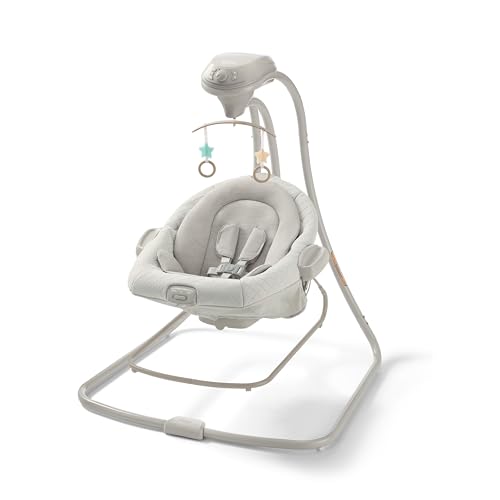
Infant Swing and Bouncer: The Complete Guide to Choosing Soothing Gear
Understand the difference between swings and bouncers, compare motion types, safety features, and tier categories so you can pick the right soothing seat for your baby's needs.
Why this guide matters: Infant swings and bouncers are among the most used soothing products in the first six months. They can calm a fussy baby, give parents a free hand, and support supervised play. But they are not interchangeable, and not every model fits every home or every baby.
This guide explains the two product families, the motions they use, the safety points that matter most, and how to match a tier to your routine. You will finish with enough clarity to choose a model with confidence.
What Is an Infant Swing and Bouncer?
An infant swing moves your baby in a controlled rocking, gliding, or side-to-side motion. Most modern swings use a motor with adjustable speed and a timer. A bouncer is a lightweight, low-profile seat that responds to your baby's own movement, producing a gentle bounce. Some models combine both functions in a single frame.
Both products belong to the wider category of infant bouncers and motion-based soothing seats. Parents often compare them with a bouncer jumper or a stationary standing activity center, but those serve different developmental stages.
Understanding the role of each product helps you avoid buying two items that do the same job. It also helps you plan for the transition from a play yard or crib mattress to active supervised play.
Swing vs Bouncer: Key Differences
Infant Swing
- Powered by a motor or natural pendulum motion
- Adjustable speed and timer settings on most models
- Larger footprint; often freestanding or collapsible
- Better for longer soothing sessions and hands-free time
- Commonly includes music, sounds, and removable toy bars
- Motion types include front-to-back, side-to-side, and multi-direction
Bouncer
- Reacts to the baby's own movement
- No motor; simple, low-maintenance design
- Lightweight and easy to move room to room
- Compact storage; ideal for smaller spaces
- Often doubles as a portable seat for supervised play
- Best for short soothing sessions and travel
Many families keep both. A swing handles the longer calming periods, while a bouncer stays near the kitchen or bathroom for quick supervision. If space is limited, a combined swing-and-bouncer unit can cover both needs without doubling the footprint.
Motion Types Explained
The motion a swing or bouncer produces is the most important comfort factor. Babies respond differently, so it helps to understand what each motion type feels like.
- Front-to-back swing: Mimics the feel of a stroller or a gentle walk. This is the most common motion and often the first choice for newborns.
- Side-to-side swing: A cradling, swaying movement. Some babies settle faster with this motion, especially after feeding.
- Multi-direction swing: Combines both motions and lets you test which one your baby prefers. Mid-range and premium models often include this feature.
- Bouncing motion: Found in bouncers. The baby's own kicks and shifts create a gentle bounce. No motor is involved, so the response is immediate.
- Vibration: A light vibration setting appears on many bouncers and some swings. It can soothe some babies but is not necessary for every family.
If your baby is easily overstimulated, start with the lowest speed and the simplest motion. You can always add features later. A simple bouncer is often the best first step before committing to a full-featured swing.
Safety Features That Matter
Safety should drive the purchase decision more than any other factor. The following features are non-negotiable in a well-designed swing or bouncer.
- Five-point harness: Keeps the baby secure even during active motion. A three-point harness is acceptable on some bouncers but a five-point is the standard for swings.
- Stable base: The frame should not tip when a baby shifts weight. Look for a wide base and a locking mechanism on folding models.
- Non-slip feet: Rubberized feet prevent sliding on hardwood and tile floors.
- Weight and age limits: Follow the manufacturer's limits. Most swings support newborns up to around 25 to 30 pounds; bouncers usually stop earlier.
- Firm, flat seat: The seat should support the baby's back without deep inclines. Avoid models that position the baby in a curled posture.
- Auto shut-off: A timer that stops the swing after a set period prevents prolonged motion and saves battery life.
Never use a swing or bouncer for sleep. If your baby falls asleep in one, move them to a firm, flat surface such as a play yard or a crib with a proper crib mattress.
Tier Comparison: Entry-Level to Premium
Swings and bouncers are commonly grouped into three tiers. The tier reflects build quality, motion control, and added features, not just brand name. Use the table below to match a tier to your routine and space.
| Tier | Best For | Typical Features |
|---|---|---|
| Entry-level | Short-term use, travel, or a second seat for grandparents | Simple frame, one motion direction, manual speed, basic harness, compact fold |
| Mid-range | Daily use in a single room with occasional repositioning | Adjustable speed, timer, multiple motion directions, removable toy bar, music |
| Premium | Long daily sessions, multi-caregiver homes, and full-feature setups | Multi-direction motion, app or remote control, deep recline, premium fabrics, larger frame |
Entry-level models are a solid choice for travel or a secondary seat. Mid-range models are the most common pick for everyday use. Premium models suit families who want fine motion control and durable materials. The right tier depends on how often you plan to use the product and how much space you can dedicate to it.
How to Choose the Right Swing or Bouncer
Use the following checklist to narrow your options before you buy. Each point maps to a real-world decision you will make once the product arrives.
- Measure your space: Swings need clearance for the full arc of motion. Bouncers need only a small floor area. If your nursery is compact, a compact bouncer may be the better fit.
- Decide on power: Battery-powered swings are portable but need frequent battery changes. Plug-in models avoid that but limit placement to reach of an outlet.
- Check the recline: Newborns need a flatter recline. Older babies can use a more upright seat. Adjustable recline covers both stages.
- Consider the transition: A swing or bouncer is a temporary product. Plan for the next stage, such as an activity center or a walker with wheels, once your baby outgrows the seat.
- Think about travel: If you travel often, a foldable bouncer or a lightweight travel swing is easier to pack than a full-size unit.
If you are building a full gear list, pair this guide with our overview of infant car seats and a lightweight compact stroller so your travel setup stays consistent.
Care and Maintenance Tips
Swings and bouncers take daily wear from movement, spit-up, and contact with fabric. A few simple habits keep them in good condition and extend their useful life.
- Check the harness weekly: Look for frayed straps or a loose buckle. Replace the harness if any part shows wear.
- Wipe the frame: Use a damp cloth on plastic and metal parts. Avoid abrasive cleaners that can weaken the finish.
- Wash fabric covers according to the label: Most seat covers are removable and machine washable on a gentle cycle.
- Inspect the base and feet: Confirm the non-slip feet are intact and the frame locks fully when unfolded.
- Store with the battery removed: If the swing uses batteries, take them out during long storage to prevent leakage.
Frequently Asked Questions
What is the difference between an infant swing and a bouncer?
A swing uses a motorized or natural motion to rock or glide a baby, often for longer soothing sessions. A bouncer is a lightweight seat that responds to your baby's own movement, providing gentle bouncing and a portable spot to rest.
Are infant swings and bouncers safe for newborns?
Most swings and bouncers are designed for newborns up to a certain weight or until they can sit up unassisted. Always follow the manufacturer's age and weight guidelines, use the harness, and never leave a baby unattended or use these products for sleep.
How long can a baby use a swing or bouncer?
Many infants enjoy swings and bouncers from birth until around six months or until they become mobile and try to sit up. Always check the product's maximum weight limit and discontinue use once your baby outgrows it or can climb out.
Can a baby sleep in a swing or bouncer?
No. Swings and bouncers are not designed for sleep. If your baby falls asleep in one, transfer them to a firm, flat surface such as a crib or bassinet as soon as possible to follow safe sleep guidelines.
Final Thoughts
An infant swing and bouncer are short-term products, but they shape the first six months of daily routine. Focus on safety first, then on motion type, then on tier. A simple bouncer covers supervised play and quick soothing. A full-feature swing covers longer calming sessions and hands-free time. Choose based on your space, your baby's temperament, and how you plan to use the product day to day.
For related gear, explore our guides on bouncer jumpers, changing pads, and bath tubs with stands to complete your nursery setup.