
Hands-Free Bottle Feeding: The Complete Guide for Busy Parents
Discover how wearable breast pumps and compatible bottles make hands-free bottle feeding possible — so you can pump, feed, and multitask with confidence.
Why hands-free bottle feeding matters: For many parents, pumping is a significant part of the feeding journey. Hands-free systems let you express milk while tending to your baby, working, or simply resting — reducing the physical and mental load of feeding day and night. This guide explains how the technology works, what to look for, and how to build a routine that fits your family.
What Is Hands-Free Bottle Feeding?
Hands-free bottle feeding describes a feeding workflow in which a parent uses a wearable or hands-free breast pump to express milk without holding pump flanges in place, then feeds that milk to their baby via a bottle — often at the same time or with minimal interruption. In practice, the term covers two related ideas: the pump itself (which frees your hands during expression) and the bottle-feeding setup (which lets you or a partner feed the baby efficiently).
Wearable pumps sit inside a nursing bra or a specialized pumping bra and collect milk into a small attached container. Because they don't require you to sit tethered to a pump, they make it possible to prepare a bottle, soothe a fussy baby, or answer emails while milk is being expressed. Combined with a bottle that your baby accepts well, this creates a genuinely hands-free feeding loop — especially useful for parents returning to work, caring for multiple children, or managing night feeds.
If you're exploring the broader category of wearable pumping devices, our guide to hands-free wearable breast pumps covers the major form factors and what distinguishes a good wearable from a mediocre one. For a wider look at pump types, see our hands-free breast pump overview.
How Wearable Pumps Make Hands-Free Feeding Possible
Traditional double electric pumps require you to hold two flanges against your breasts for 15–30 minutes per session. That's 15–30 minutes where your hands are occupied — often multiple times a day. Wearable pumps change the equation by using a bra-supported collection cup that stays in place on its own. You insert the cups, switch the pump on, and your hands are free.
Key components of a wearable pump
- Collection cup: A breast shield and milk container combined into one unit that fits inside your bra.
- Pump motor: A small, rechargeable motor unit that attaches to the cup or sits separately and connects via tubing.
- Suction and cycle settings: Adjustable controls that mimic a baby's suckling pattern, often with massage and expression modes.
- Bottle compatibility: Most wearable cups detach from the pump and screw directly onto a standard-width or narrow-width bottle — this is the crucial link to hands-free bottle feeding.
The bottle-compatibility step deserves special attention. Not every wearable pump cup fits every bottle. Before you commit to a system, confirm that the collection cup can attach to a bottle your baby already accepts, or that the pump includes a bottle that works for your feeding routine. Our article on hands-free electric breast pumps dives deeper into motor performance and battery life.
Bottle Compatibility: The Missing Link in Hands-Free Feeding
A wearable pump only delivers true hands-free bottle feeding if the milk can move seamlessly from pump to bottle to baby. There are three common approaches:
| Approach | How It Works | Best For |
|---|---|---|
| Direct-attach cups | The collection cup unscrews from the pump and screws directly onto a compatible bottle. | Parents who want the fewest parts and fastest transfer. |
| Pour-and-transfer | Milk is poured from the collection cup into any bottle your baby prefers. | Babies who are picky about bottle nipples or flow rates. |
| Pump-and-store kits | Cups attach to storage bags or containers, then milk is warmed and poured into a bottle later. | Parents building a milk stash for work or outings. |
If you plan to pump and feed in the same session, direct-attach cups are the most efficient. Check the thread width (standard vs. narrow) and whether an adapter ring is included. Some premium wearable systems ship with multiple adapters, which makes them flexible across bottle brands. If your baby has settled on a particular bottle, prioritize a pump that can either attach to it or transfer milk into it cleanly.
Compatibility Checklist
Before buying, verify: (1) the cup's thread size matches your bottle; (2) an adapter is included or sold separately; (3) the cup is dishwasher-safe; and (4) the assembled cup-plus-bottle fits inside your bra without leaking. Testing these four points prevents most hands-free feeding frustration.
Building a Hands-Free Bottle Feeding Routine
The technology is only half the equation. A workable routine accounts for your supply, your baby's feeding schedule, and the practical realities of cleaning and storage. Here's a framework that many pumping parents find effective:
1. Pump on a schedule that mirrors feeding
If you're exclusively pumping or building a stash, aim to pump whenever your baby feeds, or roughly every 3 hours during the day. Wearable pumps make this easier because you can pump while feeding your baby a bottle — a genuine hands-free bottle feeding session where both tasks happen at once.
2. Pair pumping with bottle prep
Use the hands-free window to warm a bottle, assemble feeding supplies, or soothe your baby. The goal is to stack tasks that would otherwise compete for your attention. This is where wearable pumps earn their keep: the pump runs quietly in the background while you handle the feeding.
3. Clean and rotate parts
Wearable pump cups have more nooks than traditional flanges, so establish a rinse-soak-sanitize rhythm. Many parents keep two sets of cups so one can dry while the other is in use. Bottle brushes designed for wide-neck bottles work well on cup interiors.
4. Store milk safely
Follow standard milk storage guidelines: room temperature for short periods, refrigerator for a few days, freezer for longer-term storage. Label containers with the date and use the oldest milk first. If you're pumping at work, a small cooler bag with an ice pack keeps milk safe during commutes.
5. Involve a partner
One of the quieter benefits of hands-free bottle feeding is that it lets a partner take over feeds. A partner can feed the baby a bottle of expressed milk while you pump — or while you rest. This sharing of the feeding load is one of the most practical reasons families invest in wearable pumps.
Choosing the Right Hands-Free Feeding Setup
Wearable pumps and hands-free bottle feeding systems span several market tiers. Rather than anchoring to a single product, think in terms of the tier that matches your usage pattern:
- Entry-level tier: Basic wearable cups with manual or simple motor controls. Suitable for occasional pumping or supplementing. Often single-cup systems.
- Mid-range tier: Double-cup sets with rechargeable motors, multiple suction levels, and broader bottle compatibility. A solid choice for daily pumping at home.
- Premium tier: Quieter motors, app connectivity, hospital-grade suction patterns, and comprehensive adapter kits. Well-specified for parents pumping several times a day.
- Top-tier / flagship tier: The most advanced wearable systems with smart sensors, leak-resistant designs, and the widest bottle ecosystem support. A long-term investment for exclusive pumpers.
When comparing options, weigh motor strength, noise level, battery life, cup capacity, and — critically — how easily the cup connects to a bottle. A premium pump with poor bottle compatibility creates more friction than a mid-range pump that attaches directly to the bottle your baby loves.
What to prioritize by use case
Occasional pumping: prioritize ease of cleaning and cup comfort. Daily pumping at work: prioritize battery life, noise level, and a discreet profile. Exclusive pumping: prioritize suction strength, double-cup efficiency, and comprehensive bottle adapters. Night feeds: prioritize quiet operation and a dimmable display.
Common Challenges and How to Solve Them
Leaks and spills
Wearable cups can leak if they're overfilled or if the seal isn't seated correctly. Check that the silicone diaphragm is fully dry and properly aligned before each session, and avoid filling past the maximum line. Leaning forward sharply while pumping can also cause spills — keep your posture upright.
Lower output than a traditional pump
Some parents notice slightly lower output from wearable pumps compared with hospital-grade electric pumps. This is often a fit issue: ensure the breast shield flange size matches your nipple diameter. A properly sized flange improves suction efficiency and comfort. If output remains low, try a hands-on massage before and during pumping.
Baby won't take the bottle
Bottle refusal is common and rarely about the pump. Try different nipple flow rates, warm the milk to body temperature, and offer the bottle when the baby is calm rather than ravenous. Some babies prefer a bottle that mimics the breast more closely. If refusal persists, consult your pediatrician or a lactation consultant.
Cleaning fatigue
More parts mean more cleaning. Rotating two cup sets and using dishwasher-safe components reduces the burden. A dedicated drying rack for pump parts keeps the kitchen counter organized and speeds up turnaround between sessions.
Frequently Asked Questions
Can you really feed a baby while wearing a hands-free pump?
Yes. Many parents pump while bottle-feeding their baby, especially once the baby is comfortable taking a bottle. Keep the baby in a supported position on your lap or in a bouncer, and make sure the pump cups are secure before you begin.
Do wearable pumps work with all bottles?
No. Bottle compatibility depends on thread size and whether an adapter is included. Standard-width and narrow-width are the two main thread types. Always check the pump's specifications and adapter availability before assuming a bottle will fit.
Are hands-free pumps as effective as traditional pumps?
Premium and top-tier wearable pumps approach the performance of traditional electric pumps, but entry-level wearables may have weaker suction. For exclusive pumping, a high-end wearable or a hybrid setup (wearable for daytime, traditional for morning) often works best.
How often should I clean my wearable pump cups?
Clean cups after every pumping session. A quick rinse followed by a thorough wash with warm soapy water is standard; sanitize daily or per the manufacturer's instructions. If you pump multiple times a day, having a second cup set simplifies the routine.
Can I use a hands-free pump if I have a large bust?
Yes, but fit matters more. Look for pumps with adjustable straps and larger flange options. Our guide to hands-free breast pumps for large breasts covers sizing and support considerations in detail.
Does insurance cover wearable pumps?
Many insurance plans cover breast pumps, including some wearable models. Coverage varies by plan and provider. See our resources on hands-free breast pumps with insurance and pumps covered by insurance for general guidance.
Ready to Simplify Your Feeding Routine?
Explore our recommended hands-free bottle feeding products below and find the setup that fits your family.
View Recommended ProductsRecommended Hands-Free Bottle Feeding Products
⚠️ AFFILIATE DISCLOSURE: This website contains affiliate links. As an Amazon Associate, we earn from qualifying purchases. If you make a purchase through these links, we may receive a small commission at no additional cost to you. Read our full affiliate policy.

Hands-Free Baby Bottle - Anti-Colic Nursing System 9 oz Baby Bottle with Fast Flow Nipple/Teat 3m+ with Tube Straw Feeding System for Toddler (2 Bottles - Elephant)
Check price on Amazon
Hands-Free Baby Bottle - Anti-Colic Nursing System 4 oz Baby Bottle with Fast Flow Nipple/Teat 3m+ with Tube Straw Feeding System for Toddler (2 Bottles - Elephant)
Check price on Amazon
Kelvix|Bottles,3 in 1 Feeding Bottle, Easy to Grip Anti-Colic, Blue | Multifunction Feeding Bottle, Anti-Colic Drinking Bottle, Easy to Grip, 300ml, PP Milk Storage Bottles
Check price on Amazon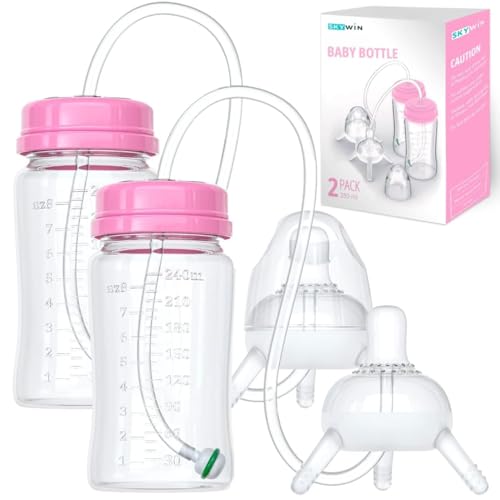
Baby Bottle Anti Colic with Straw - Built in Nipple Valve & Base Vent Hole | 8oz - 2 Pk - Design for Gas Reduction, Upright Position Hand Free Bottle for 6m-2y Kids, Use Under Caregiver Assisted - Pink
Check price on Amazon
Hands-Free Baby Bottle - Anti-Colic Nursing System 9 oz Baby Bottle with Fast Flow Nipple/Teat 3m+ with Tube Straw Feeding System for Toddler (2 Bottles - Dinosaur)
Check price on Amazon
Hands-Free Baby Bottle - Anti-Colic Nursing System 4 oz Baby Bottle with Fast Flow Nipple/Teat 3m+ with Tube Straw Feeding System for Toddler (2 Pack - Dinosaur)
Check price on Amazon
Hands-Free Baby Bottle - Anti-Colic Nursing System 9 oz Baby Bottle with Fast Flow Nipple/Teat 3m+ with Tube Straw Feeding System for Toddler (2 Bottles - Blue)
Check price on AmazonDisclaimer
Baby product selection and parenting decisions involve personal preferences and individual circumstances. The information provided on CradleCheck is for educational and informational purposes only. We are not medical professionals, and our content should not replace professional medical advice, diagnosis, or treatment. Always consult with your pediatrician or healthcare provider regarding your baby's health and safety. Some content may use AI assistance. Always check product safety standards and recalls before purchasing. If you do not agree, please do not use this website. Read the full disclaimer.