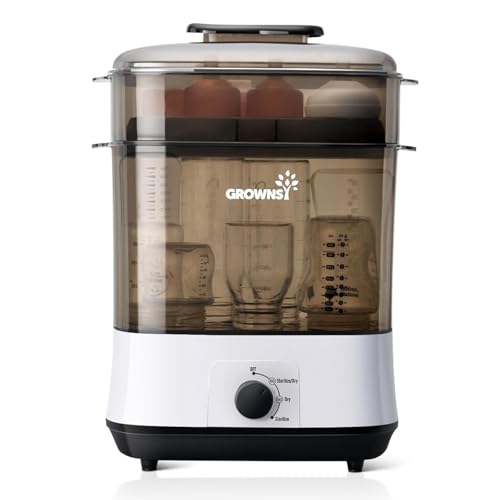
Feeding Bottle Steam Sterilizer: A Complete Buying Guide
Everything you need to know about choosing a steam sterilizer for baby bottles — how they work, what features matter, and how to match a model to your daily feeding routine.
Explore the GuideWhy it matters: A feeding bottle steam sterilizer uses hot steam to eliminate harmful bacteria from bottles, nipples, and pump parts without chemical residue. For parents who bottle-feed or combination-feed, it is one of the most practical additions to the feeding setup — especially in the newborn stage when cleaning frequency is highest.
What Is a Feeding Bottle Steam Sterilizer?
A feeding bottle steam sterilizer is an appliance that uses boiling water to produce hot steam, which circulates inside a closed chamber to sanitize bottles, nipples, collars, caps, and breast pump accessories. Unlike boiling pots or microwave bags, an electric steam sterilizer automates the process and typically includes a drying function, a timer, and a keep-warm or storage mode.
Steam sterilization is one of the most trusted methods recommended by hospitals and pediatric care providers because it is chemical-free and reaches temperatures that effectively neutralize common germs. If you are building out your entire feeding station, our feeding equipment guide walks through complementary items that pair well with a sterilizer.
How Steam Sterilization Works
The process is straightforward and repeatable, which makes it ideal for busy feeding schedules:
- Fill the base with water — most models use a measured water reservoir.
- Load the chamber — bottles sit upside down so condensation drains properly.
- Heat generates steam — the heating plate boils water into steam that fills the chamber.
- Steam circulates — hot steam reaches every surface, including nipple tips and bottle threads.
- Cycle completes — models with drying fans push filtered air through to remove residual moisture.
Most electric cycles run between 6 and 15 minutes depending on load and model. The entire process is hands-off after loading, which is a major advantage for parents sterilizing multiple times per day.
Key Features to Compare
Chamber Capacity
Entry-level models typically hold 4 to 6 bottles, while mid-range and high-end tier models accommodate 8 to 12 bottles plus pump parts. Match capacity to how many bottles you use per day.
Drying Function
Models with a built-in drying fan reduce the need to air-dry separately. This is one of the most useful upgrades between starter tier and mid-range units.
Cycle Time
Faster cycles are convenient, but very quick cycles may trade off drying time. Look for transparent cycle indicators to know when bottles are ready.
Material Quality
High-grade stainless steel heating plates resist scale buildup and last longer than entry-level alternatives. Durable construction matters for daily-use appliances.
Auto Shut-Off
An automatic shut-off when the water runs dry prevents damage and adds a layer of safety for households with curious toddlers.
Keep-Warm / Storage Mode
Some models hold sterile contents for hours, which is convenient for night feedings and reducing repeated cycles.
Footprint
Counter space is limited in many kitchens. Compact models with vertical loading save counter depth compared to horizontal designs.
Noise Level
Drying fans generate the majority of noise. If you sterilize at night near sleeping areas, a quieter model is worth prioritizing.
Steam Sterilizer vs. Other Sterilization Methods
Parents often compare steam sterilizers against boiling, microwave bags, and UV cabinets. Each method has trade-offs:
| Method | Best For | Considerations |
|---|---|---|
| Electric Steam Sterilizer | Daily use, pump parts, high volume | Requires counter space and water; drying function adds convenience |
| Microwave Steam Bag | Travel, occasional use | Limited capacity; bag lifespan is short |
| Boiling Pot | Backup method | Manual timing; risk of burns; no drying |
| UV Cabinet | Mixed items including toys | Different mechanism; not steam-based; larger footprint |
For parents who want a dedicated, repeatable, and hands-off process, an electric steam sterilizer is the most common choice. If you are also comparing electric bottle options, our guide on the electric bottle steriliser covers additional models and use cases.
How to Choose the Right Steam Sterilizer
1. Match Capacity to Your Feeding Volume
If you bottle-feed exclusively, a mid-range or high-end tier model with 8+ bottle capacity saves you from running multiple cycles per day. If you combination-feed and use 3–4 bottles daily, an entry-level or essential tier sterilizer with 4–6 capacity is usually sufficient.
2. Prioritize Drying if You Use Bottles Frequently
Wet bottles are inconvenient and can reintroduce bacteria if left sitting. A drying function is one of the most practical upgrades in the mid-tier range and is often the deciding factor between two otherwise similar models.
3. Consider Pump Parts Compatibility
Breastfeeding parents should verify that the sterilizer accommodates pump flanges and valves. Some models include dedicated baskets for small parts. For more on pump-side essentials, see our essentials for breastfeeding guide.
4. Check Counter Footprint
Measure your available counter depth before ordering. Vertical-load models often fit better in smaller kitchens than wide horizontal designs.
5. Look for Auto Shut-Off and Dry-Run Protection
These safety features protect the appliance and are standard on mid-range and above. They are especially valuable in busy households where cycles run unattended.
6. Evaluate Noise if You Sterilize at Night
Drying fans are the primary noise source. If your sterilizer lives near a bedroom or nursery, a quieter model is worth considering. For a broader look at feeding-area products, see the feeding bottle sterilizer overview.
Using Your Steam Sterilizer Safely
- Use the right water: Distilled or filtered water reduces mineral scale buildup on the heating plate.
- Descale regularly: Follow the manufacturer's descaling schedule, typically every 2–4 weeks depending on water hardness.
- Load correctly: Place bottles upside down so condensation drains and steam reaches all surfaces.
- Don't overcrowd: Overloading blocks steam circulation and reduces effectiveness.
- Handle with care: Contents are hot immediately after a cycle; allow cooling before removing.
- Keep sterile items covered: Once the cycle finishes, keep the lid closed until you are ready to use the contents.
After sterilization, bottles should be stored in a clean, dry place. Many parents pair their sterilizer with a dedicated drying rack to keep the feeding station organized.
Maintenance and Longevity
A steam sterilizer is a long-term investment in your feeding routine. With regular descaling and proper water use, most mid-range and high-end tier units last through multiple children. Key maintenance habits include:
- Empty the reservoir after each use to prevent standing water.
- Wipe the heating plate weekly with a soft, damp cloth.
- Descale using a manufacturer-approved solution when you notice white mineral deposits.
- Store the unit dry and unplugged when not in use.
Frequently Asked Questions
How does a feeding bottle steam sterilizer work?
A steam sterilizer uses boiling water to generate hot steam that circulates around bottles, nipples, and accessories, killing harmful bacteria and germs without chemicals.
How long does a steam sterilization cycle take?
Most electric steam sterilizers complete a full cycle in about 6 to 15 minutes, depending on the model and load size. Drying adds additional time.
Can I sterilize breast pump parts in a steam sterilizer?
Yes, most steam sterilizers are designed to accommodate breast pump parts, provided the parts are heat-safe and manufacturer-approved for steam sterilization.
How often should I sterilize baby bottles?
For newborns and infants under three months, daily sterilization is commonly recommended. Frequency can be adjusted based on your pediatrician's guidance and your baby's health needs.
Do I need a sterilizer if I wash bottles thoroughly?
Thorough washing removes residue, but steam sterilization adds a layer of protection against bacteria that may remain on surfaces, especially on nipples and bottle threads. Many parents use both together.
Final Thoughts
A feeding bottle steam sterilizer is one of the most practical feeding-time appliances you can add to your routine. Focus on capacity, drying function, material quality, and safety features when comparing models, and match the tier to how frequently you bottle-feed. With consistent maintenance, a well-chosen sterilizer will serve your family through the newborn stage and beyond.
For more feeding and nursery setup guidance, explore our feeding equipment guide and electric feeding bottle sterilizer resources.