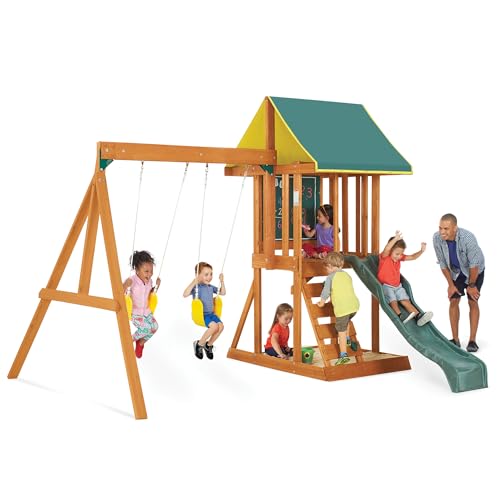
Children's Wooden Swing Set: The Complete Buying Guide
Everything you need to know before choosing a backyard swing set — from wood types and safety standards to space planning, assembly, and long-term maintenance. Make a confident, informed decision for your family's outdoor play space.
Explore Top PicksWhy Choose a Wooden Swing Set?
A children's wooden swing set is more than just backyard equipment — it's an investment in active play, physical development, and family time. Unlike metal or plastic alternatives, wooden swing sets offer a natural aesthetic that blends beautifully with garden landscapes while delivering exceptional durability and structural stability.
Wooden swing sets are designed to grow with your family. Many mid-range and premium models support multiple swing positions, climbing walls, slides, and trapeze bars, allowing you to customize the play experience as children develop new skills. The solid timber frame absorbs motion better than hollow metal tubing, creating a smoother, more comfortable swing experience for young children.
From a practical standpoint, wooden sets are easier to repair and modify. If a swing beam or rung shows wear, individual components can often be replaced without dismantling the entire structure. This modularity makes wooden swing sets a long-term investment that adapts to your family's changing needs — a key advantage over disposable plastic play equipment.
Choosing the Right Wood Material
The type of wood used in a swing set directly affects its durability, maintenance requirements, and long-term performance. Here's a breakdown of the most common materials you'll encounter:
Cedar
Cedar is the gold standard for wooden swing sets. Its natural oils resist rot, decay, and insect infestation without chemical treatment. Cedar is lightweight yet strong, naturally resistant to warping, and develops a beautiful silver-grey patina over time if left untreated. Premium and luxury-tier swing sets frequently use cedar for their main beams and platforms.
Redwood
Similar to cedar in its natural rot resistance, redwood offers a rich, warm tone that many families prefer. It's slightly denser than cedar and holds stains well. High-end tier swing sets often feature redwood construction for its combination of beauty and longevity.
Pressure-Treated Pine
Pressure-treated pine is the most common material in entry-level and mid-range swing sets. The treatment process infuses the wood with preservatives that protect against rot and insects, making it a solid choice for families seeking durable construction at a more accessible position in the market. It's heavier than cedar and requires periodic sealing to maintain appearance.
Fir
Fir is often used in mid-tier swing sets as a structural component. It's strong and takes stains well, though it requires more consistent maintenance than cedar or redwood. When properly sealed, fir swing sets deliver reliable performance for many seasons.
Safety Standards You Must Know
Safety should be the first filter in your buying decision. Reputable wooden swing set manufacturers design their products to meet or exceed ASTM International standards (specifically ASTM F1148 for home playground equipment) and CPSC guidelines. Here's what to look for:
- Stability testing: The frame should resist tipping even when multiple children swing simultaneously. Look for wide-base A-frame designs with ground anchors included.
- Hardware quality: All bolts, brackets, and swing hangers should be galvanized or stainless steel to prevent rust and structural failure. Plastic-coated chains reduce pinch hazards.
- Age-appropriate design: Many premium sets include separate zones for toddlers (bucket swings) and older children (belt swings, trapeze bars). This prevents younger children from accessing equipment beyond their developmental stage.
- Fall surfacing: The area beneath and around the swing set should have impact-absorbing surfacing such as wood chips, rubber mulch, or engineered wood fiber, installed to a depth of at least 9 inches.
- Entrapment prevention: Check that all openings are either smaller than 3.5 inches or larger than 9 inches to prevent head entrapment — a critical safety detail often overlooked.
Always verify that the swing set you're considering has passed third-party safety testing. If you're setting up a nursery or child's room simultaneously, our children's wooden rocking chair guide offers complementary safety considerations for indoor furniture.
Space Planning & Backyard Placement
Before ordering any swing set, measure your available space carefully. The footprint listed by the manufacturer refers only to the structure itself — you must also account for the safety zone.
Minimum Clearance Requirements
- 6 feet of clear space around all sides of the structure
- 6 feet in front of and behind the swing arc (the path the swing travels)
- No overhead obstructions such as tree branches or power lines within 8 feet above the highest swing point
- Level ground — a slope of no more than 1 inch per 12 feet is ideal; larger slopes require excavation or professional installation
Placement Considerations
Position the swing set where you can supervise from inside the home — a kitchen window or patio view is ideal. Avoid placing the set directly against a fence or wall, as this reduces the usable safety zone and creates a hard-impact surface. If your yard is compact, consider an outdoor table and chairs set that can be repositioned easily, freeing up space for the swing set during play hours.
Sun exposure matters too. A spot with partial afternoon shade protects children from overheating and preserves the wood's finish. If shade is unavailable, consider a canopy accessory or orient the set so the slide faces away from direct afternoon sun.
Tier Comparison: Entry-Level to Premium
Wooden swing sets span a wide range of configurations. Understanding the tier landscape helps you match your selection to your family's needs and long-term plans. Here's how the tiers compare across key dimensions:
| Tier | Best For | Typical Construction | Lifespan Expectation |
|---|---|---|---|
| Entry-Level | Young families testing backyard play; compact yards | Pressure-treated pine, basic A-frame, 2–3 swing positions, limited accessories | 5–8 years with regular maintenance |
| Mid-Range | Families with multiple children; long-term backyard investment | Fir or cedar frame, reinforced beams, 3–4 swing positions, slide and climbing wall options | 8–12 years with proper care |
| Premium | Growing families seeking expandability and premium materials | Cedar or redwood, heavy-duty brackets, modular design, multiple play zones, accessories included | 12–15 years with routine maintenance |
| Luxury / Professional-Grade | Large families, daycare settings, or multi-generational use | Thick-cut cedar, commercial-grade hardware, engineered stability, customizable layouts | 15+ years; often backed by extended structural warranties |
As you move up the tiers, the differences become most noticeable in beam thickness, hardware quality, and the smoothness of the swing motion. Entry-level sets typically use thinner beams that may flex slightly during vigorous play, while premium and luxury sets use reinforced, thicker timber that delivers a rock-solid feel. Mid-range models are the sweet spot for most families — they offer balanced construction with enough accessories to keep children engaged for years.
If you're also furnishing a playroom or study area, our children's desk with storage guide can help you create a cohesive indoor-outdoor play environment.
Key Features to Consider
Swing Types
Most wooden swing sets accommodate a mix of swing types. Bucket swings with full leg support suit toddlers, while belt swings and trapeze bars serve older children. Premium sets often include glider swings that let two children swing face-to-face — a favorite for siblings.
Slide Options
A slide transforms a swing set into a complete play structure. Look for slides with high side walls, a gentle slope for younger children, and a smooth transition at the bottom. Some premium sets offer wave slides or tunnel slides as upgrade options.
Climbing Elements
Rock walls, rope ladders, and climbing nets add physical challenge and help develop coordination. Ensure climbing elements have proper handholds and are positioned so children can exit safely at the top.
Roof and Canopy
A fabric or wooden roof over the swing beam or play deck provides shade and extends the set's usable hours. Canopies also protect the wood from UV damage. For related shade solutions, see our children's play tent options.
Anchoring System
Ground anchors are non-negotiable for safety. Most quality sets include stakes or auger-style anchors that secure the legs into the ground. Some premium sets offer below-ground concrete anchoring for maximum stability — an option worth considering in windy regions.
Assembly & Installation Tips
Assembly is the most physical part of the swing set ownership experience. Here's what to expect across the tiers:
- Entry-level kits: Typically ship flat-packed with pre-cut lumber and hardware. Expect 4–6 hours for two adults. Some drilling may be required, and instructions may be less detailed.
- Mid-range sets: Usually include pre-drilled holes, labeled parts, and illustrated instructions. Allow 5–8 hours for two adults. A power drill and rubber mallet are helpful.
- Premium and luxury sets: Some manufacturers offer professional installation as part of the purchase or as an add-on service. If self-assembling, expect 8–12 hours spread over a weekend.
Regardless of tier, follow these assembly best practices:
- Lay out all parts and hardware before beginning. Inventory against the parts list to catch missing items early.
- Assemble on a flat surface near the final location, then move the completed frame into place with helpers.
- Do not fully tighten bolts until the entire frame is square and level. Use a carpenter's level at every stage.
- Install ground anchors only after confirming the set is level and positioned correctly.
- Perform a "shake test" after assembly — the structure should feel solid with no wobble.
Long-Term Maintenance Checklist
A wooden swing set rewards regular care with years of safe, enjoyable play. Build these habits into your seasonal routine:
Monthly Inspection
- Tighten all bolts, screws, and swing hangers (vibration loosens hardware over time)
- Check swing chains and ropes for fraying or wear
- Inspect wooden surfaces for splinters, cracks, or insect damage
- Verify ground anchors remain secure
Seasonal Maintenance
- Spring: Clean the wood with a mild detergent and soft brush. Apply a fresh coat of water-based sealant or stain if the finish looks dull. Inspect for winter damage.
- Summer: Check for loose hardware caused by wood expansion. Lubricate swing hangers with a silicone-based spray (avoid oil-based lubricants that attract dirt).
- Fall: Remove fallen leaves and debris from the play area. Inspect for rot around ground contact points. Prepare for winter by tightening all connections.
- Winter: If possible, cover the swing seats or remove them to prevent ice damage. Check the structure after storms for loose parts.
Annual Deep Care
Once a year, sand any rough spots with fine-grit sandpaper and reapply a protective finish. Replace any hardware showing rust or corrosion. For cedar and redwood sets, you may choose to let the wood weather naturally to its silver-grey patina — just ensure the structural integrity remains sound.
Frequently Asked Questions
What wood is best for a children's wooden swing set?
How much space do I need for a wooden swing set?
How long does a wooden swing set last?
Is assembly difficult for a wooden swing set?
Can a wooden swing set be moved after installation?
What age is a wooden swing set suitable for?
Ready to Choose Your Family's Swing Set?
Now that you understand the materials, safety standards, space requirements, and maintenance needs, you're equipped to make a confident decision. Browse our recommended wooden swing sets below — each one selected for durability, safety, and family-friendly design.
View Recommended Swing Sets