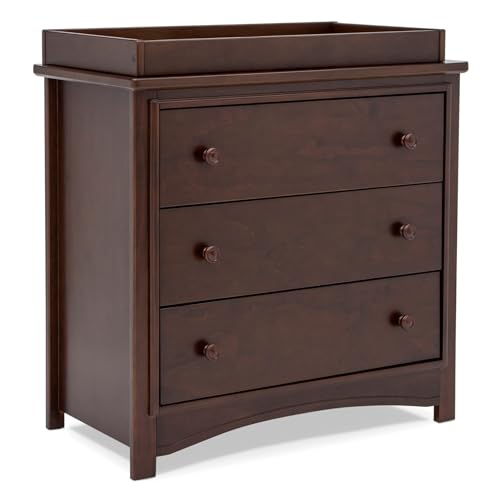
Changing Table with Drawers: The Complete Buying Guide
Everything you need to know about choosing a changing table with drawers — storage capacity, safety features, materials, and how to build a diaper-changing station that actually works for your nursery.
Why a changing table with drawers makes sense: A dedicated diaper-changing station keeps wipes, diapers, creams, and spare outfits within arm's reach — so you never have to leave your baby unattended mid-change. Drawers add closed, dust-free storage that keeps a nursery tidy and turns a single piece of furniture into a long-term dresser once potty training is done.
What Is a Changing Table with Drawers?
A changing table with drawers is a nursery furniture piece that combines a raised, contoured changing surface with built-in drawer storage beneath it. Unlike open-shelf units, drawers keep supplies hidden and protected from dust and light, which is especially useful for diapers, wipes, and skincare products that degrade with exposure.
Most models fall into two broad designs. The first is a dedicated changing table with a fixed top surface and two to four drawers. The second is a changing table dresser — a full dresser where the top is fitted with a removable changing pad. The dresser style often offers more storage and converts into standard bedroom furniture later, making it a popular choice for parents planning a long-term nursery layout.
If you are still deciding between a dedicated unit and a convertible design, our guide to the changing table dresser breaks down the trade-offs in more detail. For parents working with a compact room, a changing table layout for small spaces can help you fit storage without crowding the floor plan.
Key Features to Evaluate Before You Buy
1. Changing Surface and Safety Edges
The changing surface should have raised edges on all four sides — usually at least two inches high — to prevent a wriggling baby from rolling off. A contoured center helps keep the baby positioned, while a safety strap adds a second layer of protection (though you should never rely on the strap alone).
If the unit does not include a pad, you will need to add one. Our overview of the changing pad covers thickness, waterproofing, and how to secure a pad to the table surface. Parents who prefer a lighter setup often use a changing pad placed on top of a dresser instead of a dedicated table.
2. Drawer Count and Configuration
Drawer layout matters more than raw drawer count. A practical configuration looks like this:
- Two shallow top drawers — ideal for wipes, diaper cream, nail clippers, and thermometers.
- Two deeper lower drawers — sized for diapers in bulk, swaddles, onesies, and burp cloths.
- Smooth, quiet glides — soft-close runners prevent slamming during night changes.
- Stoppers or full-extension runners — full-extension drawers let you reach the back of the drawer easily.
Models with additional open shelving on the side can hold diaper pails or hampers. If that layout appeals to you, compare it with a changing table with drawers and shelves, which blends closed and open storage.
3. Height and Ergonomics
The top surface should sit roughly at waist height for the primary caregiver — commonly between 36 and 40 inches from the floor. Too low and you will bend uncomfortably dozens of times a day; too high and you lose control of the baby during a change. Measure your own standing elbow height before shopping, and check the manufacturer's stated height rather than guessing from product photos.
4. Frame Stability and Wall Anchoring
Look for solid wood, high-grade engineered wood, or a reinforced metal frame. Drawer units are heavier than open shelves, which generally improves stability — but any tall nursery furniture should be anchored to the wall with the included anti-tip kit. Never skip this step, even in a rental.
5. Material and Finish
Surfaces should be easy to wipe clean and resistant to moisture. A changing table and changing pad combination with a sealed or laminated finish is easier to sanitize than raw wood. Check for low-emission finishes and avoid strong chemical odors out of the box.
Changing Table with Drawers vs. Other Storage Options
The table below compares the most common nursery storage formats by tier and intended use. It focuses on category positioning rather than any commercial figures.
| Option | Tier | Best For | Trade-Off |
|---|---|---|---|
| Entry-level changing table with 2 drawers | Entry-level | Short-term use, compact nurseries | Fewer drawers; limited long-term repurposing |
| Mid-range changing table with 3–4 drawers | Mid-range | Everyday use through toddler years | Larger footprint; needs wall anchoring |
| Changing table dresser (convertible) | Premium | Long-term nursery furniture, room transitions | Heavier; assembly takes longer |
| Dresser with separate changing pad | Mid-tier | Reusing existing furniture | Pad security depends on non-slip base |
| Changing table with open storage only | Starter tier | Quick access, smaller budget footprint | Supplies visible and exposed to dust |
If you want a broader picture of the whole category — including safety standards and pad compatibility — the complete changing table guide covers the fundamentals. For parents comparing open and closed storage, our changing table with storage overview expands on capacity planning.
How to Set Up a Drawer-Based Changing Station
A well-organized station reduces the number of times you have to reach away from your baby. Follow this sequence:
- Anchor the unit first. Attach the anti-tip strap to a wall stud before loading any drawers.
- Fit the changing pad. Use a pad with a non-slip base, or secure the pad to the table with the manufacturer's fasteners. Our guide to changing pads explains which base materials grip best.
- Stock the top drawers. Wipes, diaper cream, a spare pacifier, and nail care tools go in the shallow drawers closest to the changing surface.
- Fill the lower drawers by frequency. Most-used items — diapers and onesies — in the top lower drawer; seasonal or backup supplies in the bottom.
- Keep a laundry bin nearby. A small hamper within arm's reach means soiled clothes go straight in instead of onto the floor.
Safety Reminder
Never leave a baby unattended on a changing table, even for a second. Keep one hand on the baby at all times, use the safety strap, and confirm the unit is anchored to the wall. Changing tables are not intended for sleep.
For families who need a changing surface in a very tight footprint, a small-space changing table setup can combine a wall-mounted pad with drawer storage beside it. Parents who prefer to start with the simplest configuration can also review the newborn changing table guide, which focuses on the first three months.
Who Should Choose a Changing Table with Drawers?
This format works best for parents who want a single, organized station rather than supplies spread across shelves and baskets. It is a strong fit if:
- You plan to change diapers in the nursery most of the time and want everything in one place.
- You prefer closed storage that keeps supplies out of sight and away from pets.
- You want furniture that can transition into a dresser after potty training.
- You have a dedicated nursery wall long enough for a unit at least 30 inches wide.
If floor space is very limited, a changing pad that attaches to a dresser can deliver similar function without adding another piece of furniture.
Common Mistakes to Avoid
- Skipping the wall anchor. Drawers shift weight forward when opened, increasing tip risk.
- Buying a pad that does not fit. Measure the tabletop before purchasing any pad or cover.
- Overloading top drawers. Heavy items in shallow drawers strain the runners.
- Ignoring drawer depth. Deep drawers are useful, but too deep and small items get lost at the back.
- Placing the table near cords or blinds. Keep the station clear of window blind cords and loose cables.
If you are outfitting an entire room, it helps to review nursery furniture set options alongside your changing table choice so the finishes and heights match.
Frequently Asked Questions
What should I look for in a changing table with drawers?
Prioritize a sturdy frame, raised edges on all four sides, a safety strap, smooth drawer glides, and an included wall-anchoring kit. Confirm the top surface height suits the primary caregiver and that the changing pad you plan to use fits the tabletop dimensions.
How many drawers does a changing table need?
Three to four drawers is the practical sweet spot. Two shallow top drawers handle wipes, creams, and small tools, while two deeper lower drawers hold diapers in bulk and spare clothing. Fewer drawers usually means supplies end up on open shelves or in baskets nearby.
Can a changing table with drawers be used after potty training?
Yes. Convertible changing table dressers accept a removable pad, and once the pad is off the unit functions as a standard dresser. This is the main reason many parents choose a dresser-style unit over a dedicated table with a fixed changing surface.
Are changing tables with drawers safe for newborns?
They are safe when used correctly. Anchor the unit to the wall, always use the safety strap, keep one hand on your baby, and never leave the baby unattended. Place the station away from blind cords, heaters, and loose cables.
Do I need a separate changing pad for a drawer-style table?
Most drawer-style tables include a contoured top but not a pad. You will generally need to add one. Choose a pad with a non-slip base and a waterproof cover, and check that its length and width match the tabletop before purchasing.