
Brain Development Toys for 4 Month Old: The Complete Guide
Your baby's brain is growing at an incredible pace. Discover which toys truly support cognitive development at 4 months and how to choose the right ones for your little one.
Explore Top PicksWhy 4 months is a pivotal age: By 4 months, your baby has moved past the newborn stage and is actively engaging with the world. Their vision has sharpened, they can track moving objects, and they're beginning to reach and grasp intentionally. The right toys at this stage can nurture these emerging skills and lay a strong foundation for future learning.
Understanding Brain Development at 4 Months
What's Happening in Your Baby's Brain?
At 4 months, your baby's brain is forming millions of neural connections every second. This is a critical window for sensory development, motor coordination, and early cognitive skills. Your baby is learning to:
- Track objects visually — following moving toys with their eyes
- Reach and grasp — intentionally grabbing objects within reach
- Recognize faces and voices — distinguishing familiar people from strangers
- Explore through mouthing — using their mouth to learn about textures and shapes
- Respond to sounds — turning toward voices and reacting to music or rattles
- Develop hand-eye coordination — bringing objects to their mouth or midline
Toys that engage these developing skills are not just entertainment — they're tools for brain-building. The best toys for this age are simple, safe, and designed to stimulate multiple senses at once.
Types of Brain Development Toys for 4 Month Olds
1. High-Contrast Visual Toys
At 4 months, your baby's color vision is still developing, but they are drawn to bold patterns and high-contrast images. Black-and-white or brightly colored toys with simple, geometric patterns help strengthen visual tracking and focus.
What to look for: Soft books with high-contrast images, black-and-white cards, toys with bold stripes or dots, and crib mobiles with simple shapes.
2. Sensory Rattles and Shakers
Rattles are classic for a reason. They teach cause and effect — when your baby shakes the toy, it makes a sound. This simple interaction builds cognitive connections and encourages your baby to repeat the action, strengthening memory and motor skills.
What to look for: Lightweight rattles that are easy for small hands to grip, with gentle sounds that won't startle. Look for textured handles for added tactile stimulation.
3. Textured and Crinkle Toys
Babies at 4 months explore the world through touch and mouthing. Toys with different textures — soft fabric, crinkly material, bumpy surfaces — provide rich sensory input that supports tactile development and fine motor skills.
What to look for: Crinkle blankets, soft fabric books with textured patches, toys with tags and ribbons (ensure they are securely attached and safe for mouthing).
4. Baby-Safe Mirrors
A mirror is one of the most powerful brain-building toys for a 4 month old. When your baby sees their reflection, they're developing self-awareness and visual recognition. Mirrors also encourage tummy time, which strengthens neck and core muscles.
What to look for: Shatter-proof, baby-safe mirrors with soft frames. Floor mirrors or mirror panels attached to play gyms work well.
5. Soft Grasping Toys and Teethers
With grasping skills emerging, lightweight toys that are easy to hold are essential. Teethers serve double duty — soothing sore gums and providing sensory exploration. Look for toys that are easy to clean and safe for mouthing.
What to look for: BPA-free teethers, soft rings, and easy-to-grip toys with different textures. Avoid toys with small parts that could detach.
What to Look for When Choosing Toys
Not all toys are created equal. When selecting brain development toys for your 4 month old, keep these criteria in mind:
Safety First
Ensure the toy has no small parts, sharp edges, or loose components. Check for non-toxic, BPA-free materials. Age-appropriate labeling is essential.
Multi-Sensory Engagement
The best toys stimulate more than one sense — sight, sound, touch, and mouthing. Multi-sensory toys create richer neural connections.
Simple Design
Avoid overly complex or electronic toys. Simple toys encourage active exploration and imagination rather than passive consumption.
Easy to Grasp
At 4 months, fine motor skills are still developing. Choose lightweight toys with handles or rings that are easy for small hands to hold.
Durable Construction
Babies explore with their mouths and hands. Choose toys with durable construction that can withstand repeated washing and handling.
Developmental Appropriateness
Select toys that match your baby's current skills and offer a slight challenge to encourage growth without frustration.
Quality Tiers for Brain Development Toys
When exploring options, you'll encounter toys across different quality tiers. Understanding these tiers helps you make informed decisions based on your preferences and needs:
| Tier | Characteristics | Best For |
|---|---|---|
| Entry-Level | Simple designs, basic materials, functional construction | Parents seeking straightforward, no-frills options |
| Mid-Range | Better materials, thoughtful design, enhanced durability | Families wanting a balance of quality and functionality |
| Premium | High-grade materials, superior craftsmanship, refined details | Parents prioritizing longevity and premium feel |
| Top-Tier | Exceptional quality, innovative features, heirloom-worthy construction | Those seeking the very best for long-term use |
Entry-level toys can be perfectly adequate for short-term use, while premium and top-tier options often offer better durability and thoughtful design that can be passed down or reused. The key is to match the tier to your specific needs and how long you plan to use the toy.
How to Use Toys to Maximize Brain Development
Interactive Play Matters Most
The toy itself is only part of the equation. How you engage with your baby during play makes a significant difference. Here are some tips:
- Narrate and describe: Talk about what you're doing and what your baby is seeing. "Look at the red rattle! Shake, shake, shake!"
- Follow your baby's lead: If your baby is fascinated by a particular toy or feature, lean into that interest.
- Rotate toys: Keep 3-5 toys accessible at a time and rotate them every few days to maintain novelty and engagement.
- Create a safe exploration space: Use a play mat or gym where your baby can freely reach, roll, and explore.
- Limit screen time: At this age, face-to-face interaction and physical toys are far more beneficial than screens.
Safety Tips for Toy Selection
Safety should always come first. Keep these guidelines in mind:
- Check for choking hazards — no parts smaller than 1.25 inches in diameter
- Avoid toys with long strings or cords (strangulation risk)
- Ensure toys are free of sharp edges, points, or loose parts
- Look for non-toxic, BPA-free, and phthalate-free materials
- Wash and sanitize toys regularly, especially those used for mouthing
- Supervise play at all times
- Check for recalls before purchasing — visit the CPSC website for updates
For more on caring for your baby's health and development, explore our guides on eczema-friendly baby products and safe pacifier choices.
Related Developmental Toy Guides
As your baby grows, their toy needs will evolve. Here are other guides that may be helpful:
- Fine Motor Skills Toys for 6 Month Old — Supporting grasping and coordination as your baby becomes more active
- Cause and Effect Toys for 6 Month Olds — Building cognitive connections through interactive play
- Infant Activity Centers — Multi-sensory play stations for growing babies
- Car Seat Toys — Keeping baby engaged and stimulated while on the go
Recommended Brain Development Toys for 4 Month Olds
⚠️ AFFILIATE DISCLOSURE: This website contains affiliate links. As an Amazon Associate, we earn from qualifying purchases. If you make a purchase through these links, we may receive a small commission at no additional cost to you. Read our full affiliate policy.

Etyat Baby Toys 6-12 Months, Montessori Toys for 1 Year Old, Silicone Pull String Teether Toy, Stacking Building Blocks Infant Toddler Toy 0-3, Shape Bin Sensory, Baby Boys&Girls Gifts Set
Check price on Amazon
Baby Teething Toys for 0-6 6-12 Months, Newborn Infant Montessori Toys | Tummy Time Toy, Sensory Toy, Babies Teether Gifts for Boys Girls, 6 Month Old Baby Toys, Baby Stocking Stuffers 6-12 Months
Check price on Amazon
YHHYTOY 6-in-1 Montessori Baby Toys 0-6 6-12 Months, Infant Toys Baby Gifts | 4 5 6 Months Old Baby Sensory Toys, Soft Stacking Blocks Rings Shape Sorters Suction Spinners, Baby Gifts for Girls Boys
Check price on Amazon
hahaland Baby Tissue Box Toy - 6 Month Old Montessori Baby Toys 6-12 Months | Sensory Pulling Play Scarf Soft Box, Crinkle, Mirror, Tag Babies Gifts Christmas Stocking Stuffers 1 Year Old Birthday Gift
Check price on Amazon
URMYWO Black and White Baby Toy, Tummy Time High Contrast Newborn Toys | Visual Stimulation Soft Baby Book, Brain Development Montessori Sensory Infant Mirror Toy 0-6-12 Months, Boy Girl Shower Gift
Check price on Amazon
hahaland Baby Books 0-6 Months, Infant Tummy Time Baby Toys 6 to 12 Months | Touch Feel Book Baby Gifts for Boy Girl 0-3 Months Learning Toy Baby Birthday Easter Basket Stuffers 1PCS
Check price on Amazon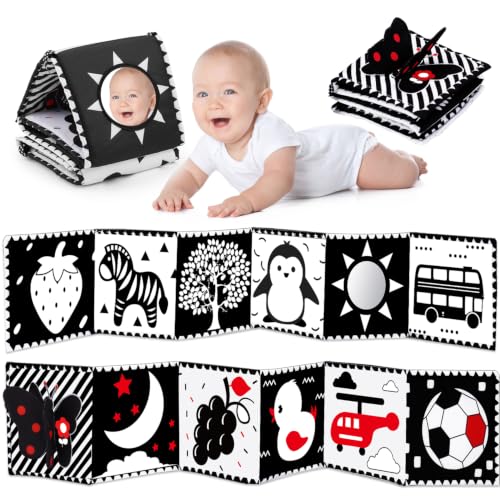
Black and White Baby Toy Tummy Time High Contrast Newborn Toys Essential | Visual Stimulation Soft Baby Book Brain Development Sensory Infant Mirror Toy 0-3 3-6 2 4 5 Months Old Boy Girl Shower Gift
Check price on Amazon
Fat Brain Toys Rolio- Sensory Toys for Babies 6 Months+, Tummy Time Rattle
Check price on AmazonFrequently Asked Questions
What type of toys are best for brain development in a 4 month old?
Toys that engage multiple senses are best. Look for high-contrast patterns, textured objects, soft rattles, crinkle toys, and safe mirrors. These support visual tracking, auditory processing, and tactile exploration — all critical for brain development at this age.
How often should I introduce new toys to my 4 month old?
Introduce a new toy every few days to a week, rotating them to maintain novelty. Avoid overwhelming your baby with too many options at once. Rotating 3-5 toys at a time is a good rule of thumb — it keeps things fresh without causing overstimulation.
Are electronic toys good for a 4 month old's brain development?
Simple, non-electronic toys are generally better at this age. They encourage active exploration and interaction, which is how babies learn best. If using electronic toys, choose ones with simple cause-and-effect features and limit screen time. Face-to-face interaction and physical play are far more beneficial than screens at this stage.
How can I tell if a toy is appropriate for my 4 month old?
Check for safety features like no small parts, non-toxic materials, and age-appropriate labeling. The toy should be easy for small hands to grasp and safe for mouthing, since babies at this age explore with their mouths. Also consider whether the toy engages your baby's current skills and offers a slight challenge to encourage growth.
Do I need to buy expensive toys for brain development?
Not at all. Some of the most effective brain development toys are simple and entry-level — a soft rattle, a high-contrast book, or a baby-safe mirror. What matters most is that the toy is safe, engages your baby's senses, and is used in interactive play with you. Premium toys may offer better durability and design, but developmental value comes from how the toy is used, not its tier.
Ready to Support Your Baby's Brain Development?
Explore our curated selection of brain development toys for 4 month olds. Each option is chosen with safety, sensory engagement, and developmental appropriateness in mind.
View Recommended ToysContinue Exploring
Preparing for your baby's next stages? Don't miss our guides on newborn swings for soothing and stimulation, personalized baby blankets for comfort, and convertible cribs with changing tables for setting up the perfect nursery.