Cause and Effect Toys for 6 Month Olds: The Complete Guide
At six months, your baby is discovering that their actions can make things happen. Our expert guide explores the best cause and effect toys that turn this developmental leap into hours of engaging, brain-boosting play.
Around the six-month mark, something remarkable happens in your baby's brain. They begin to understand a fundamental concept: I do something, and something else happens. This is the dawn of cause and effect learning, and it's one of the most exciting developmental milestones of the first year.
When your baby bats at a hanging toy and it swings, or presses a button and hears a sound, they're not just playing — they're building the cognitive foundation for problem-solving, intentional communication, and early reasoning. The right toys can accelerate and enrich this process, turning everyday play into powerful learning.
This guide breaks down exactly what makes a great cause and effect toy for a six-month-old, the key features that matter, and how to choose the right options for your baby's stage. Whether you're building a registry or looking for the perfect gift, you'll finish this article ready to make a confident choice.
Why this matters now: Six months is the sweet spot for cause and effect toys. Your baby has enough motor control to intentionally reach, grab, and press, but is still fascinated by simple, predictable reactions. Toys that reward their actions with a clear response are perfectly matched to this window of development.
What Are Cause and Effect Toys (and Why Six Months Is the Perfect Age)
Cause and effect toys are any playthings that produce a clear, immediate reaction when your baby interacts with them. A rattle that shakes, a button that lights up, a lever that pops open a surprise — these toys teach babies that their actions have consequences, which is a foundational concept for learning.
By six months, most babies have developed the physical skills needed to make these toys work: they can reach with purpose, grasp objects, transfer items between hands, and press or push with intent. At the same time, their attention span is expanding, and they're eager to repeat actions that produce satisfying results. This is why cause and effect toys are so effective at this age — they're perfectly calibrated to both the baby's abilities and their curiosity.
These toys also support development across multiple domains. Physically, they encourage reaching, grasping, and hand-eye coordination. Cognitively, they build understanding of patterns and consequences. And emotionally, they give babies a sense of agency and control over their environment, which builds confidence.
Key Features to Look For in Cause and Effect Toys for 6 Month Olds
Not all cause and effect toys are created equal. When evaluating options for a six-month-old, focus on these essential features:
Simple, Predictable Reactions
At six months, babies need toys that respond the same way every time. Avoid complex toys with multiple random outcomes — your baby is still learning the basics of cause and effect.
Easy to Activate
Your baby should be able to make the toy work with a simple press, pat, or grasp. Toys that require precise timing or complex movements will frustrate rather than engage.
Safe, Baby-Friendly Materials
Look for BPA-free plastic, food-grade silicone, or natural wood with non-toxic finishes. All parts should be securely attached with no small pieces that could detach.
Sensory Engagement
The best toys engage multiple senses — a soft rattle sound, bright colors, interesting textures. This multi-sensory feedback reinforces the cause and effect learning.
Portable and Easy to Clean
Six-month-olds put everything in their mouths, so toys should be easy to wipe down and sturdy enough to survive drops, throws, and teething.
Age-Appropriate Size
Toys should be large enough to be safe (no choking hazards) but small enough for little hands to grasp and manipulate comfortably.
Types of Cause and Effect Toys for Six-Month-Olds
There's a wide range of toys that fall under the cause and effect umbrella. Here are the main categories, each with its own developmental benefits:
1. Activity Centers and Play Gyms
Activity centers with buttons, levers, and spinning elements are a classic choice. At six months, your baby can sit with support and interact with the various features, discovering that each one produces a different reaction. These are excellent for developing fine motor skills and sustained attention. For more options, explore our guide to the infant activity center.
2. Rattles and Shakers
Simple rattles are among the earliest cause and effect toys. When your baby shakes it, it makes a sound. This immediate feedback teaches the connection between action and result, and the repetitive motion strengthens grip and arm control.
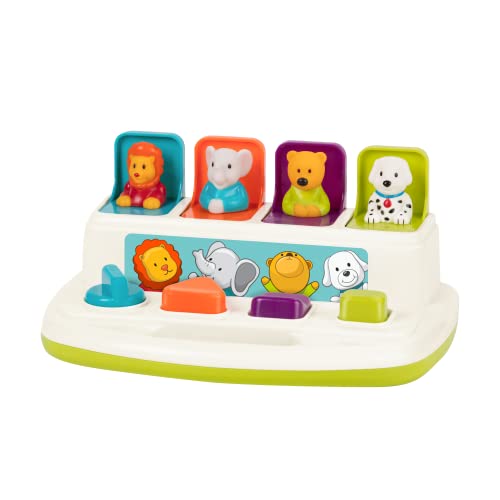
3. Pop-Up and Surprise Toys
Toys where pressing a button or turning a knob causes a character to pop up are endlessly fascinating for six-month-olds. The element of surprise combined with the predictable mechanism makes these toys highly engaging.
4. Light and Sound Toys
Toys that light up or play music when touched are powerful motivators for babies this age. The bright visual and auditory feedback encourages repeated interaction, building both cause and effect understanding and sensory processing.
5. Stacking and Nesting Toys
While these seem simple, stacking rings and nesting cups teach cause and effect through physical manipulation — knock the stack over, and it falls; nest the cups, and they fit. These also support fine motor development and spatial reasoning.
6. Sensory Balls and Textured Toys
Balls with different textures, sounds, or lights inside react to being rolled, squeezed, or shaken. These are great for tummy time and floor play, encouraging movement and exploration.
How Cause and Effect Toys Support Development at Six Months
The benefits of these toys extend far beyond entertainment. Here's what's happening developmentally when your baby plays with a cause and effect toy:
- Cognitive development: Babies learn that actions have consequences, which is the foundation for problem-solving and logical thinking.
- Fine motor skills: Reaching, grasping, pressing, and manipulating toys strengthens hand and finger muscles.
- Hand-eye coordination: Tracking a toy's reaction and repeating the action builds visual-motor integration.
- Language and communication: The anticipation and excitement of cause and effect play creates opportunities for back-and-forth interaction with caregivers.
- Sense of agency: Making something happen builds confidence and independence.
For a broader look at toys that support this stage, see our guide to fine motor skills toys for 6 month olds and brain development toys for 4 month olds for a complementary perspective on early learning.
Comparison Table: Toy Categories at a Glance
| Toy Category | Best For | Developmental Focus | Tier |
|---|---|---|---|
| Activity Centers | Sitting play, sustained engagement | Fine motor, cognitive, sensory | Mid-tier |
| Rattles & Shakers | Grasping, early cause-effect | Grip strength, auditory | Essential tier |
| Pop-Up Toys | Surprise and repetition | Problem-solving, attention | Mid-tier |
| Light & Sound Toys | Sensory stimulation | Visual tracking, auditory processing | Entry-level to mid-range |
| Stacking & Nesting | Floor play, motor control | Spatial reasoning, coordination | Essential tier |
| Sensory Balls | Tummy time, exploration | Tactile, motor, visual | Entry-level |
Tier descriptors reflect relative market positioning, not absolute quality. Higher tiers typically offer more features, durability, or design refinement.
Safety Considerations for Six-Month-Old Toys
At six months, babies are increasingly mobile and curious, which means safety becomes even more important. Keep these guidelines in mind:
- No small parts: Anything that fits inside a toilet paper tube is a choking hazard. Check that buttons, caps, and decorative elements are securely attached.
- Non-toxic materials: Look for toys labeled BPA-free, phthalate-free, and lead-free. Avoid vintage or hand-me-down toys with unknown finishes.
- Smooth edges: Check for sharp corners or rough surfaces that could hurt your baby's delicate skin.
- Age-appropriate warnings: Always follow the manufacturer's age recommendations. Toys designed for older children may have features unsafe for a six-month-old.
- Regular inspection: Check toys regularly for wear and tear, especially if your baby is teething and chewing on everything.
Pro tip: Rotate toys every few days. Six-month-olds get bored quickly, and rotating a small collection keeps each toy fresh and engaging. This also prevents toy overload, which can be overwhelming for a baby's developing attention span.
How to Choose the Right Cause and Effect Toys
With so many options available, narrowing down the right toys for your baby can feel overwhelming. Here's a practical framework:
- Start simple: Begin with basic rattles and single-action toys. Once your baby masters those, introduce toys with multiple features.
- Match the toy to your baby's motor skills: If your baby is just learning to grasp, choose lightweight toys. If they're already batting at objects, introduce toys that require a bit more precision.
- Consider your baby's temperament: Some babies prefer gentle, predictable toys, while others crave more stimulation. Choose accordingly.
- Invest in quality over quantity: A few well-made, durable toys are far more valuable than a large collection of fragile ones. Look for toys with solid construction and reinforced joints.
- Think about longevity: Some toys, like stacking cups and activity centers, will grow with your baby and remain useful well beyond six months.
Frequently Asked Questions
What are the best cause and effect toys for a 6-month-old?
The best options are simple, durable toys with clear, predictable reactions. Rattles, activity centers with buttons and levers, pop-up toys, and light-and-sound toys are all excellent choices at this age.
How many toys does a 6-month-old need?
Fewer than you might think. A curated collection of 5–10 quality toys, rotated regularly, is more than enough. Focus on variety in type rather than quantity.
Are electronic toys bad for babies?
Not inherently. Well-designed electronic toys can be valuable cause and effect tools. The key is balance — ensure your baby also has plenty of non-electronic, open-ended play opportunities.
When should I introduce cause and effect toys?
Around 4–6 months, when your baby begins to intentionally reach and grasp. Start with simple rattles and gradually introduce more interactive toys as motor skills develop.
How do I clean and maintain these toys?
Most plastic and silicone toys can be wiped with a damp cloth and mild soap. Wooden toys should be wiped, not soaked. Always check the manufacturer's cleaning instructions and inspect toys regularly for damage.
Final Thoughts
Cause and effect toys are more than just entertainment — they're tools that help your baby understand the world and their place in it. At six months, your baby is primed for this type of learning, and the right toys can make the experience both joyful and deeply enriching.
Focus on quality, safety, and age-appropriate features, and don't be afraid to start simple. The best toy is the one your baby reaches for again and again, discovering something new each time.
Ready to Find the Perfect Toy?
Explore our curated selection of top-rated cause and effect toys for six-month-olds, carefully chosen for safety, durability, and developmental value.
View Top Picks