
Safest High Back Booster with Harness: What Parents Need to Know
Moving your child from a forward-facing harness seat to a booster is a major transition. This guide explains how to identify a genuinely safe high back booster with harness capability, which features matter most, and how to avoid the most common installation mistakes.
Why the harness matters: A high back booster with a 5-point harness is a transitional seat. It allows you to keep your child in a harnessed configuration beyond the limits of a standard convertible seat, then convert to a belt-positioning booster when the child is mature enough. The safest choice is not simply the seat with the highest weight limit—it is the seat that fits your child, fits your vehicle, and is installed correctly every single time.
What Makes a High Back Booster with Harness “Safe”
Every child restraint sold in the United States must meet the same federal safety standard (FMVSS 213). There is no legally “unsafe” seat on the market when used according to the manufacturer’s instructions. The difference between a good choice and a poor one comes down to fit, installation consistency, and how long the seat keeps your child properly restrained.
1. Belt Fit in Booster Mode
The lap belt must sit low across the bony hips, not the soft abdomen. The shoulder belt must cross the mid-shoulder, not the neck or the outer arm. The Insurance Institute for Highway Safety (IIHS) rates boosters as “Best Bet” when they achieve this fit across a range of vehicle seat geometries [citation:7]. A seat rated Best Bet in both harness and booster modes is the strongest starting point.
2. Harness Weight and Height Limits
A higher forward-facing harness limit is not automatically safer, but it does allow extended use of the five-point harness, which is generally easier to keep correct than a vehicle seat belt. Look for harness limits that comfortably exceed your child’s current size with room to grow.
3. Side Impact Protection
Deep head and torso wings with energy-absorbing foam provide meaningful protection in side impacts. Consumer Reports and the AAP both recommend high back boosters over backless models for everyday use precisely because of this structure [citation:8][citation:13].
4. Installation and Adjustment Ease
A seat that is difficult to install correctly is a less safe seat in practice. Look for clear belt paths, LATCH connectors that are easy to tighten, a no-rethread harness, and headrest adjustment that works with one hand. These features reduce the chance of user error.
How to Compare High Back Booster Tiers
Rather than focusing on arbitrary price brackets, it helps to understand what each tier of seat typically delivers in terms of safety-relevant features. Use the table below as a framework, not a ranking.
| Tier | Typical Harness & Booster Features | Best For |
|---|---|---|
| Entry-level | Basic 5-point harness to around 65 lbs forward-facing; high back booster mode to roughly 100 lbs. Simpler padding and fewer recline options. | Families who need a reliable secondary seat or a straightforward transition seat with essential safety features. |
| Mid-range | Higher harness limits, no-rethread adjustment, deeper side wings, LATCH connectors for booster mode, and easier belt routing. | Daily drivers where installation convenience and long-term fit consistency are priorities. |
| Premium / High-end tier | Reinforced frames, multi-layer side impact protection, premium fabrics, and refined adjustment mechanisms. Often IIHS Best Bet rated in multiple modes. | Parents who want the most feature-rich combination seat for a primary vehicle and plan to use it through the full booster years. |
The Harness-to-Booster Transition: What the Research Says
The American Academy of Pediatrics recommends keeping children in a harnessed seat for as long as they fit within the seat’s height and weight limits, then transitioning to a belt-positioning booster until the vehicle seat belt fits properly—typically around 4 feet 9 inches tall and ages 8 to 12 [citation:8].
A high back booster with harness gives you both options in one seat. The key decision is when to stop using the harness. There is no single correct answer, but the general principle is: use the harness until your child reaches the harness weight limit or height limit, or until they demonstrate the maturity to sit still with a vehicle belt for the entire ride. A child who slouches, plays with the belt, or falls asleep and slumps is safer in a harness.
Common Mistakes to Avoid with Harnessed Boosters
1. Moving to booster mode too early. A child who cannot sit still without leaning out of the shoulder belt is not ready for booster mode, regardless of weight or height.
2. Loose harness straps. The harness should pass the “pinch test”—you should not be able to pinch any slack at the shoulder. A loose harness allows the child to move forward excessively in a crash.
3. Incorrect headrest height. The shoulder belt guide in booster mode must sit at or just above the child’s shoulder. A guide that sits too low pulls the belt off the shoulder; too high allows the belt to cross the neck.
4. Forgetting to buckle the empty booster. An unoccupied booster that is not secured with LATCH or a seat belt can become a projectile in a sudden stop. If your seat has LATCH connectors in booster mode, use them.
5. Ignoring the expiration date. Child seats degrade over time. Check the manufacturer’s label for the expiration date and avoid using a second-hand seat with an unknown history.
Choosing Between Harness and Booster Mode: A Practical Checklist
Use this simple checklist to decide whether your child should stay in the harness or move to the vehicle belt:
Keep the harness if: your child is under the harness weight limit, still fits the harness height slots, tends to slump or unbuckle themselves, or falls asleep frequently in the car.
Consider booster mode if: your child has reached the harness limit, sits upright for the entire ride, and the vehicle belt fits correctly across the shoulder and hips with the booster’s guide. Test the fit in your actual vehicle before committing to booster mode full-time.
For related guidance on other child restraint types, see our overview of convertible car seats with the highest safety rating and the 5-point harness car seat up to 100 lbs.
Top-Rated High Back Boosters with Harness
⚠️ AFFILIATE DISCLOSURE: This website contains affiliate links. As an Amazon Associate, we earn from qualifying purchases. If you make a purchase through these links, we may receive a small commission at no additional cost to you. Read our full affiliate policy.
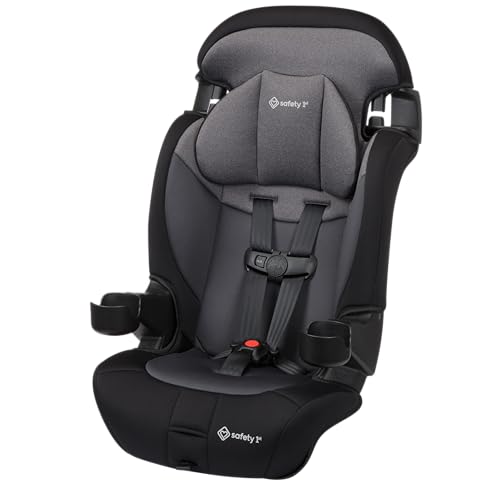
Safety 1st Grand 2-in-1 Booster Car Seat, Converts from High Back to Belt-Positioning Booster, High Back Seat for Kids 40-65, and Belt-Positioning 40-100 Pounds, Old Soul
Check price on Amazon
Chicco KidFit ClearTex Plus 2-in-1 Belt-Positioning Booster Car Seat | ErgoBoost Ultra-Comfort Foam Padding, High Back & Backless Modes, Quick-Release LATCH, ClearTex Fabric, 4yr+, Obsidian
Check price on Amazon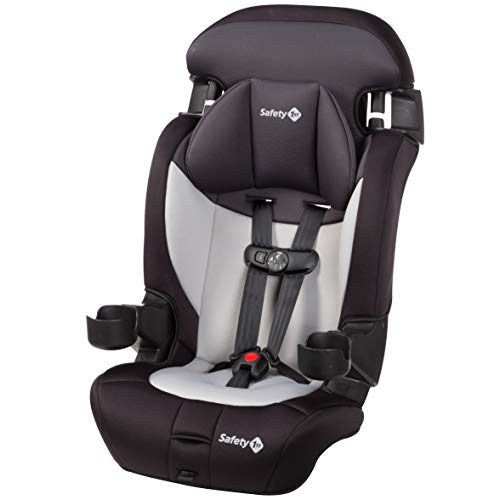
Safety 1st Grand 2-in-1 Booster Car Seat, Converts from High Back to Belt-Positioning Booster, High Back Seat for Kids 40-65, and Belt-Positioning 40-100 Pounds, Black Sparrow
Check price on Amazon
Safety 1st Grand 2-in-1 Booster Car Seat, Converts from High Back to Belt-Positioning Booster, High Back Seat for Kids 40-65, and Belt-Positioning 40-100 Pounds, Sunrise Coral
Check price on Amazon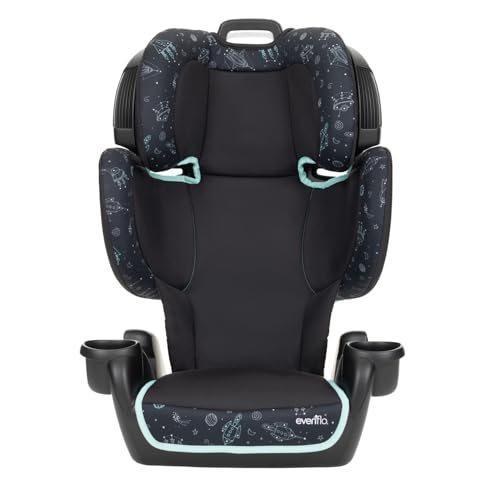
Evenflo GoTime LX Booster Car Seat (Astro Blue) | 2 Modes of Use, High Back Booster Converts to No Back Booster, 40-120 lbs. (Astro Blue)
Check price on Amazon
Britax Grow with You ClickTight Harness-2-Booster Car Seat, 2-in-1 High Back Booster, Green Contour
Check price on Amazon
Mifold Hifold Adjustable High Back Booster Seat with Strap, Slate Grey | Adjustable High Back Booster Seat for Kids with Foldable Design and Carry Strap, Ideal for Everyday Travel and Carpooling
Check price on Amazon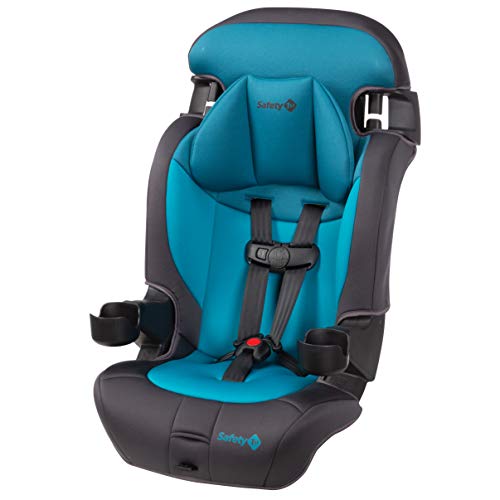
Safety 1st Grand 2-in-1 Booster Car Seat, Converts from High Back to Belt-Positioning Booster, High Back Seat for Kids 40-65, and Belt-Positioning 40-100 Pounds, Capri Teal
Check price on AmazonDisclaimer
Baby product selection and parenting decisions involve personal preferences and individual circumstances. The information provided on CradleCheck is for educational and informational purposes only. We are not medical professionals, and our content should not replace professional medical advice, diagnosis, or treatment. Always consult with your pediatrician or healthcare provider regarding your baby's health and safety. Some content may use AI assistance. Always check product safety standards and recalls before purchasing. If you do not agree, please do not use this website. Read the full disclaimer.