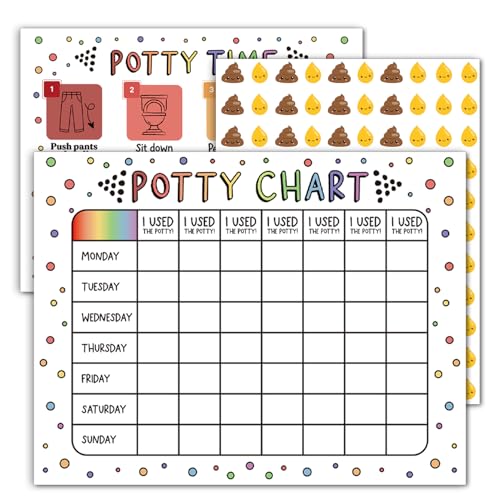
Potty Training Chart Guide
Master the art of potty training with our comprehensive chart guide. Track progress, celebrate wins, and make potty training a positive experience for your toddler.
Why a Potty Training Chart Works
Potty training is a significant milestone in your toddler's development. A potty training chart is more than just a piece of paper—it's a visual, motivational tool that helps children understand and celebrate their progress. By using a chart, you provide clear expectations and a tangible reward system that encourages consistency and builds confidence.
Charts work because they offer instant feedback. Each time your child uses the potty, they get to place a sticker or mark a box. This immediate reinforcement is powerful. Plus, it turns a potentially stressful process into a fun game. Whether you choose a simple printable or a more elaborate magnetic board, the key is consistency and positive reinforcement.
For more tips on creating a positive environment, check out our guide on potty training rewards and explore the best potty training chair options for your child.
Types of Potty Training Charts
Choosing the right chart can make all the difference. Here are the most common types:
- Sticker Charts: The classic choice. Children earn a sticker for each successful potty use. Once a row or column is filled, they get a reward.
- Dry-Erase Charts: Reusable and eco-friendly. Use dry-erase markers to track progress daily. Perfect for families who prefer minimal waste.
- Magnetic Charts: Interactive and engaging. Kids love moving magnets to show their achievements. Often more durable and fun.
- Personalized Charts: Include your child's name and favorite themes (e.g., animals, cars, princesses). Personalization increases engagement.
Whichever you choose, make sure it's visible and accessible. Place it at your child's eye level in the bathroom or a common area. This constant visual reminder keeps them motivated.
Pairing a chart with comfortable potty training underwear can also boost confidence and independence.
How to Use a Potty Training Chart Effectively
Using a chart is simple, but a few best practices can ensure success:
- Set Clear Goals: Define what earns a sticker (e.g., sitting on the potty, trying, or successful use). Be specific.
- Be Consistent: Use the chart every time, even for small successes. Consistency reinforces the habit.
- Celebrate Small Wins: Praise your child for every attempt. Positivity is key to building confidence.
- Reward Milestones: When a row or chart is complete, offer a small reward. This could be extra playtime, a favorite snack, or a trip to the park.
- Involve Your Child: Let them choose their stickers or markers. Ownership increases excitement.
Remember, every child is different. Some may take to potty training quickly, while others need more time. Patience and consistency are your best allies. For additional support, our guide on sleep training methods offers similar principles of consistency and routine that apply here too.
Benefits of Using a Potty Training Chart
Charts offer a range of benefits that extend beyond just tracking:
Motivation
Visual progress is a powerful motivator for toddlers. Seeing their achievements encourages them to keep going.
Structure
Charts provide a clear structure. Children thrive on routine, and a chart helps establish a predictable potty routine.
Positive Reinforcement
Celebrating successes builds a positive association with using the potty, reducing stress for both parent and child.
Communication
Charts can serve as a communication tool, helping you discuss progress and challenges with your child in a non-confrontational way.
Moreover, using a chart can be a fun bonding activity. It gives you a daily opportunity to cheer for your child's achievements and create lasting memories. For more ideas on keeping your child engaged, you might also explore toys for 1-year-old boys or toddler table and chairs to create a comfortable space for them.
Printable vs. Digital Charts: Which Is Better?
Both options have their pros and cons. Printable charts are budget-friendly and can be customized. You can find countless free templates online. Digital charts (apps or tablet-based) are interactive and often include sounds and animations that appeal to tech-savvy kids.
Consider your child's personality. If they enjoy hands-on activities, a printable chart they can decorate with stickers is ideal. If they are drawn to screens, a digital chart might be more engaging. Some families even use a combination of both!
Whichever you choose, ensure it's used consistently. The tool is less important than the consistency and positivity you bring to the process. And don't forget to have a reliable potty training toilet ready to make the experience as smooth as possible.
Sample Potty Training Chart Structure
If you're creating your own chart, consider this simple structure:
- Columns: Days of the week (Monday-Sunday).
- Rows: Times of day (Morning, Afternoon, Evening) or specific activities (After meals, Before bath).
- Reward Rows: A separate row for "Reward" where you track accumulated stickers.
This format helps track patterns. For instance, you might notice your child is more successful in the morning. Use this data to adjust your approach. For example, if mornings are successful, focus on reinforcing that habit.
You can also include a "Notes" section for observations. This can be helpful for identifying triggers or setbacks. For additional tracking tools, you might find our guides on baby shower gift ideas or kids Christmas pajamas useful for other gift or reward ideas.
Common Potty Training Chart Mistakes to Avoid
Even with a chart, things can go awry. Here are pitfalls to steer clear of:
- Being Inconsistent: If you don't use the chart regularly, its effectiveness diminishes. Make it a daily habit.
- Focusing Only on "Success": Reward attempts and effort, not just successful uses. This encourages resilience.
- Using Negative Reinforcement: Avoid scolding or punishing for accidents. Focus on the positive.
- Ignoring Accidents: Accidents are part of the process. Use them as learning opportunities without drama.
By avoiding these mistakes, you'll create a supportive environment that encourages your child to keep trying. Remember, this is a journey, and every child moves at their own pace. Patience is your most valuable tool.
For more on creating a supportive environment, check out our articles on newborn clothes size (a reminder that every child grows differently) and toddler girl clothes for comfortable wear during training.