Portable Booster Seat for Restaurant Dining: The Complete Parent's Guide
Dining out with a baby or toddler doesn't have to be stressful. A portable booster seat gives your child a clean, secure, and familiar spot at the table — no more wrestling with unfamiliar restaurant high chairs. This guide covers everything you need to know before you choose one.
Why a Portable Booster Seat Changes Restaurant Meals
Anyone who has dined out with a baby knows the routine: you arrive, scan the room for a high chair, discover it is either unavailable, wobbly, or covered in a mystery residue, and then spend the first ten minutes of the meal trying to settle your child into an unfamiliar seat. A portable booster seat for restaurant use solves that entire chain of problems in one compact package.
First, hygiene. Restaurant high chairs are shared equipment and are not always cleaned between guests. A booster seat that travels with you gives your child a surface you control, wiped down with your own supplies. Second, familiarity. Children behave better in a seat they recognize, and a booster that lives in your car or diaper bag becomes a reliable cue that mealtime is starting. Third, consistency. The harness and seating position your child uses at home carry over to the restaurant, which means fewer battles and more actual eating.
There is also a practical angle that many parents overlook: not every venue has a high chair at all. Cafes, food trucks, farmers markets, and casual eateries often have nothing beyond standard dining chairs. A portable booster turns any chair into a proper seat, which expands where your family can comfortably eat. For parents who travel, a booster that folds flat pairs naturally with a backpack diaper bag with an insulated bottle holder, keeping hands free and gear organized.
How a Restaurant Booster Seat Works
Most portable boosters for restaurant use follow one of two attachment designs. Understanding the difference helps you match the seat to how you actually dine out.
Strap-On Booster Seats
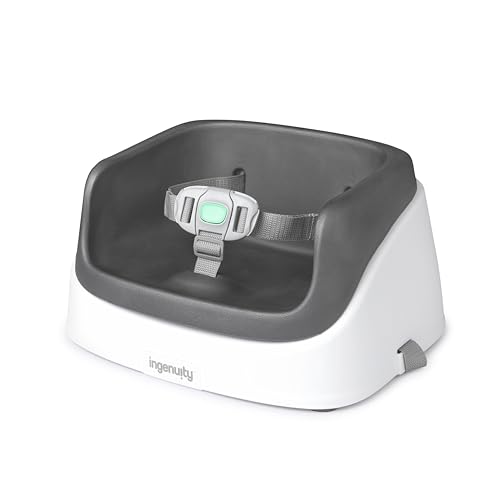
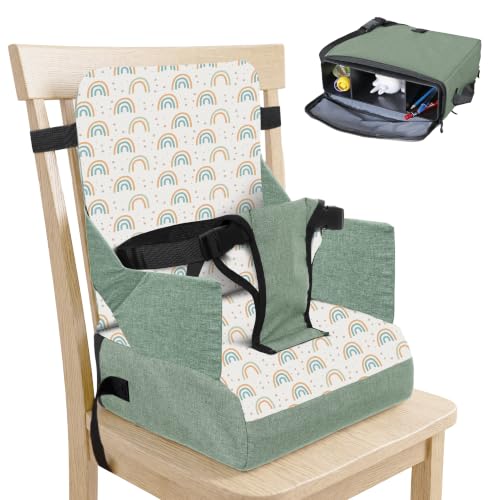
These use adjustable straps that wrap around the back and underside of a standard dining chair, securing the booster in place. The child sits in a raised seat with a harness, and the booster's base rests on the chair seat. This design is the most common and works with the widest range of restaurant chairs, provided the chair has a backrest you can strap around.
Clip-On and Hook-On Seats
These clamp directly onto the edge of a table, suspending the child at table height with no chair required. They are excellent in tight spaces, but compatibility depends on table thickness and edge style — a thick, rounded, or pedestal table may not accept a clamp securely. Always test the clamp before seating your child.
Foldable Booster Seats
A foldable booster collapses into a flat or book-like shape for storage in a car trunk or diaper bag. Many foldable models combine the strap-on design with a compact frame. If portability is your top priority, this category deserves your attention; the trade-off is often a simpler harness and less side support than a full booster.
For families who alternate between restaurant dining and home meals, a dedicated baby booster seat at the kitchen table plus a travel booster for outings covers both scenarios well.
Key Features That Matter Most
When you compare portable booster seats, these are the features that separate a seat you will use for years from one that ends up in the trunk permanently.
- Harness system: A three-point harness is the practical minimum; a five-point harness offers better containment for wiggly toddlers. Look for padded straps and a secure, easy-to-operate buckle that a child cannot undo.
- Chair attachment: Wide, adjustable straps with non-slip grips and a locking buckle keep the booster from shifting. Some models add a second strap that runs under the chair seat for extra stability.
- Base stability: A broad, flat base distributes weight and resists tipping. Booster seats with a contoured bottom that grips the chair surface perform better than smooth plastic shells.
- Side and back support: Raised side panels and a backrest help younger babies sit upright. For a baby still developing trunk control, a seat with more containment is worth the extra bulk.
- Wipeable surfaces: Restaurant meals are messy. A smooth, crevice-free shell and a removable, machine-washable fabric cover make cleanup realistic.
- Foldability and weight: A seat that folds flat and weighs little is the one you will actually carry. Check the folded dimensions against your diaper bag or stroller basket.
- Tray or no tray: A snap-on tray keeps food contained and provides a clean eating surface, but adds bulk. If your child eats directly off the table, a tray-free design is simpler.
Safety Standards and Setup Checklist
Safety is the non-negotiable part of choosing a portable booster seat for restaurant use. Look for a seat that meets a recognized standard such as ASTM F2640 (the standard for booster seats) or carries a JPMA certification. These indicate the seat has been tested for stability, restraint strength, and structural integrity.
Certification is only half the story. How you set up the seat matters just as much. Use this checklist every time you dine out:
- Inspect the chair first. Choose a chair with a solid backrest, a flat seat, and no armrests that block the booster's sides. Avoid folding or pedestal chairs that feel unstable.
- Attach the booster securely. Route the straps around the backrest and under the seat, tighten them fully, and confirm the booster does not shift when you push it side to side.
- Test before seating your child. Give the booster a firm tug in several directions. If it moves more than a fraction of an inch, reposition or choose a different chair.
- Buckle the harness snugly. The harness should lie flat against your child's body with no more than two fingers of slack at the shoulder. Adjust the buckle position so it sits at chest level.
- Position the child close to the table. Slide the chair in so your child's tray or hands reach the table comfortably, and keep the chair away from walkways and hot surfaces.
- Never leave your child unattended. A booster seat is not a substitute for supervision. Keep the chair within arm's reach throughout the meal.
For very young babies, a portable floor seat or a portable infant bassinet may be safer than a chair-mounted booster until head and neck control is solid. Once your child can sit upright confidently, a booster becomes an appropriate choice.
Market Tiers: Entry-Level to Top-Tier
Portable booster seats fall into four broad market tiers. Rather than focus on numbers, compare what each tier delivers in construction and features. The right tier depends on how often you dine out, how much you travel, and how long you want the seat to last.
| Tier | Typical Construction | Harness & Support | Best For |
|---|---|---|---|
| Essential Tier | Lightweight plastic shell, simple folding, basic straps | Three-point harness, minimal side support | Occasional diners, grandparents' car, backup seat |
| Balanced Tier | Reinforced frame, removable washable cover, non-slip base | Five-point harness, moderate side containment | Families who eat out weekly and want a dependable everyday seat |
| Premium Tier | Rigid foldable frame, premium fabrics, refined buckle hardware | Five-point harness, deep side panels, adjustable backrest | Frequent travelers and parents who prioritize postural support |
| Top-Tier | Professional-grade materials, precision folding, extended weight range | Five-point harness with padded chest clip and multi-position recline | Long-term investment for growing families and heavy use |
A balanced-tier model is the sweet spot for most families: it is feature-rich for its class, holds up to weekly restaurant visits, and its cover survives repeated washing. Top-tier seats make sense if you travel frequently or want a seat that will serve multiple children. Essential-tier seats are a solid choice for a secondary seat kept in a grandparent's car or a spare bag.
Sizing and Age Guidance
Most portable booster seats are designed for children from around six months, once they can sit upright with steady head and neck control, up through toddlerhood. Always follow the manufacturer's stated minimum and maximum weight and height limits rather than relying on age alone.
Fit matters in three places. First, the harness should adjust to your child's torso without bunching. Second, the seat's side panels should sit at or above your child's waist for containment. Third, your child's feet should have somewhere to rest — a footrest or the chair's own seat edge — because dangling legs make sitting still harder. If your child is on the smaller side, a seat with a deeper bucket and a higher backrest provides better support. If your child is tall, check that the shoulder strap height still fits before you commit.
For babies approaching the transition to table food, pair the booster with practical mealtime gear such as a baby bowl and dribble bibs with waterproof backing. The right setup at the table keeps the focus on the meal rather than the mess.
Portability, Cleaning, and Everyday Use
The best portable booster seat is the one you actually bring with you. That means evaluating portability honestly: check the folded dimensions, the weight, and whether the seat has a carry handle or stuff sack. A seat that folds to the size of a thick book slips into a diaper bag or under a stroller; a bulky seat with a rigid frame is better left in the car trunk.
Cleaning deserves equal weight. Restaurant meals involve sauces, crumbs, and spills. A seat with a smooth shell, a removable cover, and no deep crevices takes minutes to wipe down. Look for covers that are machine-washable and harness straps that can be spot-cleaned without removing the entire assembly. A snap-on tray, if you choose one, should lift off easily and be dishwasher-safe.
Think about the full dining-out kit: a booster seat, a pack of wipes, a bib, and a few small toys. A diaper bag with a changing pad attached keeps the booster and mealtime supplies organized in one place, so you are not digging through a crowded bag while your child waits. For longer outings, a stainless steel sippy cup with straw rounds out the kit and reduces spills at the table.
Buying Tips and Common Mistakes
Before you commit to a seat, run through these practical checks. They catch the issues that reviews and product photos tend to hide.
- Measure your diaper bag first. Compare the booster's folded dimensions against the bag's main compartment. A seat that technically folds but does not fit your bag will stay home.
- Confirm chair compatibility. If you dine at the same handful of restaurants, check that their chairs have solid backrests and flat seats. Strap-on boosters need both.
- Try the buckle one-handed. You will often be holding a child with one arm while buckling with the other. A stiff or fiddly buckle becomes a daily frustration.
- Check the weight limit against your child's growth. A seat with a higher maximum weight serves you longer, but only if the harness and side support still fit comfortably.
- Do not skip certification. A seat without a recognized safety standard is not worth the risk, regardless of how convenient it looks.
Common mistakes worth avoiding: buying a clip-on seat without testing it on your usual restaurant tables; choosing a seat with a non-removable cover; and assuming a booster replaces supervision. A booster is a tool for safer, cleaner dining — not a substitute for a parent within arm's reach.
If you are also setting up feeding gear at home, a wooden high chair pairs well with a travel booster: the high chair stays at the kitchen table, and the booster lives in the car for outings. Together they cover every mealtime scenario without redundancy.
Ready to Compare Portable Booster Seats?
Explore our curated selection of portable booster seats for restaurant dining and find the tier that fits your family's routine.
View Recommended OptionsFrequently Asked Questions
What is a portable booster seat for restaurant use?
A portable booster seat for restaurant use is a compact, foldable seat that attaches to a standard dining chair to elevate your child to table height. It provides a clean, familiar surface for your baby or toddler and eliminates reliance on restaurant-provided high chairs.
How do I know if a restaurant chair is compatible with my portable booster seat?
Most portable booster seats are designed to fit standard dining chairs with a backrest and a seat depth of at least 12 inches. Check that the chair has a solid back for strap attachment and that the seat surface is flat. Avoid chairs with armrests that block the booster's side panels, and always test the attachment before seating your child.
What safety features should I look for in a portable booster seat?
Prioritize a three-point or five-point harness, sturdy chair attachment straps with non-slip grips, a wide stable base, and a safety certification such as ASTM F2640 or JPMA. A seat with a raised backrest and side containment offers better postural support for younger babies.
At what age can my child use a portable booster seat at a restaurant?
Most portable booster seats are suitable from around 6 months, once your baby can sit upright with good head and neck control. Always follow the manufacturer's minimum weight and age recommendations. For babies under 6 months, a portable infant floor seat or a clip-on high chair may be more appropriate.
How do I clean a portable booster seat after dining out?
Look for a booster seat with a wipeable surface, removable and machine-washable fabric cover, and a food-catching tray or crevice-free design. After each meal, wipe down the seat and harness with a baby-safe disinfectant wipe, and wash the fabric cover according to the care label.