Play Mat Buying Guide
Everything you need to know about choosing a safe, supportive, and development-boosting play mat for your baby — from materials and thickness to tummy time features and hygiene.
Start ReadingWhy This Guide Matters: A play mat is one of the most-used surfaces in your baby's early life. It supports tummy time, sensory exploration, and floor play safety. Choosing the right one means balancing cushioning, easy cleaning, non-toxic materials, and developmental features. This guide walks you through every decision point so you can pick with confidence.
Why a Play Mat Is Essential for Baby Development
Play mats are far more than a soft spot on the floor. During the first year, babies spend a significant portion of their waking hours on the floor — practicing head control, rolling, reaching, and eventually crawling. A well-chosen play mat provides a consistent, safe, and stimulating surface that supports each of these milestones.
Pediatric therapists often recommend a firm-but-cushioned surface for tummy time because it gives babies the traction they need to push up while protecting them during tumbles. A dedicated play mat also creates a clear "play zone" that helps babies develop spatial awareness and makes it easier for parents to supervise floor time. If you are building out your nursery, pairing a mat with a nursery storage unit keeps toys and blankets organized right next to the play area.
Beyond development, a play mat protects your floors from spills, spit-up, and diaper accidents. It also gives you a clean, portable surface for visits to grandparents or outdoor picnics. For families who also use a playpen or a pack and play with bassinet and changing table, a matching mat creates a consistent play surface across all your baby gear.
Types of Play Mats Explained
Play mats fall into several broad categories, each with distinct strengths. Understanding these types is the first step toward narrowing your options.
Foam Play Mats
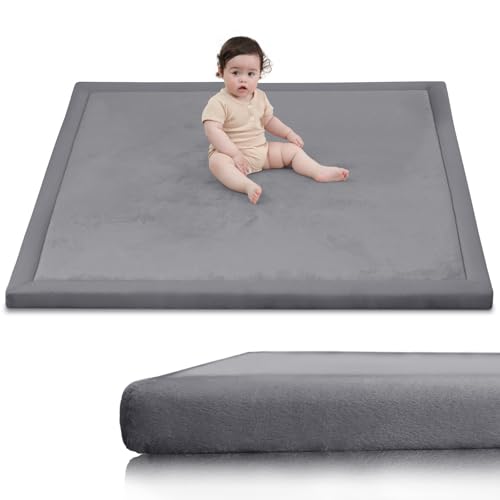
Interlocking or one-piece foam mats are the most common choice for homes with hard floors. They offer reliable cushioning, are easy to wipe clean, and many are reversible with different patterns on each side. Look for closed-cell foam, which prevents moisture from seeping in and resists bacterial growth. Premium foam mats often use non-toxic, phthalate-free materials and pass strict safety certifications.
Fabric and Quilted Mats
Fabric mats are soft, machine-washable, and ideal for younger babies who are not yet mobile. They are lightweight and easy to fold for travel. However, they offer less cushioning than foam and can shift on smooth floors unless they have a non-slip backing. Many parents use a fabric mat on top of a foam mat for extra softness during the newborn stage.
Play Gyms and Activity Mats
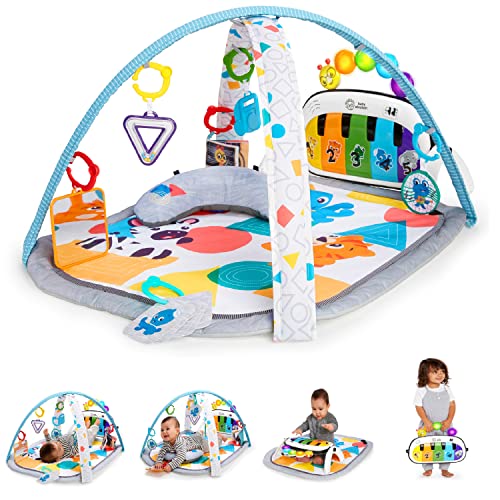
Activity mats combine a padded surface with arches, hanging toys, and sometimes a mirror or sensory elements. These are excellent for newborns through sitting age because they encourage visual tracking, reaching, and batting. Many activity mats have removable arches so the mat can be used independently as baby grows. For tummy time support, pairing an activity mat with a nursing pillow for tummy time can help younger babies stay comfortable.
Outdoor and Waterproof Mats
For park trips, beaches, or backyard play, waterproof mats with a wipe-clean surface are invaluable. These are typically thinner and more portable, folding into a compact bundle with a carry strap. They are not designed for the same level of cushioning as indoor foam mats, but they excel at keeping baby dry and clean on the go.
Puzzle and Interlocking Tiles
Interlocking tiles let you customize the size and shape of your play area. They are especially useful for covering large floor spaces or creating a dedicated corner in a living room. The trade-off is that seams can trap crumbs and liquids, so they require more frequent deep cleaning. High-end tile systems use tighter tolerances that minimize gaps.
Materials and Safety Standards
Because babies spend so much time on the floor — and often put their mouths on the mat — material safety is the single most important factor. Here is what to look for:
- Non-toxic foam: Choose mats labeled phthalate-free, BPA-free, lead-free, and formaldehyde-free. Premium mats often use TPU or EVA foam with documented safety testing.
- Certifications: Look for third-party certifications such as GREENGUARD Gold, OEKO-TEX Standard 100, or CPSIA compliance. These indicate the product has been tested for harmful chemicals and low emissions.
- Non-slip backing: A textured or rubberized underside keeps the mat from sliding on hardwood, tile, or laminate floors.
- Hypoallergenic fabrics: For fabric mats, organic cotton or OEKO-TEX certified textiles reduce the risk of skin irritation.
- Odor check: A strong chemical smell out of the box can indicate poor material quality. High-grade foam mats typically have minimal or no odor after airing out.
If your baby has sensitive skin or allergies, consider a mat with a removable, washable fabric cover over a certified foam core. This combines the cushioning of foam with the easy hygiene of machine-washable textiles. Many parents also keep a spare play mat cover on hand for quick swaps during messy play.
Thickness and Cushioning: Finding the Right Balance
Thickness is a trade-off between safety and practicality. A mat that is too thin offers little protection during tumbles; a mat that is too thick can be unstable for a baby learning to push up or crawl.
- Entry-level thickness (around 0.4–0.6 inches): Suitable for older babies who are already sitting and crawling on carpeted floors. These mats are lightweight and portable but offer limited impact protection.
- Mid-range thickness (around 0.6–0.8 inches): The sweet spot for most families. These mats provide enough cushioning for tummy time and early rolling while remaining stable enough for crawling practice.
- Premium thickness (0.8 inches and above): Best for homes with hard floors or for babies who are just learning to sit and may topple. Thicker mats are heavier and less portable, so they work best as a permanent floor setup.
For newborns and young infants, a slightly softer surface is comfortable, but always prioritize firmness for tummy time — a surface that is too soft makes it harder for babies to push up. Many families use a thicker foam mat as a base and layer a soft quilted mat on top during the newborn months.
Quality Tiers at a Glance
To help you compare options without focusing on numbers, we use a consistent tier system throughout this guide. Each tier reflects the relative position of a mat in the market based on materials, construction, and features.
Starter Tier Play Mats
These mats cover the basics: a safe, wipe-clean surface with standard foam or fabric construction. They are a solid choice for secondary play areas, grandparents' homes, or families who want a straightforward mat for a short period. Expect simpler patterns, fewer certifications, and lighter cushioning. For its tier, a well-made entry-level mat can be a good value if it carries basic safety certifications.
Balanced Tier Play Mats
Mid-range mats typically offer better foam density, reversible designs, non-slip backing, and stricter safety testing. This tier is where most families find the best balance of durability, cushioning, and developmental features. Many mid-range mats include removable toy arches or textured sensory surfaces that support tummy time and early play.
High-End Tier Play Mats
Premium mats use high-grade, non-toxic materials with documented third-party certifications, tighter manufacturing tolerances, and thoughtful design details such as seamless edges, reversible patterns, and included storage bags. They are built as long-term investments that can handle daily use through toddlerhood and beyond. For families planning multiple children, a premium mat is often the most efficient choice in the long run.
Features That Matter When Choosing a Play Mat
Beyond material and thickness, several features can make a meaningful difference in daily use:
- Reversible design: Two patterns in one mat lets you refresh the look of the play area without buying a second mat.
- Non-slip texture: Critical for hardwood and tile floors, especially once baby starts pushing up and crawling.
- Foldability and portability: Mats that fold into a compact shape with a carry handle are ideal for travel and storage.
- Wipe-clean surface: Closed-cell foam and waterproof fabric surfaces make cleanup quick after spills and diaper accidents.
- Sensory elements: Textured patches, crinkle sections, and high-contrast patterns support sensory development during tummy time.
- Edge safety: Rounded or beveled edges reduce tripping hazards and are gentler on baby's skin.
- Compatibility with play gyms: If you plan to use an activity gym, check that the mat size fits the gym's footprint.
If you are setting up a dedicated play corner, consider pairing your mat with nursery rugs for extra warmth and style, and a nursery rocking chair nearby so you can supervise comfortably. For smaller spaces, a rocking chair for small spaces keeps the play area functional without crowding it.
Play Mat Comparison by Category
Use this table to compare mat types across the factors that matter most. Remember that tier descriptors reflect relative market position, not numerical figures.
| Mat Type | Best For | Cushioning | Portability | Ease of Cleaning | Typical Tier |
|---|---|---|---|---|---|
| Foam Play Mat | Daily floor play, tummy time | High | Moderate | Easy (wipe-clean) | Entry to Premium |
| Fabric Quilted Mat | Newborn stage, travel | Low to Moderate | High | Machine-washable | Entry to Mid-Range |
| Activity Gym Mat | Sensory play, visual tracking | Moderate | Low to Moderate | Moderate | Mid-Range to Premium |
| Outdoor Waterproof Mat | Parks, beaches, picnics | Low | High | Easy (wipe-clean) | Entry to Mid-Range |
| Interlocking Tiles | Large custom play areas | Moderate to High | Low | Moderate (seams) | Entry to Premium |
Cleaning and Maintaining Your Play Mat
Regular cleaning keeps your play mat hygienic and extends its lifespan. The right routine depends on the material:
- Foam mats: Wipe daily with a damp cloth and mild soap. Avoid harsh disinfectants that can break down foam over time. Dry fully before use.
- Fabric mats: Follow the care label — most are machine-washable on a gentle cycle. Air-dry rather than tumble-dry to preserve the fabric and backing.
- Interlocking tiles: Disassemble periodically to clean seams and underneath. A soft brush helps remove crumbs from the joints.
- Outdoor mats: Rinse with water and mild soap, then air-dry completely before folding to prevent mildew.
Store mats flat or loosely rolled rather than tightly folded, which can create permanent creases in foam. If your mat will sit unused for a season, clean it thoroughly first and store it in a dry place. For families with a playpen with bassinet and changing table, keeping a spare mat nearby makes it easy to create a clean play surface anywhere in the home.
Frequently Asked Questions
Look for mats labeled phthalate-free, BPA-free, lead-free, and formaldehyde-free. Third-party certifications such as GREENGUARD Gold or OEKO-TEX Standard 100 provide added assurance that the product has been tested for harmful chemicals. Closed-cell foam and organic cotton fabrics are among the safest choices for daily floor play.
A mid-range thickness of roughly 0.6 to 0.8 inches is ideal for tummy time. It provides enough cushioning to protect baby during early rolling and pushing up, while remaining firm enough to give traction. Mats that are too soft make it harder for babies to practice head control.
Yes. On carpet, a thinner mat or a fabric mat works well because the carpet provides additional cushioning. On hard floors, choose a thicker foam mat with a non-slip backing to prevent sliding and provide impact protection.
Wipe foam and waterproof mats daily with a damp cloth and mild soap. Fabric mats should be washed weekly or more often if baby has spit up or had a diaper accident. Deep-clean interlocking tiles monthly, paying attention to the seams where crumbs collect.
You can introduce a play mat from the newborn stage. Start with short tummy time sessions on a firm, cushioned surface and gradually increase duration as baby grows. Activity mats with hanging toys are particularly engaging for babies around two to four months old.
It is practical to have a dedicated outdoor mat if you frequently visit parks, beaches, or grandparents' yards. Outdoor mats are typically thinner and waterproof, making them easy to wipe clean and fold into a bag. Keeping an indoor mat separate avoids tracking dirt and moisture into your home.
Ready to Choose the Right Play Mat?
Explore our recommended play mats below — filtered for safety, developmental value, and real-world durability.
View Recommendations