Over the Counter Diaper Rash Treatment: The Complete Guide
Everything you need to know about choosing safe, effective over the counter diaper rash treatments — active ingredients, product types, application tips, and when to see a doctor.
Why Choosing the Right OTC Diaper Rash Treatment Matters
Diaper rash is one of the most common skin concerns in infancy, affecting a large majority of babies at some point during their diaper-wearing years. While most cases are mild and resolve with simple care, the right over the counter treatment can dramatically speed healing, soothe discomfort, and prevent recurrence. The challenge for parents is not a lack of products — it is the overwhelming variety of creams, ointments, pastes, and balms lining the pharmacy shelves, each with different active ingredients, textures, and intended use cases.
This guide is designed for parents who have already identified that their baby has diaper rash and now want to make an informed purchasing decision. We break down the active ingredients that matter, compare product formats, explain how to apply treatment correctly, and flag the warning signs that mean you should skip the pharmacy aisle and call your pediatrician instead. You will also find practical guidance on matching a treatment to your baby's specific rash pattern — whether it is a mild friction rash, a moisture-driven irritation, or a suspected yeast infection.
Key takeaway: The most effective over the counter diaper rash treatments combine a skin protectant (zinc oxide or petrolatum) with a barrier that blocks moisture, urine, and feces from contacting the skin. Matching the formulation to the severity and type of rash is what separates a quick recovery from a prolonged struggle.
Understanding Diaper Rash Before You Treat It
Diaper rash (diaper dermatitis) is an inflammatory skin condition that appears as redness, irritation, and sometimes small bumps or scaling in the diaper area — the buttocks, thighs, genitals, and lower abdomen. It develops when the skin barrier is compromised by prolonged exposure to moisture, friction from diapers, urine, and stool enzymes. Understanding the underlying cause helps you choose the most appropriate over the counter treatment rather than reaching for the first tube on the shelf.
Common Types of Diaper Rash
- Irritant contact dermatitis: The most common type, caused by prolonged contact with urine, feces, and the diaper itself. Appears as red, inflamed skin in the areas of most contact.
- Yeast (candida) dermatitis: A secondary fungal infection that thrives in warm, moist environments. Distinctive for bright red, raised patches with satellite lesions (small red dots) spreading beyond the main rash area.
- Friction and chafing rash: Caused by the diaper rubbing against skin, often appearing at the waistband or leg cuffs.
- Allergic contact dermatitis: A reaction to a specific ingredient in diapers, wipes, or creams. Less common and usually localized to the area of contact.
- Seborrheic dermatitis: Greasy, yellow scaling that can overlap with diaper rash and often relates to the same condition seen on the scalp.
Most irritant and friction rashes respond well to over the counter barrier treatments. Yeast rashes typically require an antifungal agent, which may be available over the counter in some regions but often warrants pediatric guidance. Knowing the difference prevents wasted purchases and delayed healing. For a related deep dive on products designed specifically for sensitive skin, you may find our guide on eczema baby products helpful for understanding barrier-friendly formulations.
The Active Ingredients That Matter in OTC Diaper Rash Treatments
When comparing over the counter diaper rash treatments, the ingredient list tells you far more than the packaging claims. Most effective products rely on one or more of the following active ingredients, each with a distinct mechanism and best-use scenario.
Zinc Oxide
A mineral-based skin protectant that forms a physical barrier against moisture and irritants. Concentrations typically range from 10% to 40%. Higher concentrations create a thicker, more occlusive barrier suited to moderate to severe irritation. It is the most widely used active ingredient in diaper rash creams and pastes.
Petrolatum (Petroleum Jelly)
An occlusive that seals in moisture and blocks irritants. Often used alone for prevention or as a base in combination products. It is gentle, widely tolerated, and effective for mild rashes and routine barrier protection. Mid-range formulations often blend petrolatum with zinc oxide for enhanced protection.
Dimethicone
A silicone-based skin protectant that creates a breathable, water-repellent film. It is less occlusive than petrolatum, making it a good choice for babies who are prone to heat rash or who need protection without heavy occlusion. Often found in lighter creams and lotions.
Lanolin
A natural wax derived from sheep wool that acts as an emollient and barrier. It is effective for soothing dry, chapped skin but can cause allergic reactions in a small subset of babies. Patch testing is advisable for babies with known sensitive skin.
Antifungal Agents (Clotrimazole, Miconazole)
Target yeast-driven diaper rash. These are available over the counter in some regions and are appropriate when the rash shows classic yeast signs — bright red patches with satellite lesions. They should be used under pediatric guidance when possible, especially for recurring or persistent rashes.
Hydrocortisone (Low-Strength)
A mild topical steroid that reduces inflammation in severe irritant dermatitis. Over the counter strengths are low, and use should be short-term and guided by a healthcare professional. It is not appropriate for yeast rashes, which can worsen with steroid use alone.
When reading labels, note whether the product is classified as a "skin protectant" (barrier only) or includes an active treatment ingredient. For most everyday diaper rashes, a zinc oxide or petrolatum-based skin protectant is the appropriate first choice. For persistent rashes that do not improve with barrier treatment, an antifungal or low-strength steroid may be warranted — but these decisions benefit from professional input.
Creams vs. Ointments vs. Pastes: Which Format Works Best?
The delivery format of an over the counter diaper rash treatment affects how well it stays in place, how easy it is to apply, and how comfortable it feels on a baby's skin. Choosing the right format is as important as choosing the right active ingredient.
| Format | Best For | Characteristics |
|---|---|---|
| Cream | Mild rashes, daily prevention | Lightweight, spreads easily, absorbs relatively quickly. Contains more water than ointments. Good for daytime use and frequent changes. |
| Ointment | Moderate rashes, overnight protection | Thick, occlusive, stays in place longer. Creates a strong moisture barrier. Ideal for overnight or extended wear. |
| Paste | Severe rashes, maximum barrier | Very thick, high zinc oxide content, difficult to rinse off. Provides the most durable barrier. Best for stubborn or weeping rashes. |
| Balm / Salve | Prevention and sensitive skin | Wax-based, smooth application, often uses natural ingredients. Good for babies with sensitivities to synthetic ingredients. |
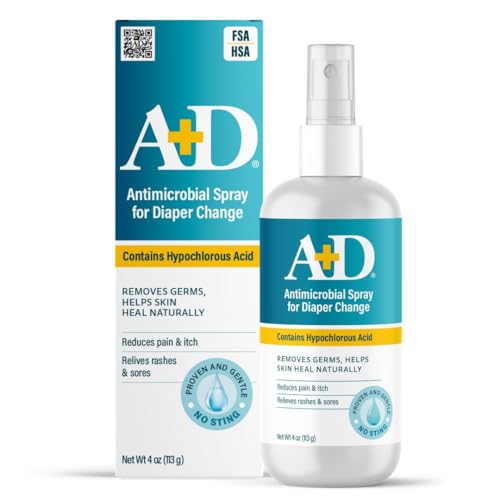
| Spray / Liquid Powder | Frequent changes, wriggly babies | No-touch application, convenient for on-the-go changes. Barrier strength is generally lighter than creams or pastes. |
How to Choose the Right OTC Diaper Rash Treatment
With ingredients and formats understood, the selection process becomes straightforward. Use the following decision framework to match a product to your baby's situation.
- Identify the rash type. Is it flat red irritation in the contact areas (irritant dermatitis), bright red with satellite dots (likely yeast), or confined to friction points like the waistband? The answer narrows your ingredient choice. For a deeper look at doctor-informed options, see our guide on doctor recommended diaper rash cream.
- Match the barrier strength to severity. Mild redness responds to a lighter cream or dimethicone-based product. Moderate irritation benefits from a zinc oxide ointment. Severe or weeping rashes call for a high-zinc paste.
- Check for fragrances and potential irritants. Babies with sensitive skin do better with fragrance-free, dye-free formulations. Products marketed for eczema-prone skin often use gentler ingredient profiles.
- Consider the frequency of changes. If you change diapers very frequently (every 1–2 hours), a lighter cream is easier to reapply. For longer stretches, especially overnight, a thicker ointment or paste stays effective.
- Plan for yeast if signs are present. If the rash has satellite lesions or has not improved after several days of barrier treatment, an antifungal may be needed. Consult your pediatrician before combining products.
- Patch test new products. Apply a small amount to a small area of skin and wait 24 hours before full application, especially with products containing lanolin or botanical ingredients.
It is also worth reviewing your diapering routine alongside your treatment choice. Frequent diaper changes, gentle cleansing with water or fragrance-free wipes, and brief "air time" without a diaper all amplify the effectiveness of any over the counter treatment. A good barrier product supports these habits rather than replacing them.
How to Apply Diaper Rash Treatment Correctly
Even the best formulation underperforms if applied incorrectly. Follow these steps for maximum effectiveness.
- Clean gently and pat dry. Use warm water or fragrance-free wipes, and pat the skin dry with a soft cloth. Avoid rubbing, which further irritates compromised skin. Allow the area to air-dry completely before applying any product.
- Apply a generous layer. Diaper rash treatments work as barriers, so the layer should be thick enough to visibly coat the skin — roughly the thickness of frosting on a cake. A thin smear does not provide adequate protection.
- Cover the entire affected area and beyond. Extend the product slightly past the visible rash margins to protect the surrounding skin from irritation spread.
- Do not rub in. Barrier products are designed to sit on the skin surface. Rubbing reduces their protective effect and can cause friction.
- Reapply at every diaper change. Barrier protection wears off with each change and with moisture exposure. Consistent reapplication is the single biggest factor in treatment success.
- Be gentle with paste removal. High-zinc pastes can be difficult to remove. Use a soft cloth with warm water or a gentle oil (like mineral oil) rather than scrubbing. Leaving a thin residue is acceptable and even protective.
Timing tip: Apply treatment at the first sign of redness, not after the rash has fully developed. Early barrier protection is far more effective than trying to reverse established irritation.
Prevention Strategies That Reduce Reliance on Treatment
Over the counter treatments are most effective when paired with preventive habits that keep the skin barrier intact. These practices reduce both the frequency and severity of diaper rash.
- Change diapers frequently. Aim to change as soon as the diaper is soiled, and at least every 2–3 hours during the day.
- Maximize air time. Let your baby go without a diaper for short periods each day, weather and flooring permitting. Air exposure is one of the most effective preventive measures.
- Choose absorbent, breathable diapers. Fit matters as much as material — a diaper that is too tight creates friction, while one that is too loose allows leakage.
- Cleanse gently. Avoid wipes containing alcohol or fragrance. Water and a soft cloth are often sufficient for urine-only changes.
- Use a preventive barrier. A thin layer of petrolatum or a light cream at each change protects skin before irritation begins, especially during episodes of diarrhea or when starting new foods.
- Address digestive triggers. Diarrhea, antibiotic use, and dietary changes are common rash triggers. Extra vigilance during these periods prevents escalation. If your baby is transitioning to formula, our guide on cow's milk protein intolerance formula may be relevant.
When Over the Counter Treatment Is Not Enough
Most diaper rashes improve within 3–5 days of consistent barrier treatment. However, certain signs indicate that over the counter products alone are insufficient and professional evaluation is needed.
- The rash does not improve after 5–7 days of consistent treatment.
- Bright red patches with satellite lesions suggest a yeast infection requiring antifungal treatment.
- Blisters, open sores, or weeping areas that could indicate a secondary bacterial infection.
- Fever, lethargy, or other signs of systemic illness accompanying the rash.
- Rash that spreads beyond the diaper area or appears on other parts of the body.
- Severe pain or distress during diaper changes that is disproportionate to the visible irritation.
- Recurring rashes that resolve and return repeatedly despite good hygiene and barrier use.
In these situations, your pediatrician may recommend a prescription antifungal, a stronger topical steroid, or a combination approach. Continuing to apply ineffective over the counter products without addressing the underlying cause can prolong discomfort and delay healing.
Frequently Asked Questions About OTC Diaper Rash Treatment
How long does over the counter diaper rash treatment take to work?
With consistent application at every diaper change, mild rashes typically show improvement within 2–3 days and resolve within 5–7 days. Moderate rashes may take up to a week. If there is no visible improvement after 5–7 days of proper use, consult your pediatrician to rule out yeast or bacterial involvement.
Can I use adult diaper rash cream on my baby?
Adult barrier creams often contain the same active ingredients (zinc oxide, petrolatum) and can be effective, but they may also include fragrances, preservatives, or concentrations not formulated for infant skin. Infant-specific products are generally preferable because their ingredient profiles are tested for the thinner, more sensitive skin of babies.
Is it safe to switch between different diaper rash treatments?
Switching between barrier-only products is generally safe. However, avoid layering multiple products with different active ingredients — especially combinations involving antifungals or steroids — without professional guidance. If one barrier product is not working, a different formulation of the same ingredient class is a reasonable next step, but persistent rashes deserve a medical assessment.
Should I stop using diaper rash treatment once the rash looks better?
Continue for 1–2 days after the rash appears resolved to allow the skin barrier to fully recover. Stopping immediately can lead to recurrence. Once fully healed, a thin layer of preventive barrier at each change is a good habit, especially for babies prone to rashes.
Can diaper rash treatment be used with cloth diapers?
Yes, but choose your product carefully. Thick zinc pastes can leave residue that affects cloth diaper absorbency and may require more intensive washing. Lighter creams and dimethicone-based products are generally more compatible with cloth diapering systems. Some parents use a reusable liner to protect the diaper itself.
What is the difference between diaper rash cream and ointment?
Creams are lighter, water-based emulsions that spread easily and absorb relatively quickly. Ointments are oil- or petrolatum-based and form a thicker, longer-lasting barrier. Ointments are better for overnight protection and moderate rashes, while creams suit daytime use and mild irritation. Many parents benefit from having both on hand.
Are natural or organic diaper rash treatments effective?
Some natural ingredients — such as lanolin, shea butter, and calendula — offer emollient and soothing properties, and several well-regarded products use them alongside proven barriers like zinc oxide. However, "natural" does not guarantee effectiveness or safety; botanical ingredients can cause allergic reactions in some babies. Look for products that pair gentle ingredients with recognized skin protectants.
Final Thoughts: Making a Confident Choice
Choosing an over the counter diaper rash treatment does not have to be complicated. The core decision comes down to three questions: what type of rash your baby has, what active ingredient addresses that type, and what format fits your diapering routine. For most everyday rashes, a zinc oxide or petrolatum-based barrier product applied generously at every change is the right starting point. Yeast rashes require antifungal consideration, and persistent or severe rashes warrant pediatric guidance.
Keep in mind that treatment is only half the equation. Frequent changes, gentle cleansing, air time, and a consistent preventive barrier do as much work as any product you can buy. When these habits are paired with a well-chosen treatment, most diaper rashes resolve quickly and comfortably — and you will be equipped to recognize when a more targeted approach is needed.