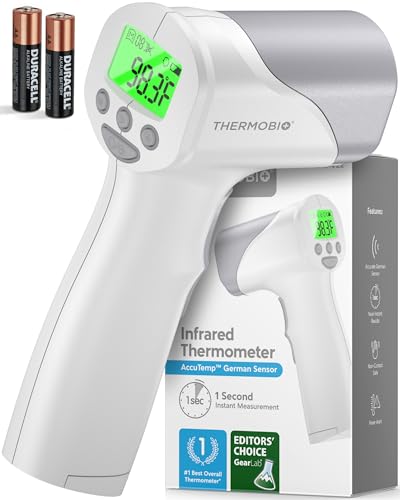
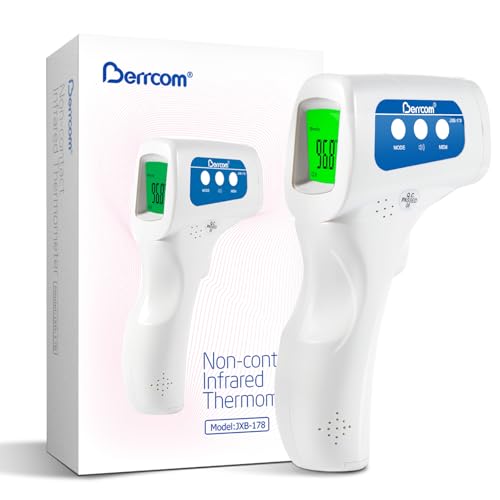
Non Contact Infrared Body Thermometer: The Complete Buying Guide
Learn how to choose a reliable no-touch thermometer for fast, accurate, and comfortable temperature checks — especially when your little one is resting or fussy.
START THE GUIDEHow Does a Non Contact Infrared Thermometer Work?
A non contact infrared body thermometer measures the thermal radiation emitted by the skin's surface — typically the forehead or temple — and converts it into a temperature reading. Unlike traditional thermometers that require physical contact, an infrared sensor detects heat from a short distance, usually between three and five centimeters.
This contactless approach offers significant advantages for parents. You can check your baby's temperature without waking them, without disturbing a sleeping infant, and without the hygiene concerns that come with shared-contact devices. The entire process takes just one to three seconds on most modern models.
Infrared thermometers are particularly valuable for screening purposes in households, clinics, and childcare settings. When your child is restless or unwell, a quick forehead scan minimizes discomfort and reduces the time spent restraining a fussy baby. For parents who want to compare different measurement technologies, our guide to the most accurate infant thermometer options provides a broader perspective on rectal, oral, ear, and forehead methods.
What Determines Accuracy in a Non Contact Thermometer?
Accuracy is the single most important consideration when choosing a non contact infrared body thermometer. A device that delivers inconsistent readings is worse than no device at all — it creates false reassurance or unnecessary alarm. Several factors influence how reliably a thermometer performs.
Sensor Quality and Calibration
The infrared sensor is the heart of the device. Premium thermometers use high-grade thermopile sensors with tight manufacturing tolerances. These sensors undergo factory calibration against reference standards and maintain their precision over time. Entry-level models may use less sophisticated sensors that drift more quickly or respond inconsistently to rapid temperature changes.
Ambient Temperature Compensation
Infrared readings are affected by the surrounding environment. A thermometer used in a cold room may read low; one used in a warm room may read high. Quality devices include ambient temperature compensation — an internal sensor that adjusts the reading based on the room's temperature. This feature is especially important if you plan to use the thermometer in different rooms or during seasonal changes.
Distance and Positioning Guidance
Most manufacturers specify an optimal measurement distance, often three to five centimeters. Some thermometers include a distance sensor or guide light that confirms you are holding the device at the correct range. Models without this guidance rely entirely on the user's steadiness, which can introduce variability, particularly when measuring a moving baby.
Clinical Validation
Look for thermometers that have been clinically validated against rectal or oral reference thermometry. Manufacturers who publish validation studies demonstrate confidence in their product's accuracy. A device claiming "clinical accuracy" without supporting evidence should be treated with caution.
Proper Usage Technique
Even the best thermometer can produce inaccurate results if used incorrectly. Sweaty foreheads, direct sunlight, recent exposure to hot or cold environments, and improper distance all affect readings. We cover proper technique in detail in the usage practices section below.
| Accuracy Factor | Why It Matters | What to Look For |
|---|---|---|
| Sensor grade | Determines baseline precision and stability | High-grade thermopile sensor |
| Ambient compensation | Adjusts for room temperature fluctuations | Dual-sensor design with ambient tracking |
| Distance guidance | Ensures correct positioning for consistent readings | Guide light or distance sensor |
| Clinical validation | Confirms real-world accuracy against reference standards | Published validation data or certification |
| Reading stability | Reduces variation between consecutive measurements | Consistent results across repeated scans |
Key Features to Compare Before You Decide
Beyond accuracy, several features separate a functional thermometer from an excellent one. These are the capabilities that matter most in day-to-day use with a baby or young child.
Reading Speed
Most modern non contact thermometers deliver a reading in one second or less. Faster readings are especially valuable when measuring a squirming infant or a sleeping child. A one-second reading feels instantaneous; anything over three seconds can feel like an eternity when your baby is unwell.
Display and Backlighting
A clear, backlit display is essential for nighttime checks. You need to read the result without turning on a lamp that might wake your baby. Look for large digits, a color-coded fever indicator (often green, yellow, and red), and adjustable brightness if you plan to use the device in a darkened nursery.
Measurement Modes
Many thermometers offer multiple modes: forehead body temperature, object temperature (for milk, bathwater, or room temperature), and sometimes ear temperature with a separate probe. Object mode is a useful bonus for parents who want to check bathwater or bottle temperature without a separate device.
Fever Alert
A fever alert feature sounds an audible signal or displays a visual warning when the reading exceeds a preset threshold, typically 38 degrees Celsius (100.4 degrees Fahrenheit). This is helpful for quick screening, but always confirm with a second reading if the result seems inconsistent with your child's condition.
Silent Mode
If you frequently check temperature during sleep, a silent mode that disables beeps and alerts is invaluable. Many mid-range and premium models include this feature. It allows you to take a reading without disturbing a sleeping baby.
Memory Recall
Some thermometers store the last ten to thirty readings, allowing you to track temperature trends over hours or days. This is particularly useful when monitoring a fever's progression or the effect of fever-reducing medication. For parents who want a comprehensive approach to infant health monitoring, pairing a thermometer with other tools — like the newborn snot sucker for congestion — helps you manage common illnesses more confidently.
Battery Life and Power
Most devices run on AAA or coin-cell batteries. Check the estimated battery life and whether the thermometer has an auto-off feature to preserve power. A low-battery indicator is essential — a thermometer that dies mid-reading is frustrating and potentially unsafe.
Build Quality and Ergonomics
The device should feel solid in your hand and be easy to hold steady at the correct distance. Rubberized grips, a comfortable trigger button, and a compact form factor all contribute to consistent usage. Hinged or flexible probe heads can make it easier to reach a baby's forehead at the right angle.
Quality Tiers Explained: Finding the Right Fit
Non contact infrared thermometers fall into three broad tiers. Understanding what each tier offers helps you match the device to your needs without over- or under-specifying.
Entry-Level
Reliable basic function for occasional household use.
- Single forehead mode
- Basic sensor with standard accuracy
- Simple LCD display
- Audible fever alert
- Sufficient for casual screening
Mid-Range
The sweet spot for most families — accuracy and features without excess.
- Forehead and object modes
- Ambient temperature compensation
- Backlit color-coded display
- Silent mode and memory recall
- Distance guidance light
- Clinically validated accuracy
Premium
Advanced features for frequent monitoring and maximum confidence.
- Dual-sensor ambient compensation
- Sub-one-second reading time
- Multiple measurement modes (forehead, ear, object)
- Large memory with trend display
- Premium materials and build quality
- Professional-grade calibration
For most families, the mid-range tier offers the best balance. These models typically include the accuracy features that matter — ambient compensation and clinical validation — along with the convenience features that make daily use easier, such as silent mode and memory recall. Entry-level devices are adequate for occasional screening but may lack the consistency needed for tracking a fever over time. Premium models add refinement and advanced features but are not strictly necessary unless you are monitoring temperature frequently or managing a chronic health condition.
Your Non Contact Thermometer Buying Checklist
Before you commit to a purchase, run through this checklist to ensure the device meets your household's needs.
- Confirm clinical validation. Look for published accuracy data or certification against reference thermometry. A claim of "clinical accuracy" without supporting evidence is not sufficient.
- Check for ambient temperature compensation. This feature significantly improves reliability across different rooms and seasons.
- Verify the reading speed. Aim for one second or less. Faster readings reduce the chance of movement affecting accuracy.
- Assess the display. A backlit screen with color-coded fever indication is easier to read at night and faster to interpret.
- Look for silent mode. Essential if you check temperature during sleep. The newborn must-haves list for many parents includes a silent thermometer for exactly this reason.
- Consider memory recall. Useful for tracking fever trends. Ten readings is generally sufficient; more is a bonus.
- Evaluate ergonomics. Hold the device in your hand (or visualize the grip) and consider whether you can maintain the correct distance comfortably, especially one-handed while holding a baby.
- Check battery requirements. Confirm the battery type and whether an auto-off feature will preserve power. A low-battery warning is essential.
- Review the warranty and support. A longer warranty signals manufacturer confidence. Accessible customer support is valuable if calibration issues arise.
- Confirm hygiene considerations. Non contact design eliminates cross-contamination risk, but check whether the sensor lens is easy to clean without damaging it.
If you are building a comprehensive health and wellness kit for your baby, consider how the thermometer fits alongside other essentials. Our guide to necessary items for newborn care can help you see the bigger picture of what you need in the first months.
Best Practices for Accurate Readings
Proper technique makes the difference between a reliable reading and a misleading one. Follow these practices every time you use your non contact infrared body thermometer.
Prepare the Environment and the Subject
Wait at least fifteen minutes after your baby has been outdoors, in a hot car, or after a bath before taking a reading. Extreme environmental exposure temporarily affects skin temperature. Ensure the forehead is dry and free of sweat, lotion, or cosmetics, which can interfere with infrared transmission.
Position the Thermometer Correctly
Hold the device perpendicular to the forehead, typically three to five centimeters away. If your thermometer has a distance guide light, use it. Keep the sensor aimed at the center of the forehead or the temple, depending on the manufacturer's instructions. Avoid aiming at the hairline or eyebrows, which can introduce error.
Take Multiple Readings if Necessary
If a reading seems inconsistent with your child's condition, wait thirty seconds and take a second reading. A third reading can confirm a trend. If all three readings are within a narrow range, you can have confidence in the result. If they vary widely, check your technique and the device's battery level.
Clean the Sensor Regularly
Wipe the sensor lens gently with a soft, dry cloth after each use. Do not use alcohol or cleaning solutions unless the manufacturer specifically recommends them. A dirty lens scatters infrared energy and reduces accuracy.
Store the Device Properly
Keep the thermometer in a stable environment — not in a bathroom where humidity fluctuates, and not in direct sunlight or near a heat source. Extreme temperatures during storage can affect calibration over time.
Frequently Asked Questions
How accurate is a non contact infrared body thermometer?
A high-quality non contact infrared body thermometer can achieve clinical accuracy within 0.2 to 0.3 degrees Celsius when used correctly. Accuracy depends on proper positioning, stable ambient conditions, and following the manufacturer's instructions. Premium models with advanced sensor technology and ambient temperature compensation tend to deliver the most consistent readings.
What is the ideal distance for taking a forehead temperature reading?
Most non contact infrared body thermometers require a distance of three to five centimeters from the forehead. Some models offer adjustable distance settings or guide lights to help you position the device correctly. Always check your specific model's manual, as the optimal distance can vary between manufacturers.
Can I use a non contact infrared thermometer for newborns?
Yes, many non contact infrared body thermometers are designed for use from birth. However, for newborns under three months, rectal thermometry remains the clinical standard for the most accurate core temperature reading. Always consult your pediatrician for guidance on the best method for your baby's age and health status.
How do I maintain my infrared thermometer for consistent accuracy?
Keep the sensor lens clean by wiping it gently with a soft, dry cloth after each use. Store the thermometer in a stable environment away from direct sunlight, heat sources, and humidity. Replace batteries promptly when the low-battery indicator appears, and recalibrate according to the manufacturer's recommended schedule.
What features should I prioritize in a non contact thermometer?
Prioritize clinical accuracy certification, a fast reading time of one second or less, ambient temperature compensation, a clear backlit display, and multiple measurement modes including forehead and object modes. Fever alerts, silent mode for sleeping babies, and memory recall for tracking temperature trends are also valuable features.
Ready to Choose with Confidence?
You now understand the key factors that separate a reliable non contact infrared body thermometer from an inconsistent one. Explore our curated selection of highly rated thermometers to find the right fit for your family's needs.
EXPLORE OPTIONS