
Most Accurate Infant Thermometer: Complete Buying Guide
When your baby has a fever, accuracy matters. This guide breaks down thermometer types, precision standards, and the features that help you get reliable readings every time.
COMPARE TYPESWhy accuracy matters: An infant's temperature can shift quickly, and an inaccurate reading may lead to delayed care or unnecessary worry. Understanding which thermometer type and feature set delivers the most dependable results helps you act with confidence when it counts.
Understanding Infant Thermometer Accuracy
Not all thermometers are built the same, and the definition of "accurate" depends on how and where you measure. Pediatricians generally agree that rectal thermometers provide the closest reading to core body temperature, making them the gold standard for infants under three months. However, newer infrared technologies have narrowed the gap, offering convenience with respectable precision.
Accuracy is typically expressed as a margin of error. A thermometer with a ±0.2°C (±0.4°F) variance is considered highly precise, while ±0.5°C (±0.9°F) is acceptable for general screening. The most accurate infant thermometer is one that matches its measurement method to your baby's age and your comfort level with use.
It's also worth noting that technique affects accuracy as much as the device itself. Proper positioning, clean sensors, and following manufacturer instructions are essential. For a complementary approach to health monitoring, a non-contact infrared body thermometer can be useful for quick checks between more thorough readings.
Types of Infant Thermometers Compared
Each thermometer type has a distinct accuracy profile, use case, and learning curve. The table below summarizes how they stack up:
| Type | Accuracy Level | Best For | Considerations |
|---|---|---|---|
| Rectal | Highest (core temperature) | Newborns and infants under 3 months | Requires care and lubrication; may be uncomfortable for some parents |
| Ear (Tympanic) | High (when positioned correctly) | Babies 6 months and older | Ear canal shape can affect readings; technique matters |
| Forehead (Temporal) | Moderate to high | Quick screening for all ages | Sensitive to sweat, drafts, and placement |
| Oral | Moderate to high | Children 4 years and older | Not suitable for infants who cannot hold still |
| Armpit (Axillary) | Moderate | General screening | Less precise than rectal; useful for quick checks |
| Non-Contact Infrared | Moderate to high | Fast screening, sleeping babies | Distance and ambient conditions affect results |
For a deeper look at how non-contact models perform, explore this guide to the non-contact infrared body thermometer and its practical applications in infant care.
Key Features That Impact Accuracy and Usability
Beyond the measurement method, certain features separate a dependable device from a frustrating one. When evaluating the most accurate infant thermometer for your family, prioritize these characteristics:
Fast Reading Time
Infants rarely stay still for long. A reading time of 1–5 seconds improves compliance and reduces measurement errors caused by movement.
Clear Backlit Display
Nighttime checks are common. A backlit screen with large digits lets you read results without turning on lights that might wake your baby.
Memory Recall
Tracking temperature trends over hours or days helps you spot patterns and share accurate information with your pediatrician.
Fever Alert
An audible or visual alert when the reading exceeds a set threshold helps you respond quickly, especially during night checks.
Flexible Tip (Rectal Models)
A soft, flexible tip improves comfort and reduces the risk of discomfort during rectal measurement, making the process smoother for both parent and baby.
Waterproof Design
Easy cleaning and sanitizing are essential for hygiene. A waterproof body allows for thorough washing without damaging electronics.
For parents building a comprehensive newborn care kit, accurate temperature monitoring pairs naturally with other health essentials like a newborn snot sucker and a well-stocked first aid collection. These tools together support confident at-home care.
Accuracy Expectations by Product Tier
Thermometers fall into distinct tiers based on sensor quality, build, and advanced features. Understanding what each tier delivers helps you set realistic expectations:
Entry-Level Tier
Entry-level thermometers typically use basic infrared sensors or standard digital thermistor technology. They are suitable for general screening and occasional use. Accuracy is generally within ±0.5°C (±0.9°F), which is adequate for identifying whether a fever is present but may not provide the precision needed for close monitoring of a newborn. These models often lack memory recall or backlit displays.
Mid-Range Tier
Mid-range models offer improved sensor calibration and faster reading times. Many include backlit displays, fever alerts, and memory functions. Accuracy improves to around ±0.3°C (±0.5°F), making them reliable for regular use with infants and toddlers. This tier represents a solid balance between performance and usability for most families.
Premium Tier
Premium thermometers feature advanced infrared sensors, refined algorithms for temporal or tympanic measurement, and robust build quality. Accuracy can reach ±0.2°C (±0.4°F), approaching the precision of rectal readings for surface measurements. These models often include multiple measurement modes, large color-coded displays, and app connectivity for tracking.
Luxury Tier
Luxury-tier devices represent the top of the market, with clinical-grade sensor arrays, exceptional consistency, and premium materials. They may include features like automatic ear temperature compensation, dual-mode operation, and professional-grade calibration certificates. For families who prioritize the highest level of precision and are willing to invest in long-term monitoring tools, these models deliver the most refined experience.
Pros and Cons of the Most Accurate Options
Rectal Thermometers
Pros
- Closest to core body temperature
- Recommended by pediatricians for newborns
- Highly reliable when technique is correct
- Fast digital readings available
Cons
- Requires lubrication and careful insertion
- Some parents find the process uncomfortable
- Not ideal for quick checks on a fussy baby
Premium Infrared Ear Thermometers
Pros
- Fast, comfortable readings
- Good accuracy with proper positioning
- Easy to use during sleep
- Often include memory and fever alerts
Cons
- Not recommended for babies under 6 months
- Earwax or curved canals can affect readings
- Requires consistent technique
High-End Non-Contact Infrared Thermometers
Pros
- No physical contact — ideal for sleeping infants
- Instant readings reduce disturbance
- Useful for screening multiple family members
- Hygienic with no probe covers needed
Cons
- Ambient temperature and distance affect accuracy
- May read surface temperature rather than core
- Premium models required for consistent precision
For families who prefer a contact-free approach, a non-contact infrared body thermometer offers a practical solution for quick, hygienic checks throughout the day.
How to Choose the Most Accurate Infant Thermometer for Your Family
Selecting the right thermometer involves matching measurement method to your baby's age, your comfort with the technique, and your monitoring needs. Consider these guidelines:
- Newborns (0–3 months): A rectal thermometer is the most accurate choice. Look for a model with a flexible tip, fast reading time, and a clear display.
- Babies 3–6 months: Rectal remains the gold standard, but a premium temporal thermometer can serve as a reliable screening tool between thorough checks.
- Babies 6 months and older: Ear thermometers become viable and offer a good balance of speed and accuracy. Choose a model with a pre-warmed tip and consistent placement guidance.
- Frequent nighttime checks: A non-contact or ear thermometer with a backlit display and silent mode minimizes sleep disruption.
- Tracking trends: Memory recall and app connectivity help you maintain a log for pediatric appointments.
Whichever type you choose, verify that the device meets safety standards and has a clear calibration or accuracy specification. For additional newborn health essentials, explore this guide to newborn must-haves to build a well-rounded care kit.
Tips for Getting the Most Accurate Readings
Even the best thermometer can give misleading results if used incorrectly. Follow these practices to maximize accuracy:
- Read the manual: Each device has specific instructions for placement and timing. Follow them precisely.
- Clean the sensor: Use an alcohol wipe before and after each use, especially for rectal and ear models.
- Ensure proper positioning: For ear thermometers, gently pull the ear back to straighten the canal. For temporal models, swipe slowly across the forehead.
- Wait for stable conditions: Avoid taking a reading immediately after a bath, feeding, or outdoor exposure, as these can affect surface temperature.
- Take multiple readings: If a result seems off, wait a few minutes and try again. Consistency across readings increases confidence.
- Calibrate periodically: Some models allow calibration checks. Follow manufacturer guidance to maintain accuracy over time.
For a complete approach to infant wellness monitoring, pair your thermometer with other trusted tools such as a newborn snot sucker and a well-organized newborn must-haves checklist.
Frequently Asked Questions
What is the most accurate type of infant thermometer?
Rectal thermometers are widely regarded as the most accurate method for infants, especially newborns and babies under three months. They provide core body temperature readings and are recommended by pediatricians for their reliability. However, non-contact infrared thermometers have improved significantly and offer a convenient alternative for quick screening.
How accurate are forehead thermometers for babies?
Forehead thermometers use infrared technology to measure surface temperature. While they are convenient and non-invasive, their accuracy can be affected by factors such as ambient temperature, sweat, and improper positioning. Mid-range and premium models with advanced sensors offer better consistency, but they may not match the precision of rectal readings.
When should I use a thermometer on my infant?
You should use a thermometer when your baby feels warm to the touch, shows signs of fussiness or discomfort, has a flushed face, or exhibits changes in feeding and sleep patterns. For newborns under three months, any fever warrants immediate medical attention, so accurate measurement is critical.
What features should I look for in an infant thermometer?
Key features include fast reading time, a clear backlit display, memory recall for tracking temperature trends, a flexible tip for comfort, and an audible fever alert. For non-contact models, look for adjustable emissivity settings and a reliable distance-to-spot ratio. A waterproof design and easy-clean surface are also beneficial.
Recommended Infant Thermometers
⚠️ AFFILIATE DISCLOSURE: This website contains affiliate links. As an Amazon Associate, we earn from qualifying purchases. If you make a purchase through these links, we may receive a small commission at no additional cost to you. Read our full affiliate policy.
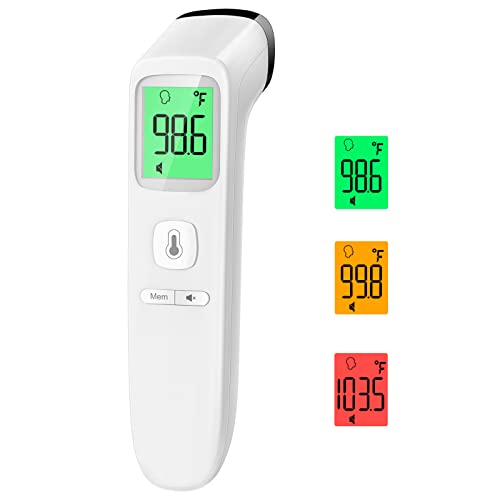
Goodbaby No-Touch Thermometer for Adults and Kid, Accurate Baby Thermometer | 1s Fast Reading, Fever Alarm, Silent Mode, 35-Reading Memory, Forehead & Object Mode, AAA Battery Included, for Home & Clinic
Check price on Amazon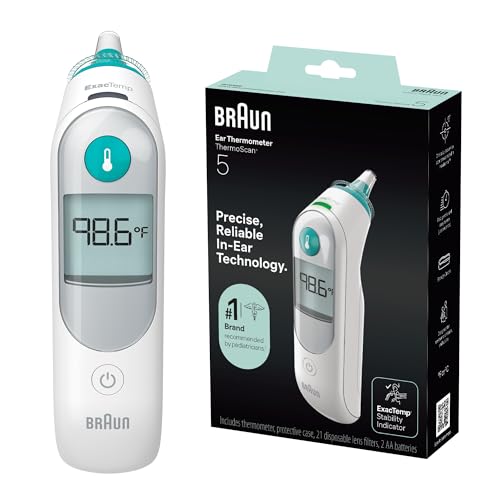
Braun ThermoScan 5 Digital Display Ear Thermometer | Baby and Infant Thermometer with ExacTemp Stability Indicator for Professional Accuracy, Recommended by Pediatricians
Check price on Amazon
Frida 3-in-1 Infrared Thermometer for Ear, Forehead & Touchless | Fever Thermometer for Babies, Infants, Toddlers, Kids & Adults, Fast, Accurate & Reliable Readings
Check price on Amazon
Braun ThermoScan 7 Digital Ear Thermometer for Adults, Babies & Infants | Age-Adjusted Fever Guidance Thermometer, No. 1 Brand Recommended by Pediatricians
Check price on Amazon
Vicks SpeedRead Digital Thermometer for Baby, Kids & Adults | Color-Coded Readings in 8 seconds, Oral, Baby Rectal Thermometer or Under The Arm, Water Resistant
Check price on Amazon
Frida Baby 3-in-1 Rectal, Underarm & Oral Thermometer for Infants & Kids | Digital Baby Thermometer for Infants & Toddlers, Quick & Accurate Check, Includes Carrying Case
Check price on Amazon
Momcozy Smart Baby Thermometer for Family with CozyLink Signal Booster | Thermometer for Adlut, Continuous Monitoring, Medical-Grade High Accuracy for Kids , Hypoallergenic 3M Sticker, App Alerts
Check price on Amazon