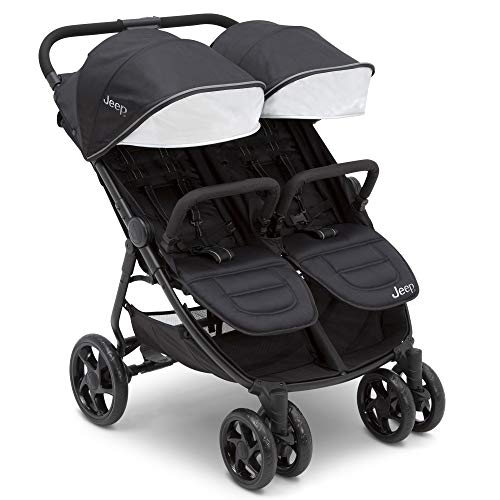
Jogging Stroller That Converts to Double: The Complete Buyer's Guide
A single-to-double jogging stroller lets active parents run with one child, then expand for two without buying a second stroller. Here is everything you need to evaluate before you decide.
Start ExploringWhat Is a Jogging Stroller That Converts to Double?
A jogging stroller that converts to double is a running-oriented stroller engineered to start life as a single-seat unit and later accept a second seating position. Unlike dedicated double joggers, which are wide from day one, a convertible model lets you delay the second seat until a new baby arrives or your toddler needs a ride alongside an infant.
The conversion typically happens in one of three ways: a bolt-on second seat that attaches behind or beside the main seat, a modular frame that accepts a second seat unit in a tandem position, or a side-by-side extension kit that widens the axle. Each approach has trade-offs in width, weight distribution, and running stability.
If you are still comparing basic running strollers, our jogging stroller buying guide covers the fundamentals of three-wheel geometry, suspension, and harness design. For parents planning travel with a running stroller, the lightweight compact jogging stroller overview is a useful companion read.
Quick definition: a convertible jogging stroller is a modular running stroller whose frame accepts a factory-designed second seat or extension kit, preserving the locking front wheel, hand brake, and fixed-wheel running mode that dedicated double joggers rely on.
How the Single-to-Double Conversion Works
Manufacturers design conversion systems around a reinforced rear axle and a frame that can carry additional load without flexing. The second seat usually attaches through machined brackets or a proprietary rail system, and the conversion kit includes its own harness, canopy, and footrest.
Tandem conversion
In a tandem setup, the second child sits directly behind or in front of the first. Tandem convertibles keep the stroller narrow enough for most sidewalks and doorways, which is a major advantage for city running. The trade-off is a longer wheelbase, which changes turning behavior and requires more space to maneuver at intersections.
Side-by-side conversion
Side-by-side convertibles widen the stroller so both children sit at the same height. This design gives each child an unobstructed view and makes it easier to tend to both at once. The downside is width: a side-by-side double jogger can exceed the clearance of narrow shop aisles and older doorways.
Modular seat and bassinet systems
Some premium convertibles use a modular frame where the second seat is a full seat unit rather than a fabric add-on. These systems often accept a bassinet or an infant car seat in either position, which matters for families with a newborn and a toddler. If you are weighing car seat compatibility, the infant car seat and jogger stroller combo guide explains how travel-system integration works with running frames.
Why Families Choose a Convertible Design
- One purchase, two configurations. You buy a single running stroller now and expand only when you need to, rather than owning a single jogger and a separate double.
- Storage and transport. A single-configuration convertible folds smaller and weighs less than a dedicated double, which matters for car trunks and apartment hallways.
- Resale and hand-me-down flexibility. Convertible frames tend to hold relevance longer because they serve two family stages.
- Running continuity. Parents who run regularly do not have to give up their running routine when a second child arrives; the same frame and running geometry carry over.
For families who anticipate a second child within a few years, a convertible is often the more efficient long-term investment than buying two separate strollers. If your priority is a stroller that folds up small for travel, the jogging stroller that folds up small guide is worth reviewing before you commit to a convertible frame.
Key Features to Evaluate
Frame and axle reinforcement
The conversion hardware puts additional load on the rear axle. Look for a frame with reinforced joints, a solid build, and a manufacturer-rated weight capacity for the double configuration. A heavy-duty axle is a strong indicator that the frame was designed for two children from the start rather than adapted afterward.
Front wheel locking mechanism
Running requires a locked front wheel for straight-line stability. Confirm that the lock remains functional and secure in double configuration, because the added weight shifts the center of gravity. A hand brake is essential on any running stroller, and it becomes more important with two children aboard.
Harness and seat support in both positions
Every seating position needs a five-point harness with adjustable straps. The second seat should have its own recline and sufficient padding; a fabric sling that offers minimal support is a sign of an entry-level conversion kit.
Canopy coverage
Independent canopies for each child are preferable, especially in tandem designs where one seat may sit further back. Check that the canopy in the second position does not interfere with the parent handle or the hand brake.
Fold mechanism with the second seat attached
Some convertibles require you to remove the second seat before folding. If you fold the stroller frequently, confirm the fold sequence in double mode so you are not surprised at the car trunk.
Suspension and tire type
Air-filled tires with adjustable suspension absorb trail and pavement imperfections better than solid tires. For families who split time between paved paths and light trails, suspension quality matters more than the number of seats. Our jogging stroller with reversible seat guide discusses how seat orientation and suspension interact for younger riders.
Tier Comparison: What Each Class Offers
The convertible jogging stroller market divides into clear quality tiers. The table below uses universal tier descriptors so you can compare classes without relying on fluctuating retail figures.
| Tier | Best For | Typical Conversion Approach | Running Suitability |
|---|---|---|---|
| Entry-level | Occasional joggers and walkers | Bolt-on fabric second seat | Light jogging on smooth pavement; fixed front wheel may be basic |
| Mid-range | Regular runners with two children | Modular second seat with independent recline | Reliable running geometry, hand brake, and adjustable suspension |
| Premium | Frequent runners and trail users | Full seat unit with bassinet or car seat compatibility | Heavy-duty frame, high-grade suspension, precise tracking |
| Luxury / flagship | Active families wanting maximum flexibility | Modular frame accepting two full seat units in multiple positions | Professional-grade running performance with premium materials |
Mid-range models usually offer a noticeably smoother conversion experience than entry-level kits, particularly in harness quality and frame rigidity. Premium and flagship tiers justify themselves for families who run several times a week or who need car seat and bassinet compatibility from day one.
Safety and Running Considerations
Running with a double stroller changes the physics of the push. The stroller is heavier, wider, and less responsive to steering input. Before you run in double configuration, confirm the following:
- Age and head control. Most manufacturers recommend waiting until a baby can hold their head up independently, typically around six months, unless the stroller supports a car seat or bassinet for younger infants. Our jogging stroller for infants under 6 months guide covers the attachment options that make early running safer.
- Locked front wheel. Always lock the front wheel for running. An unlocked wheel can cause the stroller to veer when the added weight shifts.
- Hand brake and wrist strap. Use both on any incline. A double stroller rolling away is a serious hazard.
- Weight distribution. Load the stroller according to the manufacturer's instructions, and avoid hanging heavy bags on the handle, which can tip a rear-loaded tandem design.
- Terrain awareness. Wider side-by-side doubles need more clearance on narrow paths. Tandem doubles need more distance to stop and turn.
If you are comparing models that keep the child facing you, the reversible seat jogging stroller guide explains how parent-facing configurations affect balance and running stability.
Common Buying Mistakes
- Assuming every jogging stroller converts. Only models with factory-designed conversion kits should be expanded. Third-party add-ons can void warranties and compromise frame integrity.
- Ignoring doorway and aisle width. Side-by-side doubles are wide; measure your home entry, car trunk, and frequent indoor spaces before choosing a side-by-side over a tandem.
- Overlooking the fold in double mode. A stroller that folds compactly as a single may require seat removal as a double. Test the full sequence if you fold daily.
- Underestimating the second seat's quality. The second seat often gets less padding and a simpler harness in entry-level kits. Check both seats for five-point harnesses and adequate recline.
- Skipping the hand brake check. A hand brake is non-negotiable for running, and it must remain accessible with the second seat attached.
Frequently Asked Questions
How does a jogging stroller that converts to double work?
A convertible jogging stroller starts as a single-seat running stroller and accepts an add-on kit, second seat, or side-by-side extension to accommodate a second child. The conversion hardware usually attaches to the frame with reinforced brackets, preserving the three-wheel running geometry.
Can I run with a double jogging stroller?
Yes, but only with models explicitly rated for running in double configuration. The added weight and width change the center of gravity, so look for a locking front wheel, hand brake, and a five-point harness in every seat.
When can a baby ride in a jogging stroller?
Most manufacturers recommend waiting until a baby can hold their head up independently, typically around six months, unless the stroller supports a car seat or bassinet attachment for younger infants.
Is a convertible jogging stroller suitable for everyday errands?
It can work for errands, but double configurations are wider than standard strollers. Check door widths and aisle clearance if you plan to use it indoors frequently.
Do I need a separate stroller for a newborn and a toddler?
Not necessarily. Many premium convertibles accept a bassinet or infant car seat in one position while a toddler rides in the other. Confirm that the manufacturer supports that combination for your specific model.
Ready to Compare Convertible Jogging Strollers?
Review the recommended models below, then confirm the conversion kit, running rating, and harness details for your family's needs before you buy.