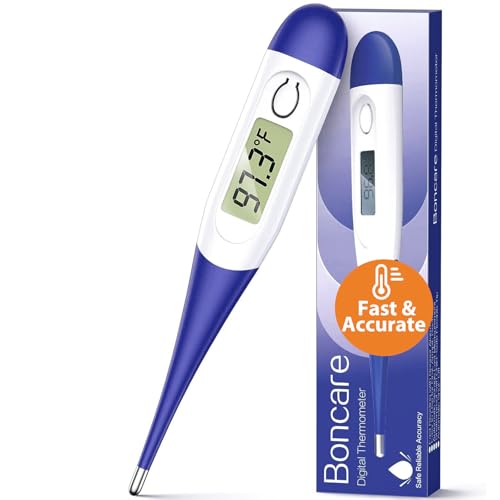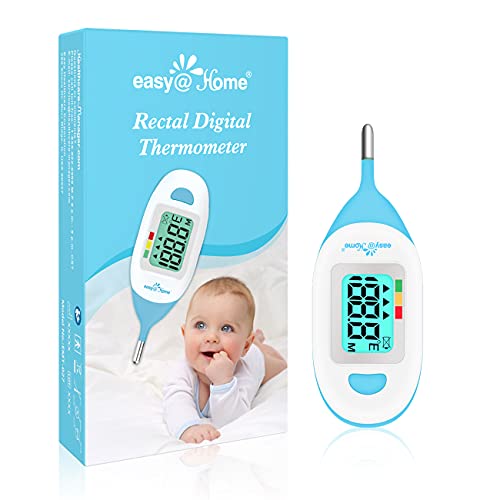
Infant Rectal Thermometer: The Gold Standard for Accuracy
When your baby's health is on the line, you need the most reliable temperature reading possible. Learn why pediatricians recommend rectal thermometers for infants and how to choose the best one for your family.
SEE TOP PICKSWhy a Rectal Thermometer Is the Best Choice for Infants
For newborns and babies under three months, a rectal temperature is considered the most accurate way to measure body temperature. Unlike ear, forehead, or armpit readings, which can be affected by external factors, a rectal thermometer provides a core body temperature that is the closest reflection of your baby's true condition.
Pediatricians and hospitals rely on rectal thermometers because they are:
- Highly accurate: They measure the internal temperature, which is not influenced by skin temperature or environmental factors.
- Fast and reliable: Modern digital rectal thermometers provide a reading in under 10 seconds.
- Essential for diagnosis: An accurate reading is critical for determining if a fever is present and whether medical attention is needed.
Did You Know? The American Academy of Pediatrics (AAP) recommends using a digital infant thermometer rectally for the most accurate temperature in babies under 3 months. For older infants and children, you can also use other methods, but rectal remains the gold standard for accuracy.
How to Use an Infant Rectal Thermometer Safely
Using a rectal thermometer correctly is simple but requires care to ensure your baby's comfort and safety. Follow these steps for a stress-free experience:
- Prepare the thermometer: Clean the tip with soapy water or rubbing alcohol, then rinse with cool water. Apply a small amount of petroleum jelly or water-based lubricant to the tip.
- Position your baby: Lay your baby on their stomach across your lap or on a firm surface, or place them on their back with their legs lifted towards their chest.
- Insert gently: With one hand, separate your baby's buttocks. With the other, gently insert the thermometer tip about 0.5 to 1 inch (1.25 to 2.5 cm) into the rectum, or until the tip is no longer visible.
- Wait for the reading: Hold the thermometer in place with your fingers. Wait until it beeps (usually within 10 seconds) and then remove it.
- Clean and record: Clean the thermometer again and record the temperature. A normal rectal temperature for a baby is around 99.6°F (37.6°C), but it can vary slightly.
For more information on digital infant thermometers, including other types and their uses, check out our comprehensive guide.
Infant Thermometer Types: A Comparison
While rectal thermometers are the most accurate, there are other types available for different situations. Here’s a quick comparison:
| Type | Accuracy | Ease of Use | Best For |
|---|---|---|---|
| Rectal | ⭐⭐⭐⭐⭐ (Gold Standard) | Moderate (requires proper technique) | Infants under 3 months, most accurate readings |
| Forehead (Temporal) | ⭐⭐⭐⭐ | Very easy (non-invasive) | Quick checks for older babies and children |
| Ear (Tympanic) | ⭐⭐⭐ | Easy | Children over 6 months, not recommended for newborns |
| Axillary (Armpit) | ⭐⭐ | Very easy | Screening, least accurate, often used for older children |
When choosing a thermometer, consider your baby's age and your comfort level. A high-quality digital infant thermometer with a flexible tip is often the best choice for rectal use, as it reduces the risk of injury.
What to Look for in an Infant Rectal Thermometer
Not all thermometers are created equal. When shopping for an infant rectal thermometer, keep these features in mind:
- Fast Reading Time: Look for a thermometer that gives a reading in under 10 seconds. This minimizes the time your baby feels uncomfortable.
- Flexible Tip: A soft, flexible tip is safer and more comfortable for your baby, reducing the risk of injury.
- Waterproof Design: A waterproof thermometer is easier to clean and can be fully submerged for sterilization.
- Memory Function: Some thermometers store the last reading, which can be helpful for tracking temperature changes over time.
- Fever Alarm: An audible alarm that signals a fever (usually above 100.4°F or 38°C) is a useful feature.
- Easy-to-Read Display: A large, backlit display makes it easy to read the temperature, even in a dimly lit nursery.
For more on baby health essentials, you might find our guide on cradle cap or diaper rash cream helpful as well.
When to Call the Doctor
Knowing when to seek medical help is just as important as taking the temperature correctly. Contact your pediatrician immediately if:
- Your baby is under 3 months old and has a rectal temperature of 100.4°F (38°C) or higher.
- Your baby is 3–6 months old and has a temperature of 102°F (38.9°C) or higher.
- The fever is accompanied by other symptoms like lethargy, irritability, poor feeding, or a rash.
- Your baby is experiencing difficulty breathing or is unusually fussy.
Always trust your instincts. If your baby seems unwell or you are worried, it's better to consult a healthcare professional. An accurate infant rectal thermometer reading can provide vital information that helps your doctor make the best decision for your baby's health.
Preparing for your baby's arrival involves many decisions. From choosing the right infant car seat to selecting the best diaper bag, every choice matters. For peace of mind during those early months, a reliable digital infant thermometer is a non-negotiable item. As your baby grows, you'll also want to explore resources on newborn sleep, newborn milestones, and feeding schedules to ensure they are developing healthily.